
White Mulberry
Morus alba L.
Location
2 Wheeler parking
Family
Moraceae
Common names
White Mulberry, Shahtoot, Tuti, Hebbattu
Native range
China; now widely naturalized across Asia, Europe, Africa, and the Americas
Habitat
Naturally grows in a variety of habitats, including forests, grasslands, and along riverbanks. It is widely cultivated in tropical and subtropical regions for its leaves (used in silkworm rearing), fruits, and ornamental value. The species thrives in both wild and cultivated environments, including roadsides, gardens, and farmlands.
Flowering
February – April
Fruiting
April – June
Conservation status
Least Concern (LC)
About this plant
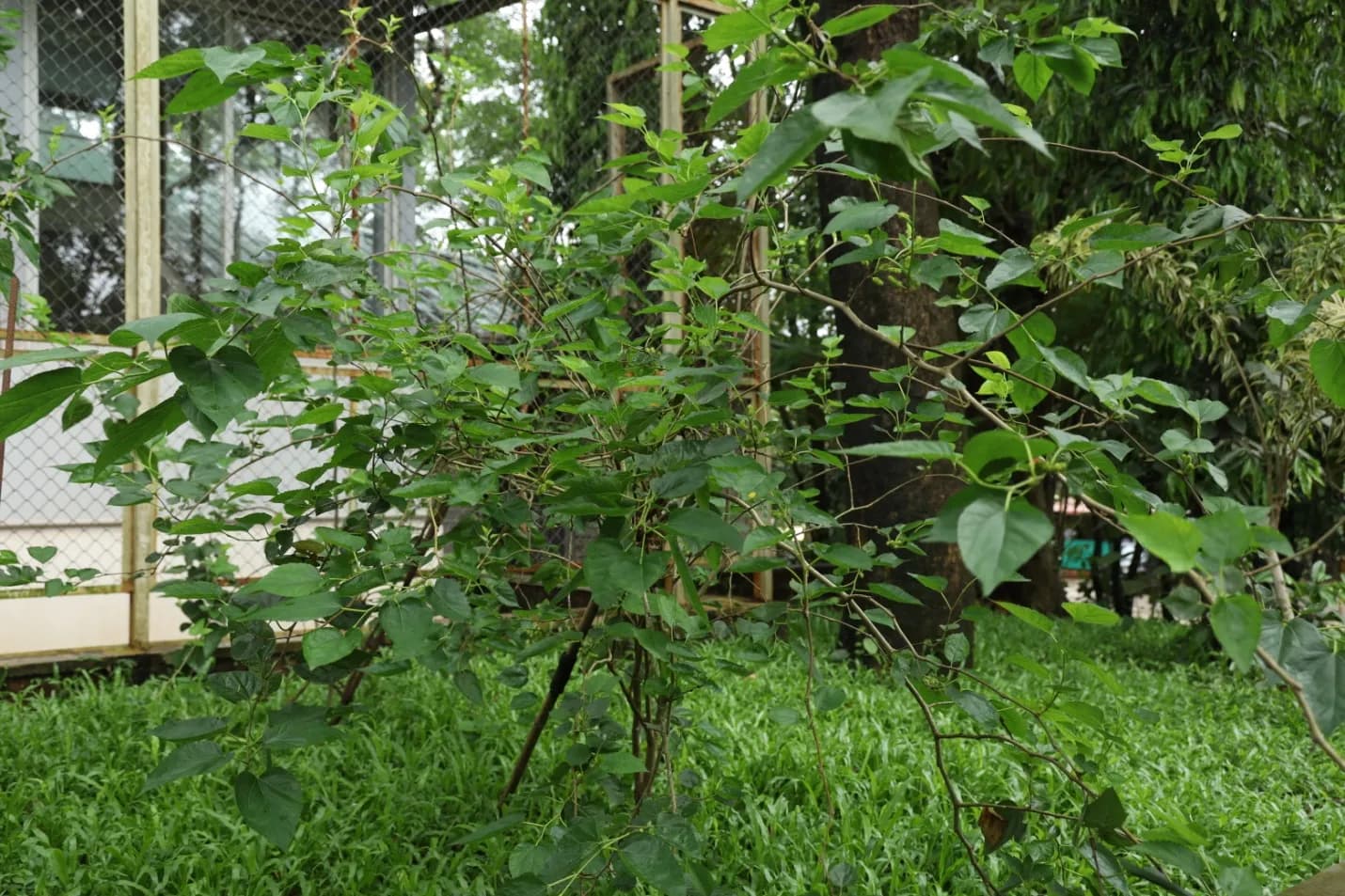
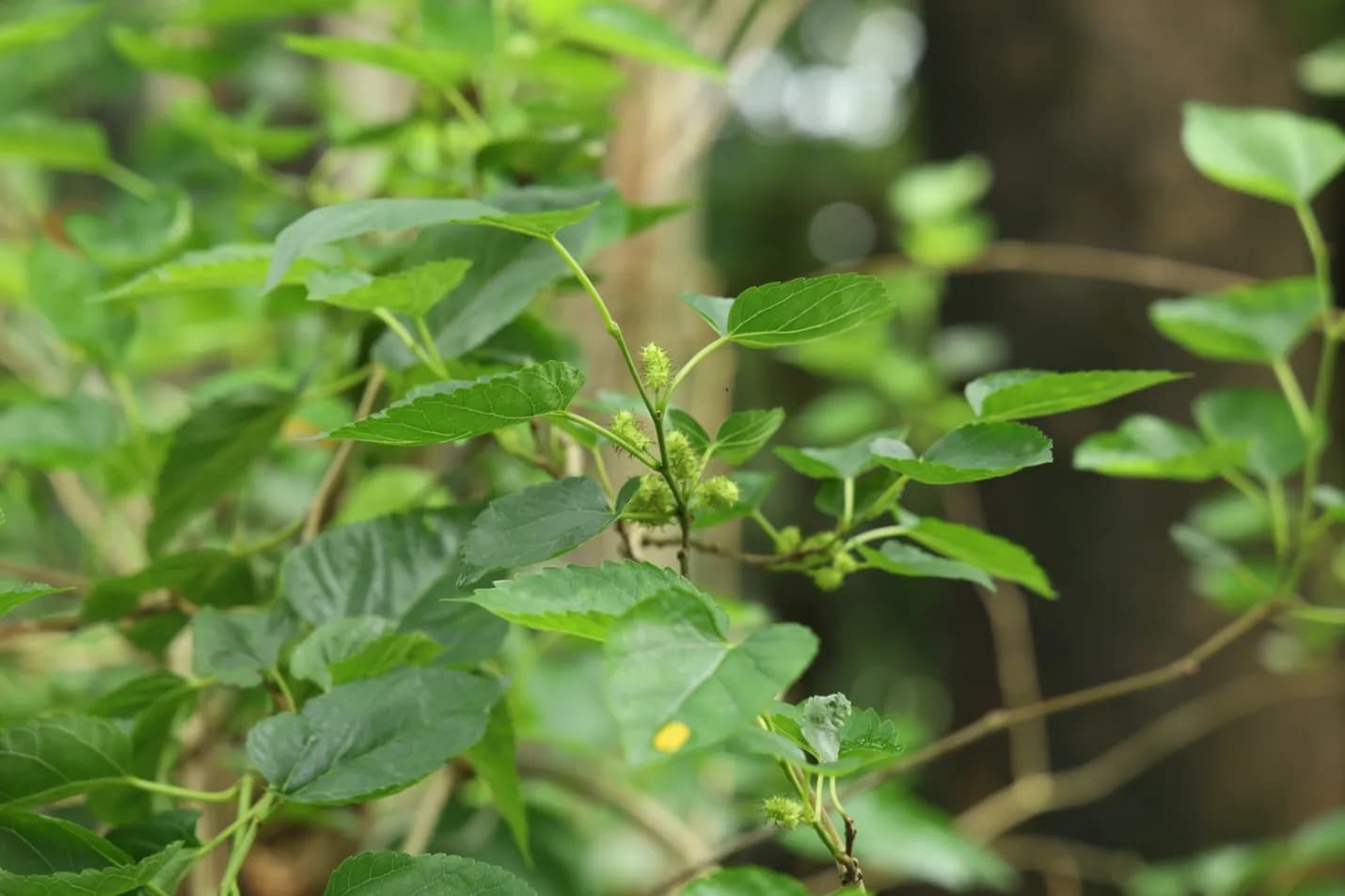
Morus alba has broad, alternate leaves that vary in shape from entire to deeply lobed, usually with serrated margins. Leaves are 5–20 cm long and bright green and are especially valued for feeding silkworms (Bombyx mori). The tree bears small, greenish flowers; male and female flowers are generally found on separate trees (dioecious). Fruits are aggregate drupes, white to pinkish or purplish when ripe, sweet and juicy, and resemble blackberries in appearance.
Uses
The species is highly important in sericulture as the primary food source for silkworms. Fruits are edible and consumed fresh or processed into jams, juices, and traditional sweets. In traditional medicine, leaves, bark, and fruits are used to treat ailments such as diabetes, cough, fever, and inflammation. The tree has a long history of use in Chinese and Ayurvedic medicine for its antidiabetic and antioxidant properties.
Growing conditions
Prefers full sunlight and well-drained loamy soils but adapts to a wide range of soil types. It is moderately drought-tolerant and resistant to air pollution, making it suitable for both rural and urban settings. Grows well in tropical to temperate climates
Habit
Fast-growing, medium-sized deciduous tree with a spreading crown. It typically attains a height of 10–15 m, with a short trunk and a wide, irregular canopy.