
Purple Orchid Tree
Bauhinia purpurea L.
Location
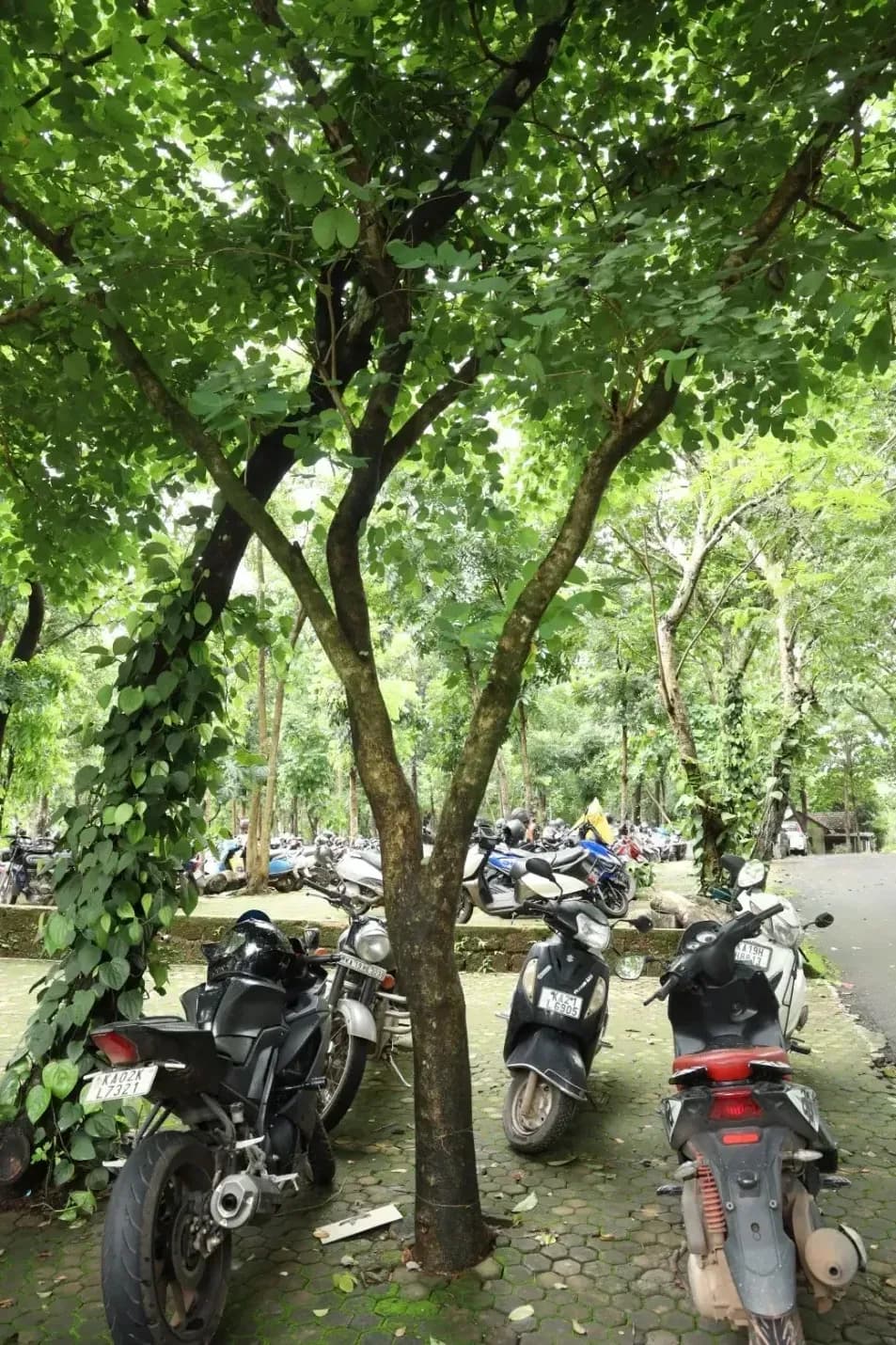
2 Wheeler parking
Family
Fabaceae
Common names
Purple Orchid Tree, Butterfly Tree, Camel’s Foot Tree, Mandara (ಮಂದಾರ in Kannada)
Native range
Southeast Asia and the Indian subcontinent
Habitat
Commonly found in tropical and subtropical regions. It grows well in open woodlands, along roadsides, gardens, parks, and urban landscapes.
Flowering
September – November
Fruiting
November – February
Conservation status
Least Concern (LC)
About this plant
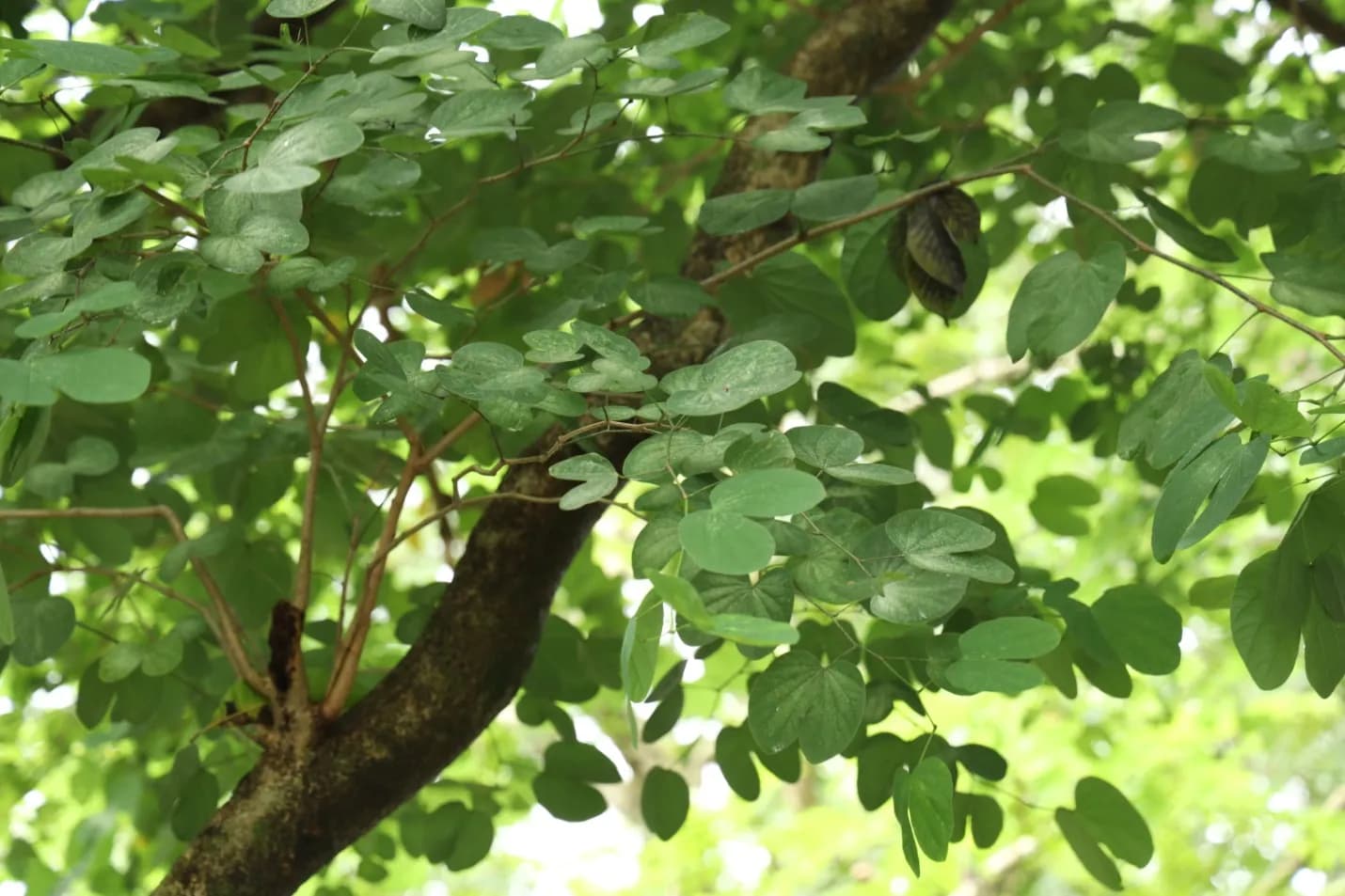
Bauhinia purpurea grows to a height of 6–12 m. Leaves are deeply cleft and resemble a camel’s hoof; they are bilobed, alternate, and 10–15 cm wide. Flowers are large, showy, purple to magenta, fragrant, and orchid-like in appearance, borne in terminal or axillary racemes. The tree produces long, flat, woody seed pods that turn brown at maturity and contain several seeds.
Uses
The species is widely planted as an ornamental tree due to its attractive flowers. In traditional medicine, bark and flower buds are used to treat diarrhea, ulcers, and digestive disorders. Various plant parts are also used in Ayurvedic preparations. Young flower buds are occasionally consumed as a vegetable in local cuisines.
Growing conditions
Thrives in full sunlight and prefers well-drained soils. It tolerates a wide range of soil types and moderate drought once established and grows best in warm, humid climates
Habit
Small to medium-sized deciduous or semi-evergreen tree with a rounded crown.