

Mango
Mangifera indica L.
Location
Boys Hostel
Family
Anacardiaceae
Common names
Mango
Native range
South Asia
Habitat
Tropical and subtropical regions
Flowering
March–May, depending on the region.
Fruiting
Fruits typically mature in 3–5 months after flowering
Conservation status
Least Concern (LC)
About this plant
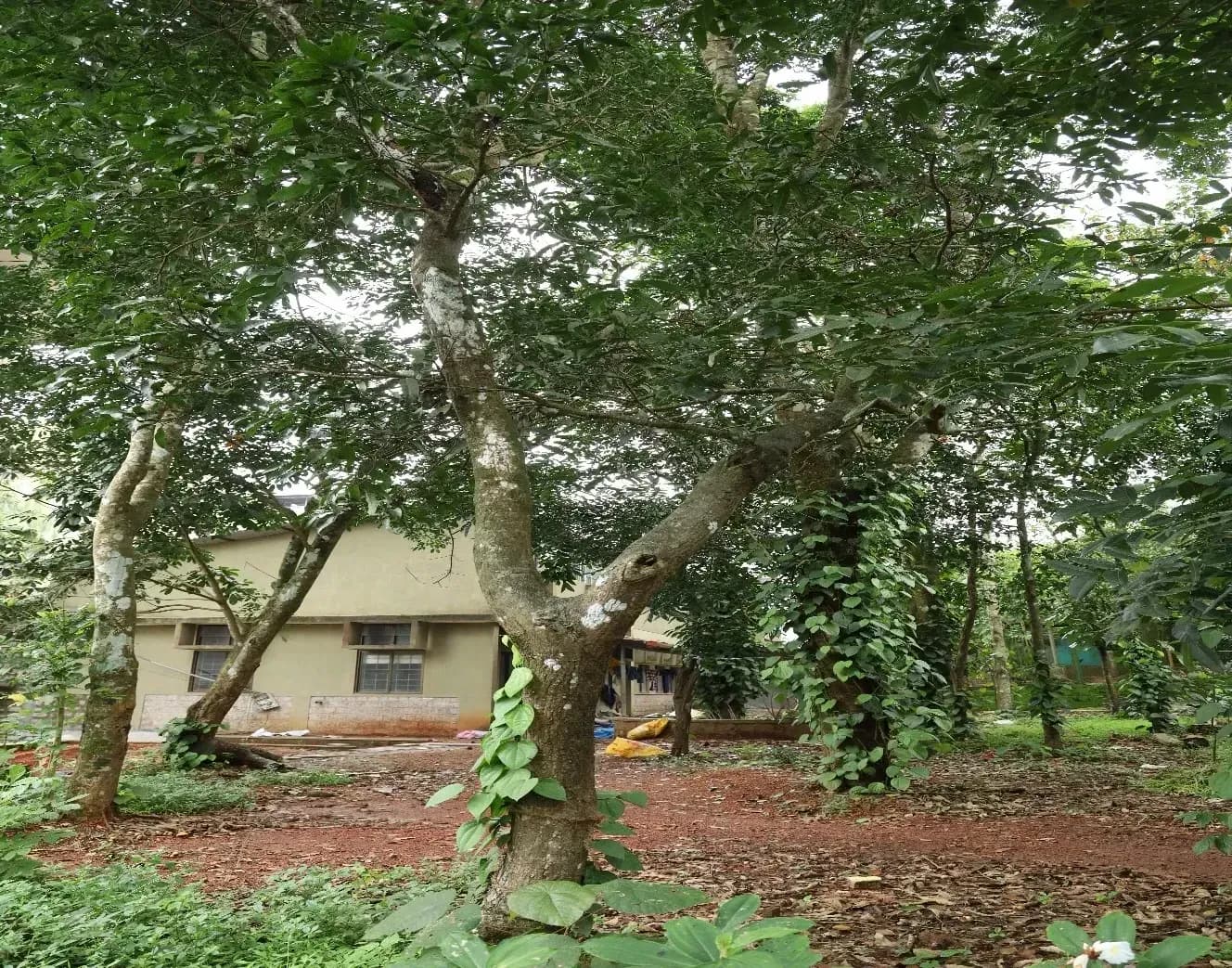
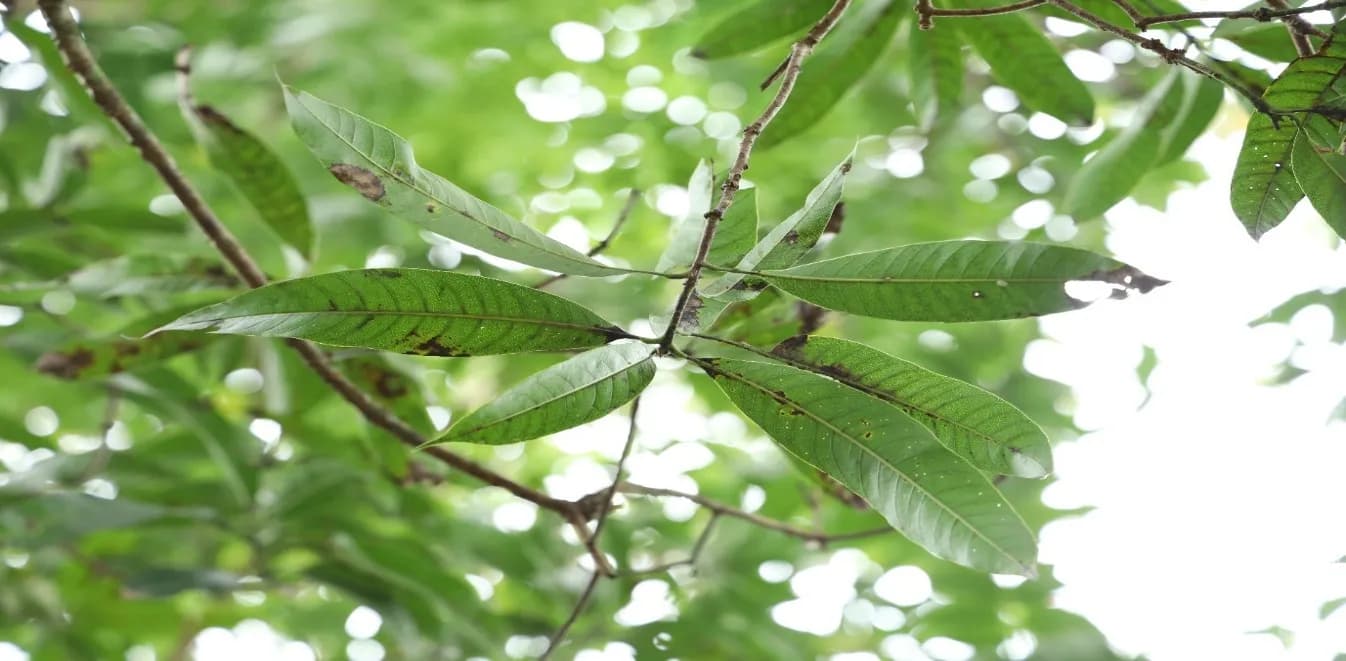
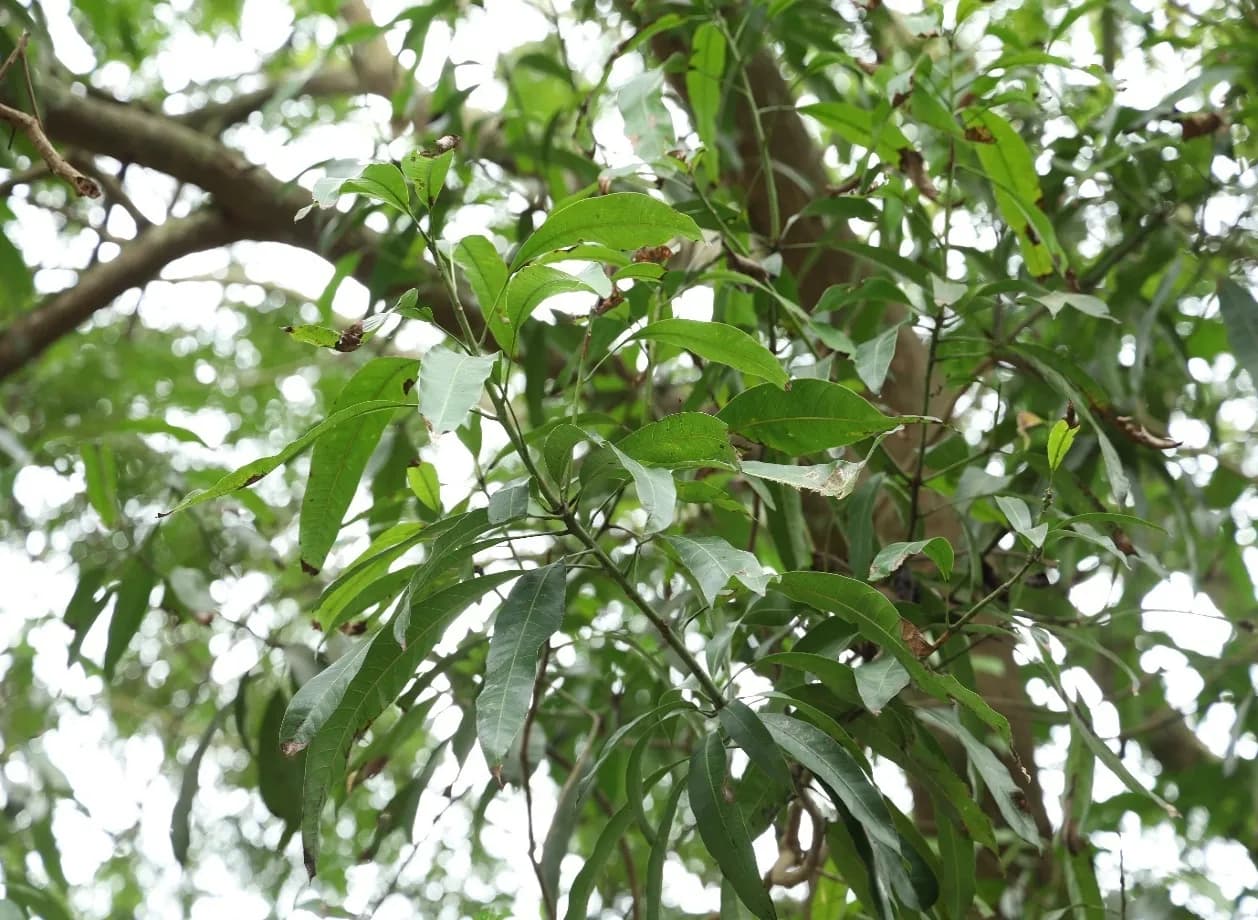
Mango tree, is a large evergreen tree that grows up to 10–40 meters tall with a broad, rounded canopy. Its leathery, lance-shaped leaves are glossy green when mature and reddish or bronze when young. The tree produces small, fragrant flowers in panicle-shaped clusters. The mango fruit is oval or oblong, typically 10–25 cm long, with smooth skin that can be green, yellow, or red. The flesh is juicy and sweet, surrounding a large, flat seed.
Uses
Mango is a highly valued fruit crop, consumed fresh, dried, or processed into products like chutneys, pickles, and juices. It has many varieties, from small, fibrous wild types to sweet, high-yielding cultivated and hybrid types. Mango wood is used in furniture and crafts, while its leaves are considered auspicious, used in decorative torans during festivals to symbolize prosperity and good luck. Medicinally, leaves, bark, and fruit exhibit antioxidant, anti-inflammatory, antidiabetic, and antimicrobial properties.
Growing conditions
Prefers full sunlight and grows best in warm climates with a mean annual temperature of 19–35 °C and annual rainfall between 300–2500 mm. Drought tolerant once established, but flowering and fruit yield depend on a dry period. Requires deep soils to accommodate extensive roots
Habit
Evergreen tree