
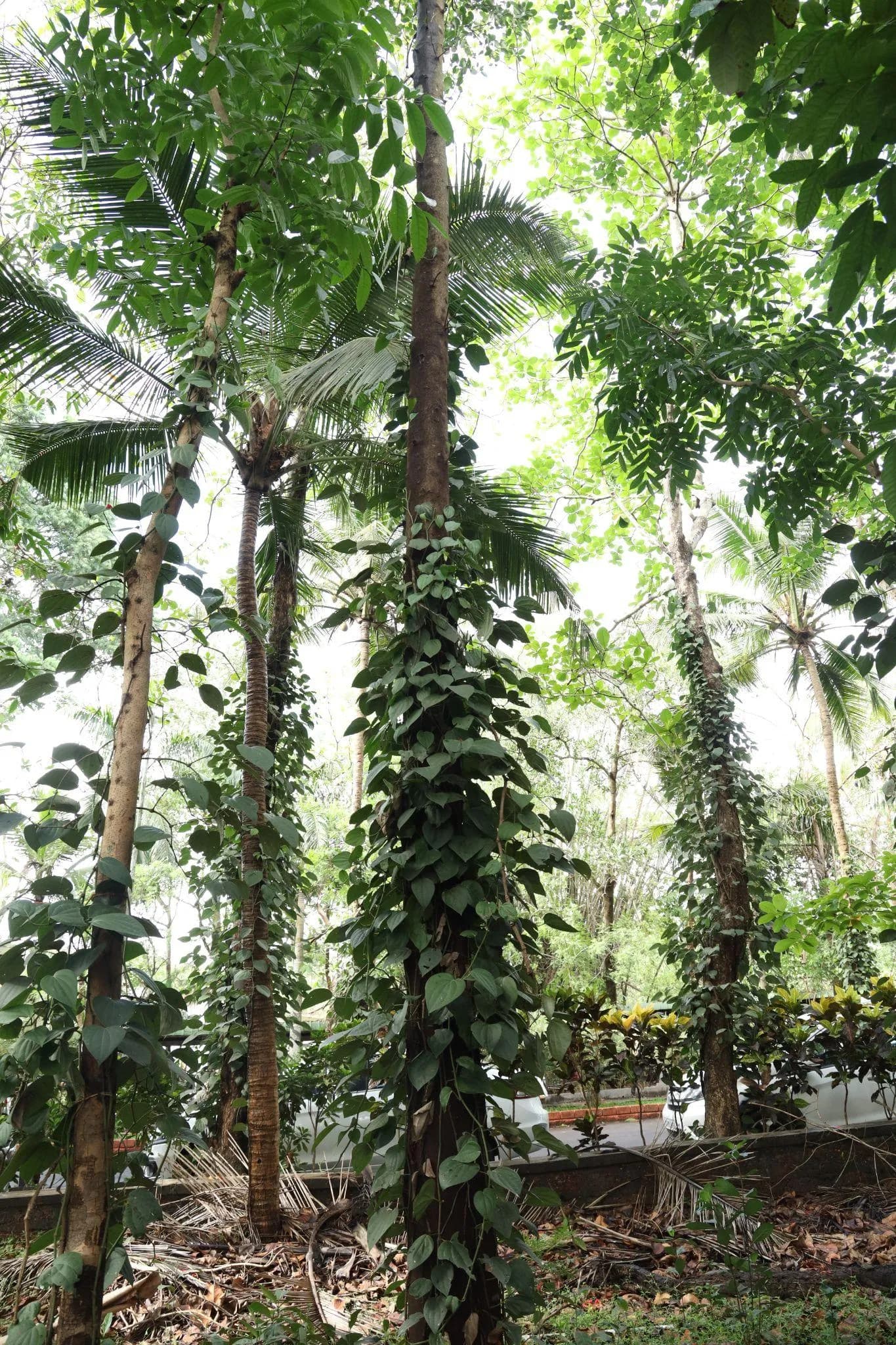
Black Wattle
Acacia mangium Willd.
Location
Main Gate & Parking
Family
Fabaceae
Common names
Black Wattle, Mangium, Hickory Wattle
Native range
Northeastern Queensland (Australia), Papua New Guinea, Maluku Islands (Indonesia).
Habitat
Occurs naturally in coastal tropical lowland forests, mixed woodlands, and savannahs.
Flowering
October-December
Fruiting
January-June
Conservation status
Not threatened, commonly planted in tropical Asia for commercial and ecological purposes
About this plant
Acacia mangium is a fast-growing evergreen tree reaching 25–35 m in height with a straight trunk and broad crown. The bark is smooth and greenish when young, becoming rough and fissured with age. Leaves are actually phyllodes (modified leaf stalks), large, leathery, and sickle-shaped. Flowers are pale cream to white and borne in cylindrical spikes. Fruits are twisted or coiled brown pods containing shiny black seeds.
Uses
Widely planted for timber, paper pulp, and land rehabilitation. Used for erosion control and nitrogen fixation to improve soil fertility. Timber is used in construction, furniture, and veneer.
Growing conditions
Prefers full sunlight and well-drained soils, tolerates acidic and nutrient-poor soils and moderate drought once established. Sensitive to frost. Adapted to tropical conditions with stable warm temperatures
Habit
Evergreen tree