
Copperpod
Peltophorum pterocarpum (DC.) K. Heyne
Location
Cafeteria
Family
Fabaceae
Common names
Copperpod, Yellow Flame Tree, Yellow Poinciana, Radhachura (ರಾಧಾಚೂರ in Kannada)
Native range
Tropical southeastern Asia, including Sri Lanka, India, Myanmar, Thailand, Malaysia, and Indonesia
Habitat
Commonly found in tropical and subtropical regions. Frequently planted along roadsides, in gardens, parks, and large open spaces as an ornamental and shade-providing tree. The species is well adapted to urban environments due to its fast growth and decorative flowers.
Flowering
March – June
Fruiting
June – September
Conservation status
Least Concern (LC)
About this plant
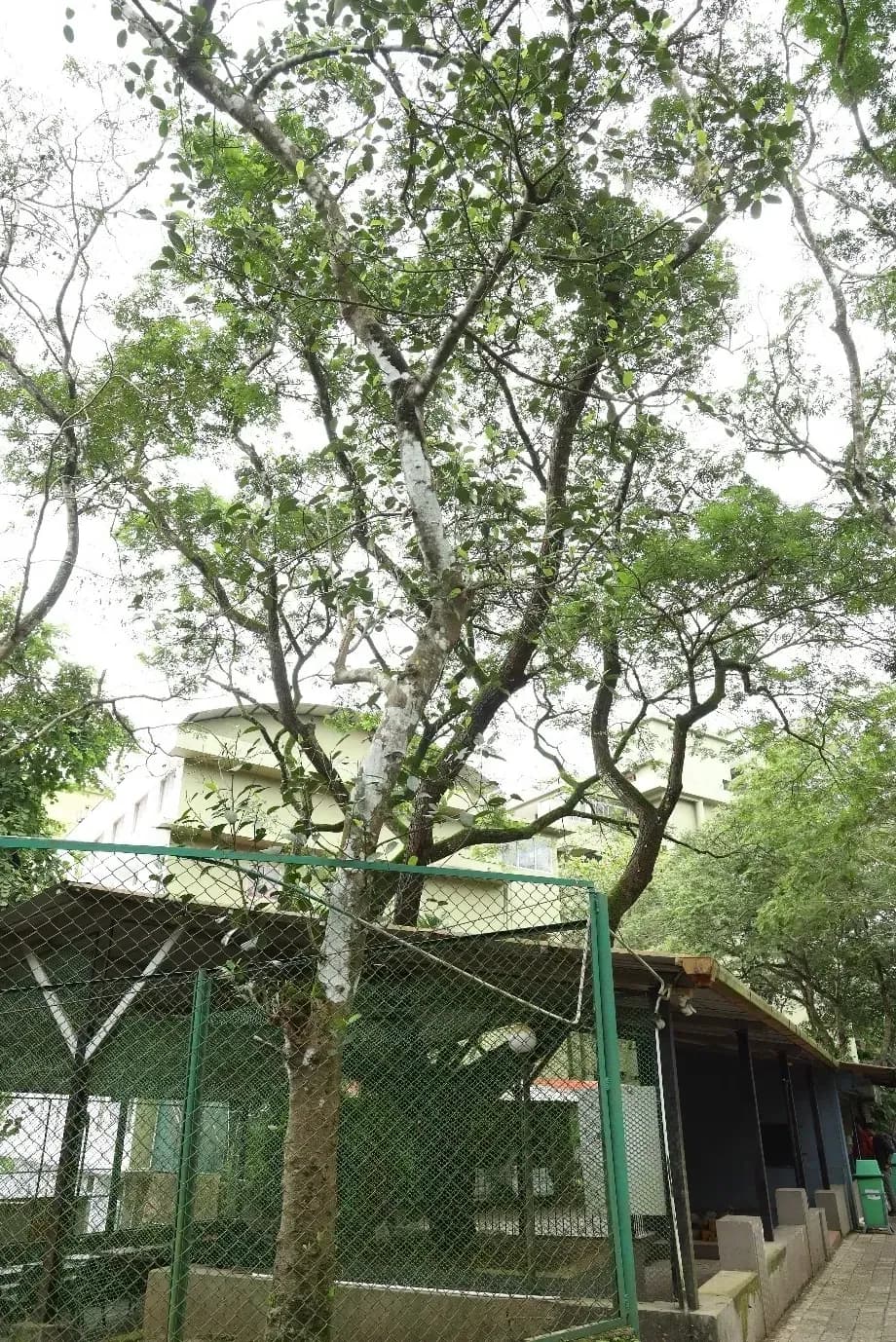
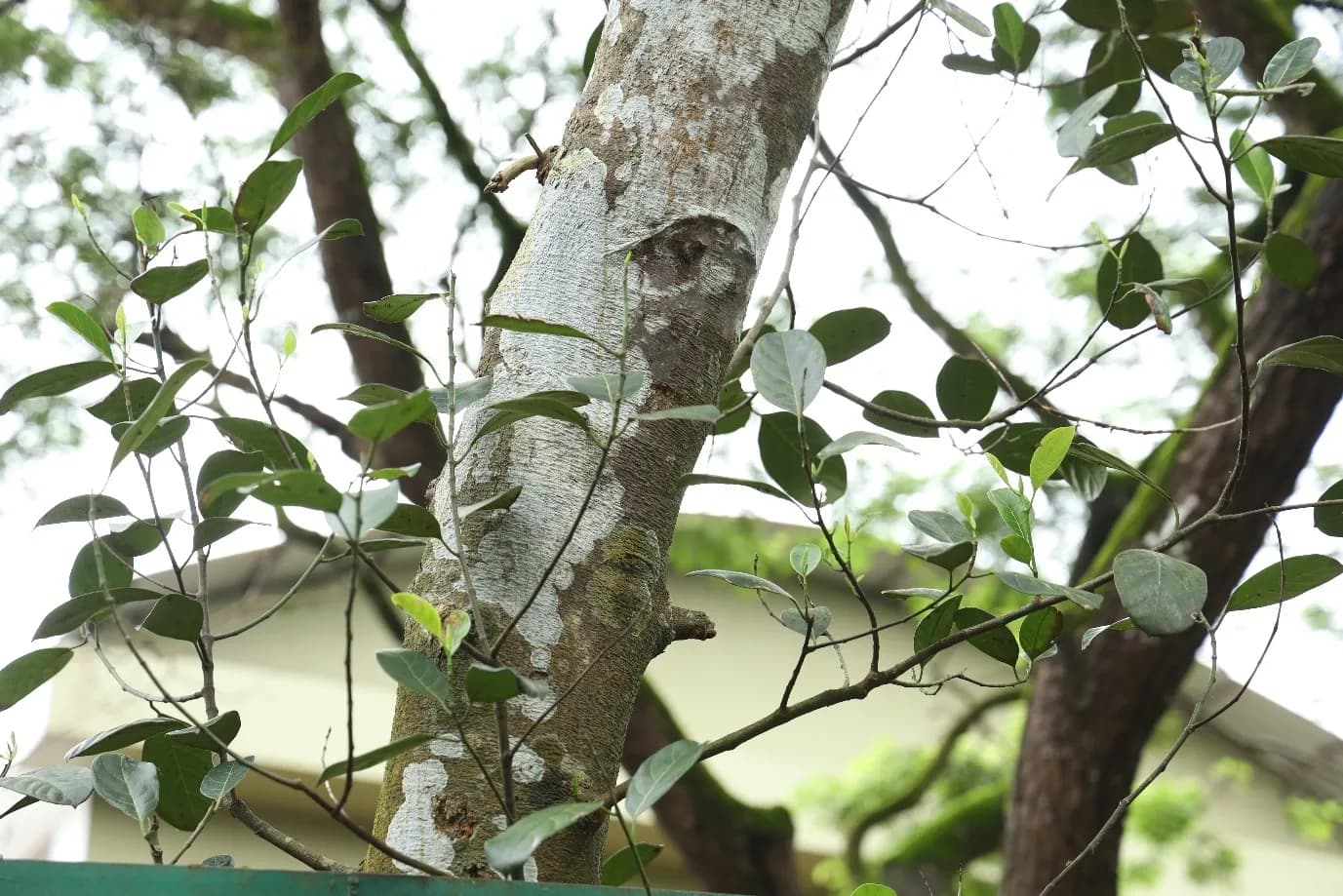
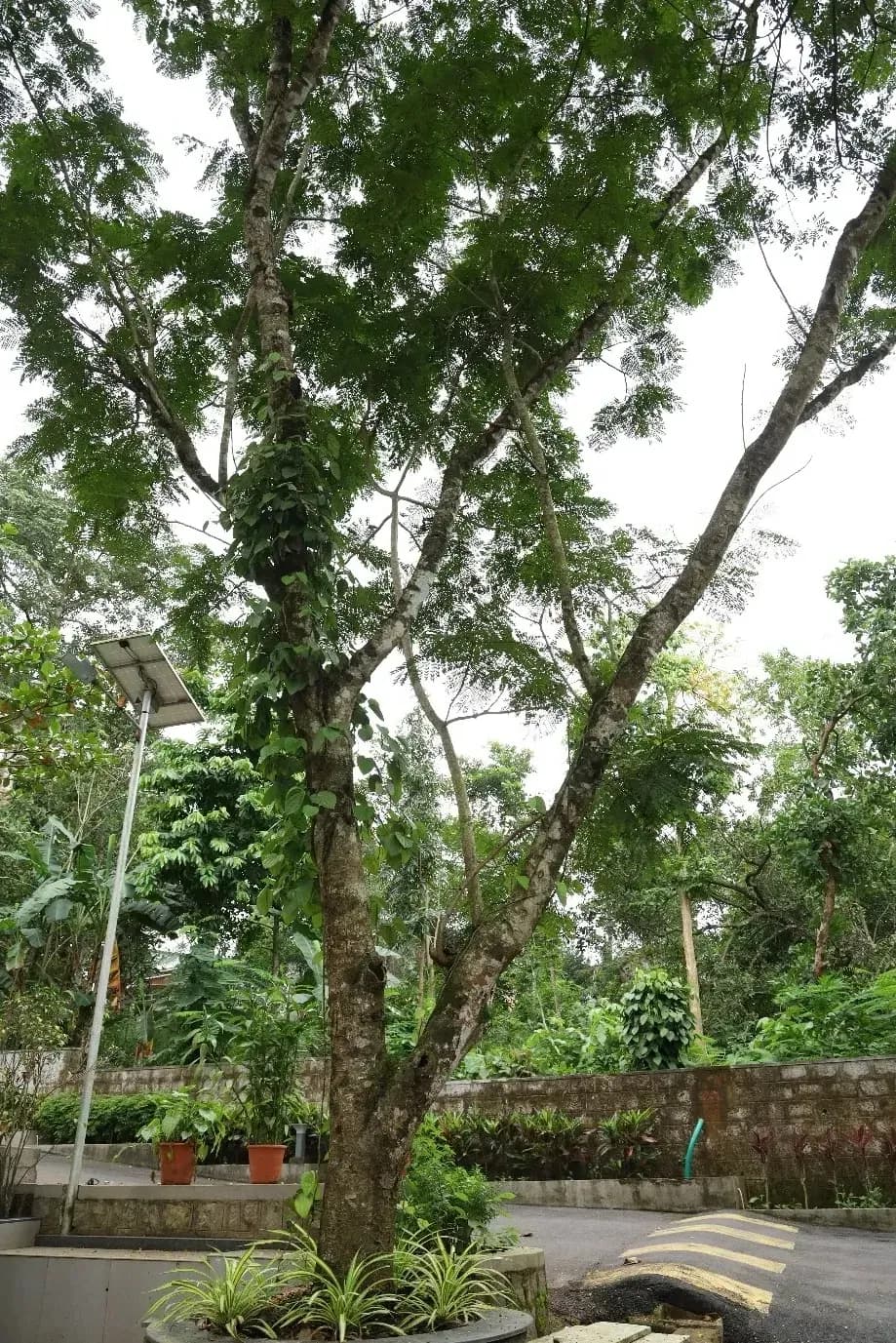
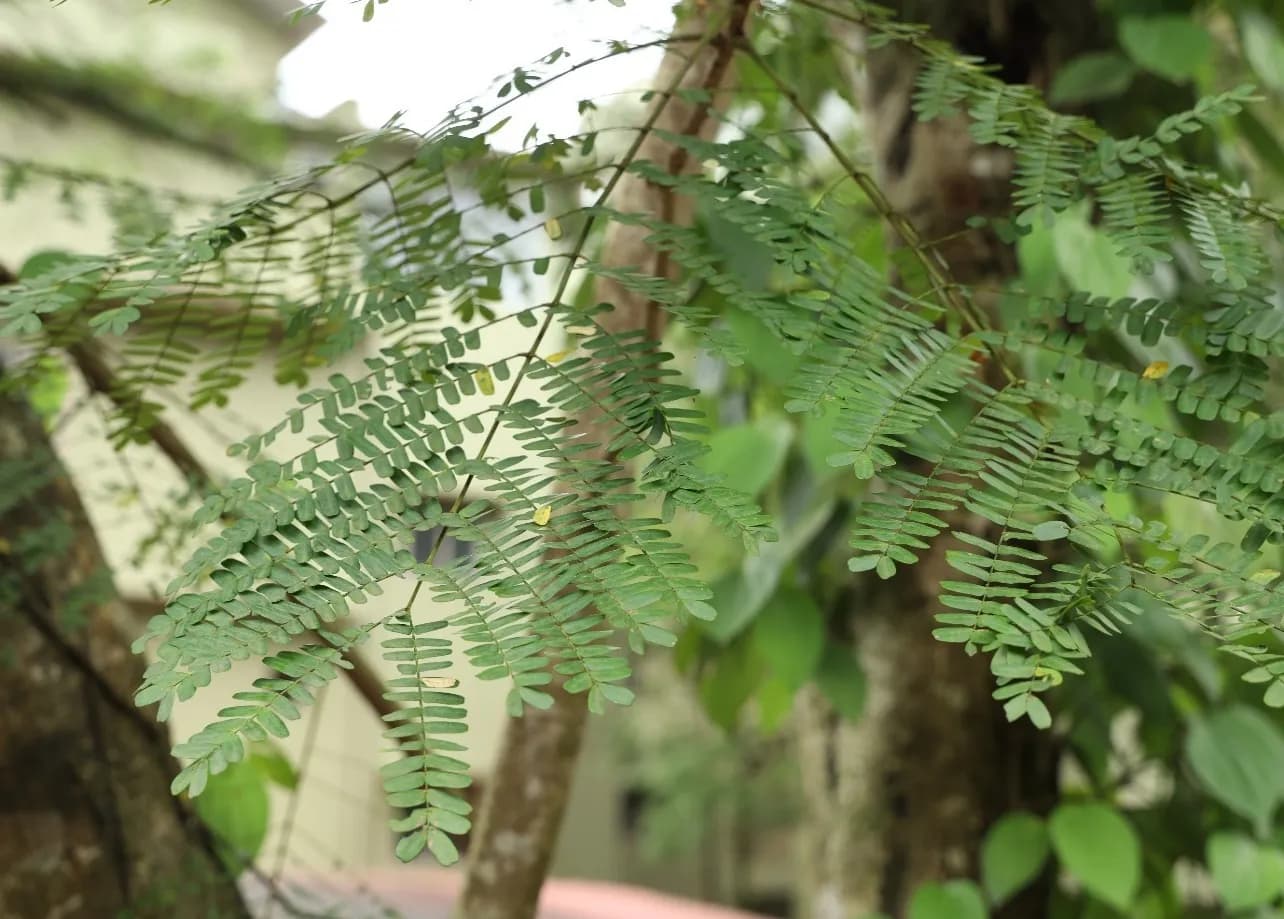
Peltophorum pterocarpum has large, feathery, bipinnate leaves with numerous small leaflets, giving the tree a soft, fern-like appearance. It produces showy, bright yellow flowers in large terminal panicles, which bloom profusely and are visible from a distance. Flowers are followed by flattened, reddish-brown, winged pods, each containing several seeds. Fallen flowers and pods often form a striking golden carpet beneath the tree.
Uses
Primarily used as an ornamental and shade tree in urban landscaping and along avenues. The wood is occasionally used for low-grade furniture, agricultural implements, and fuelwood. In traditional medicine, bark and leaves are used to treat skin diseases, ulcers, and inflammation, though such uses are limited.
Growing conditions
Prefers full sunlight and thrives in well-drained soils. It is drought-tolerant once established and withstands high temperatures, making it suitable for semi-arid and tropical climates. The tree grows rapidly and responds well to pruning
Habit
Fast-growing deciduous tree with a broad, spreading crown and an upright trunk. It typically attains a height of 15–25 m.