
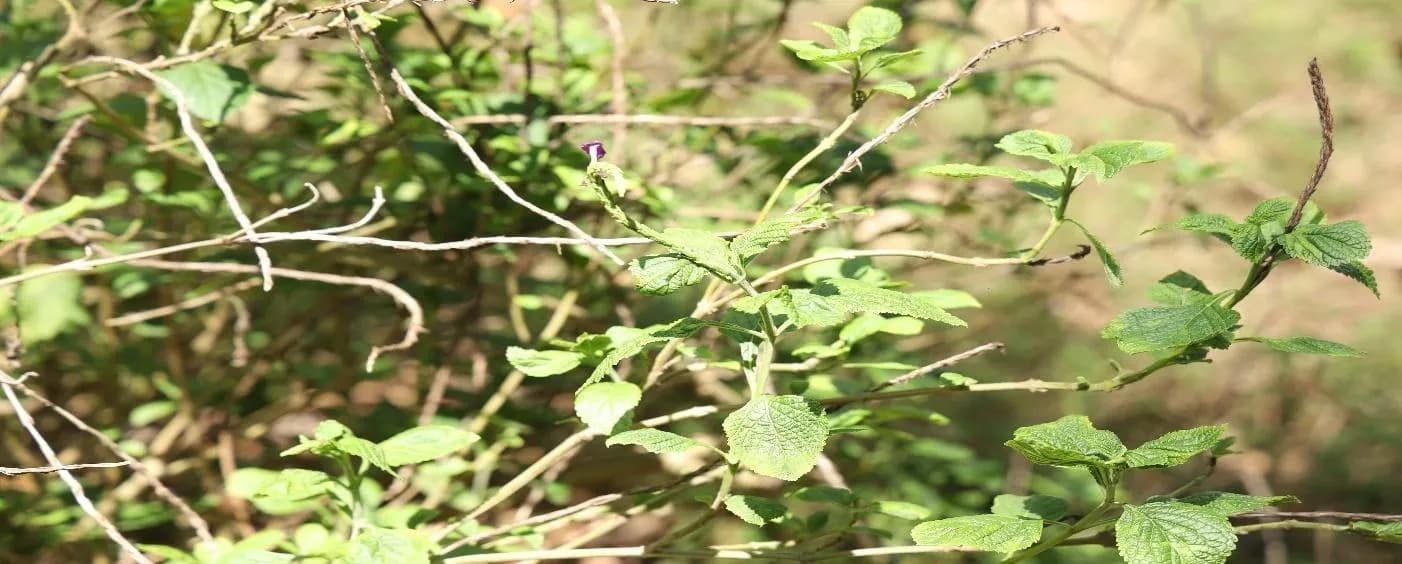
Indian Snakeweed
Stachytarpheta indica (L.) Vahl
Location
Butterfly Garden
Family
Verbenaceae
Common names
Indian Snakeweed
Native range
Tropical Asia
Habitat
Roadsides, open grasslands
Flowering
August to November
Fruiting
November to February (varies slightly by region)
Conservation status
Not typically under threat; common and occasionally considered a minor weed in agriculture
About this plant
This species has dark green, glabrous or sparsely pubescent branches and stems. Leaves are ovate or elliptic, membranous, deeply impressed between the nerves, with sharp serrate margins. The inflorescence is a terminal cylindrical spike, 10-40 cm long, with pale purple to deep blue sessile flowers blooming in small groups. The calyx is tubular with 2 strong teeth; the corolla is tubular, curved, with five lobes and two sessile stamens. The fruit consists of dry, conical capsules splitting into two parts, each containing a seed.
Uses
Stachytarpheta indica is used as a leafy vegetable in some regions (e.g., West Africa) and for local medicinal purposes. It has traditional uses including treatment for digestive ailments and respiratory conditions, reflecting its value in ethnomedicine.
Growing conditions
Prefers tropical climates, seasonally dry biomes, and grows best in clayey or alluvial soils with good moisture retention. The plant tolerates cultivation disturbances and regenerates after cultural practices like ploughing and weeding
Habit
Erect or spreading small shrub