
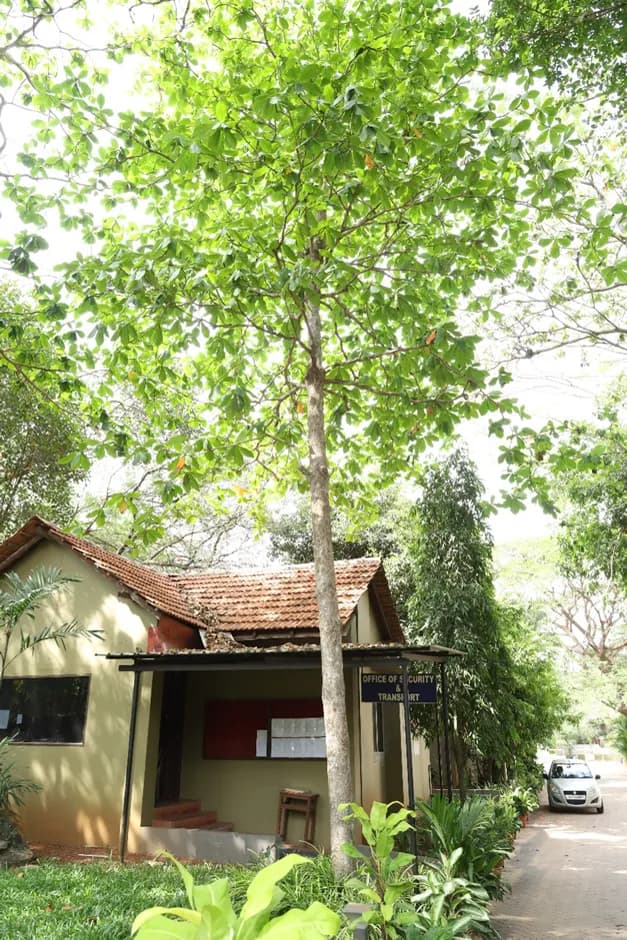

Indian Almond
Terminalia catappa L.
Location
Footpath
Family
Combretaceae
Common names
Indian Almond, Tropical Almond, Sea Almond
Native range
Tropical Asia, possibly India or Malaysia
Habitat
Coastal areas, roadsides, and tropical lowlands
Flowering
March – May
Fruiting
April – July (may vary with location)
Conservation status
Least Concern (LC)
About this plant
Terminalia catappa is a medium to large tree growing up to 25–35 meters tall, with a distinctive horizontal, layered branching pattern and a symmetrical, dome-shaped crown. The large, glossy, obovate leaves turn bright red, yellow, or purple before falling—giving it a striking seasonal appearance. The small, inconspicuous white to pale green flowers grows in axillary spikes. The fruit is a flattened, almond-shaped drupe that turns reddish-purple when ripe. Inside is an edible kernel often referred to as the Indian almond.
Uses
In the Karavali region, Terminalia catappa (locally known as "Baadamara" in Kannada) is a common sight along coastal roads and beaches, planted for shade and its ornamental beauty. The leaves are traditionally used in folk medicine and are also added to fish tanks (especially for ornamental fish) for their antibacterial and antifungal properties. The edible seeds are nutritious and mildly sweet, though not commonly harvested commercially in the region.
Growing conditions
Thrives in tropical coastal areas with sandy, well-drained soil. Tolerates salinity, strong winds, and occasional drought, making it ideal for shoreline planting. Requires full sun and minimal maintenance once established
Habit
Large, spreading, deciduous tree