
Jamun
Syzygium cumini (L.) Skeels
Location
Mechanical Block
Family
Myrtaceae
Common names
Jamun, Java Plum, Black Plum, Nerale Hannu (Kannada), Naaval Pazham (Tamil), Jam (Hindi), Njerinjambalam (Malayalam), Nerale (Tulu)
Native range
Indian subcontinent and Southeast Asia, including India, Sri Lanka, Myanmar, Malaysia, the Philippines, and Indonesia.
Habitat
Typically found in tropical and subtropical forest habitats such as moist evergreen, semi-evergreen, and dry deciduous forests. It commonly grows along riverbanks, wetlands, and other wet locations, but can also survive in drier sites once established. The species is widely cultivated in homesteads, agricultural lands, and urban areas.
Flowering
March to May
Fruiting
August to September
Conservation status
Least Concern; widespread and commonly cultivated across both native and introduced regions
About this plant
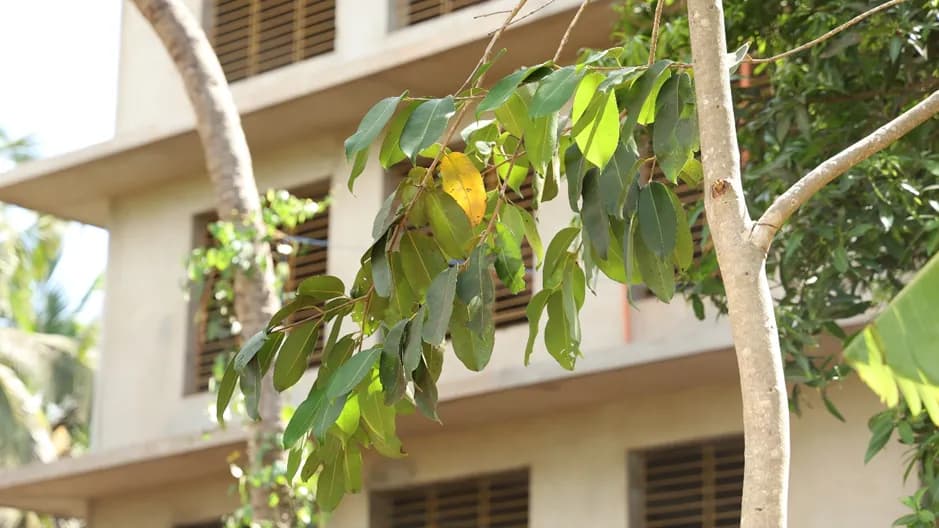
Leaves are smooth, glossy, and elliptic to oblong or ovate in shape. The tree bears white to pale pink flowers arranged in panicles. Fruits are dark purple to black berries that are edible, with a sweet to slightly acidic taste.
Uses
Widely valued for its nutritious and medicinal fruits, known for anti-diabetic, antioxidant, and digestive properties. The timber is used locally for construction and making tools. The fruits and seeds are consumed fresh or processed into juices, jams, and traditional medicinal preparations.
Growing conditions
Thrives best in moist environments with annual rainfall exceeding 1,000 mm. It tolerates waterlogging as well as comparatively drier conditions once mature and can grow in a wide variety of soils, including alluvial, lateritic, sandy, and calcareous types
Habit
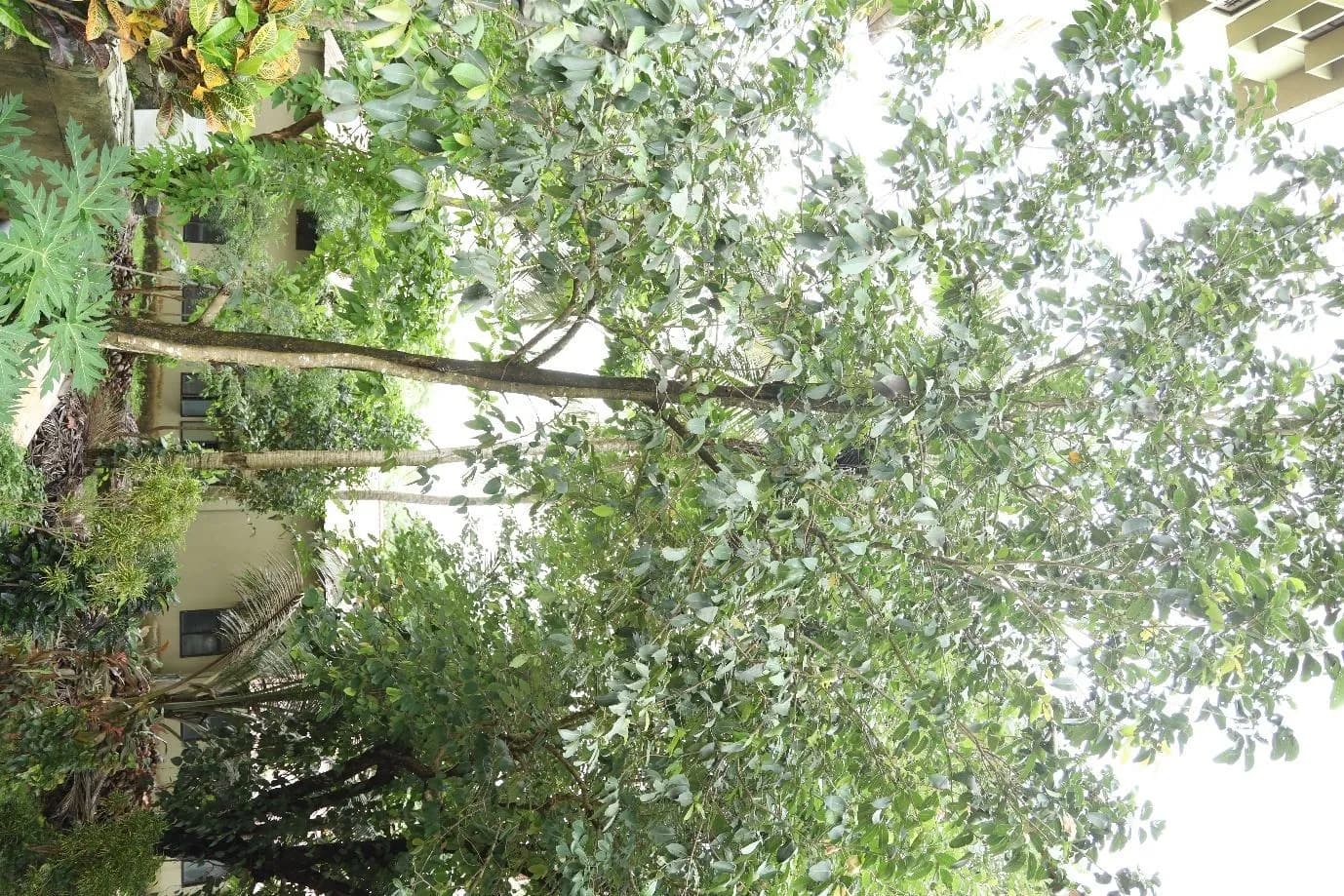
A fast-growing evergreen tree reaching heights of 13–30 meters, with a broad crown that may extend up to 11 meters in width. The trunk is often multi-stemmed near the base.