
Giant Thorny Bamboo
Bambusa bambos (L.) Voss
Location
Main Gate & Parking
Family
Poaceae
Common names
Giant Thorny Bamboo, Indian Thorny Bamboo
Native range
Indigenous to India and Southeast Asia
Habitat
Tropical and subtropical forests. Frequently found in moist deciduous forests, hillsides, riverbanks, and valleys.
Flowering
Grows vegetatively for several decades (30–60 years) before gregarious flowering. Entire clumps may flower simultaneously and then die (monocarpic flowering)
Fruiting
After flowering, produces seeds (rarely viable)
Conservation status
Although not assessed individually, it is not currently considered threatened. The species is locally common in many areas; however, habitat degradation may pose potential risks
About this plant
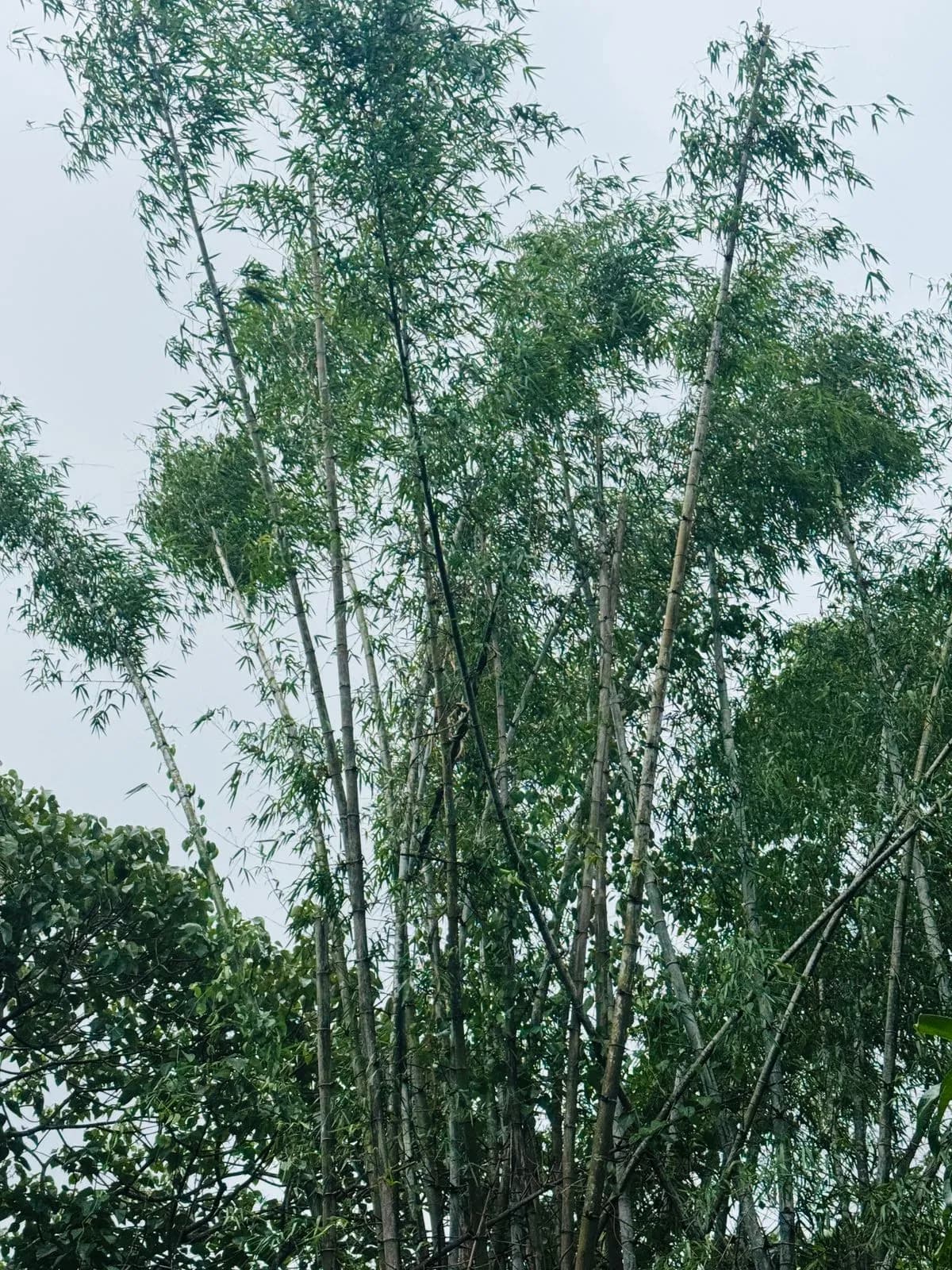
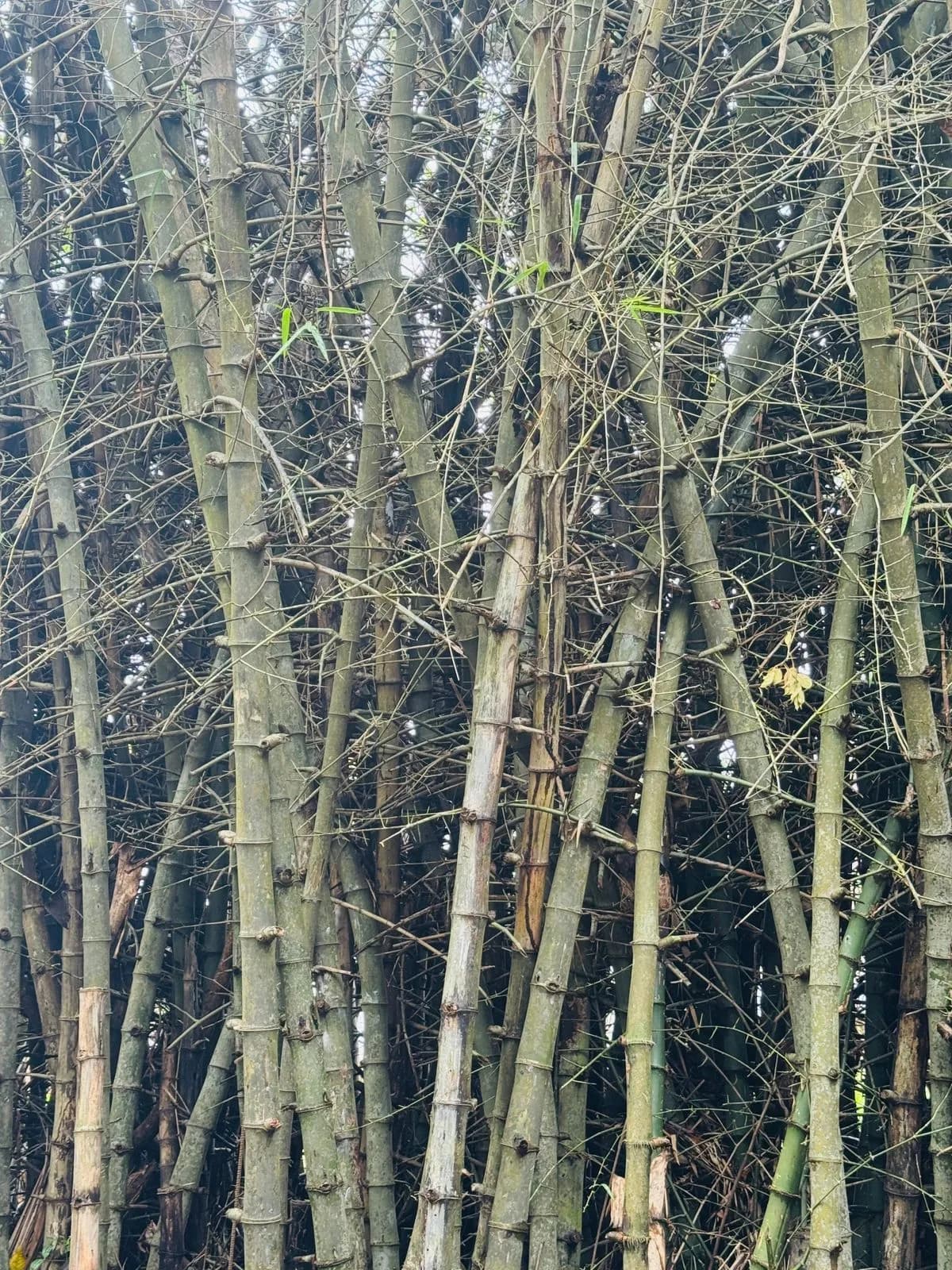
Grows to a height of about 20–30 meters. The culms are green in the early stages and gradually turn yellowish to brown as they mature. Nodes bear numerous strong, sharp spines, which are more prominent in young shoots. Leaves are lanceolate in shape, measuring around 15–25 cm in length. The culm walls are thick and sturdy, and aerial roots are present near the base.
Uses
Used in rituals, festivals, and traditional crafts. Young shoots are edible (after proper processing to remove bitterness and toxins); cooked in curries or pickled in some regions
Growing conditions
Grows best in well-drained, loamy soils rich in organic matter. It requires ample sunlight but can also tolerate partial shade. The plant thrives in tropical to subtropical regions with adequate rainfall
Habit
Tall, perennial, woody, evergreen grass (bamboo) • Grows in dense clumps with multiple culms (stems).