

Royal Palm
Roystonea regia (Kunth) O. F. Cook
Location
Civil New Block
Family
Arecaceae
Common names
Royal Palm, Cuban Royal Palm, Florida Royal Palm
Native range
Cuba, parts of Central America, Mexico, southern Florida, and the Caribbean islands.
Habitat
Occurs naturally in tropical and subtropical coastal and lowland regions, including strand swamps, hardwood hammocks, hillsides, and valleys. It grows in well-drained sandy to loamy soils and tolerates saline coastal conditions. The species is also common in gardens, urban landscapes, and parks worldwide.
Flowering
Mostly year-round in tropical climates
Fruiting
Follows the flowering period
Conservation status
Not threatened; widely cultivated and naturalized beyond its native range
About this plant
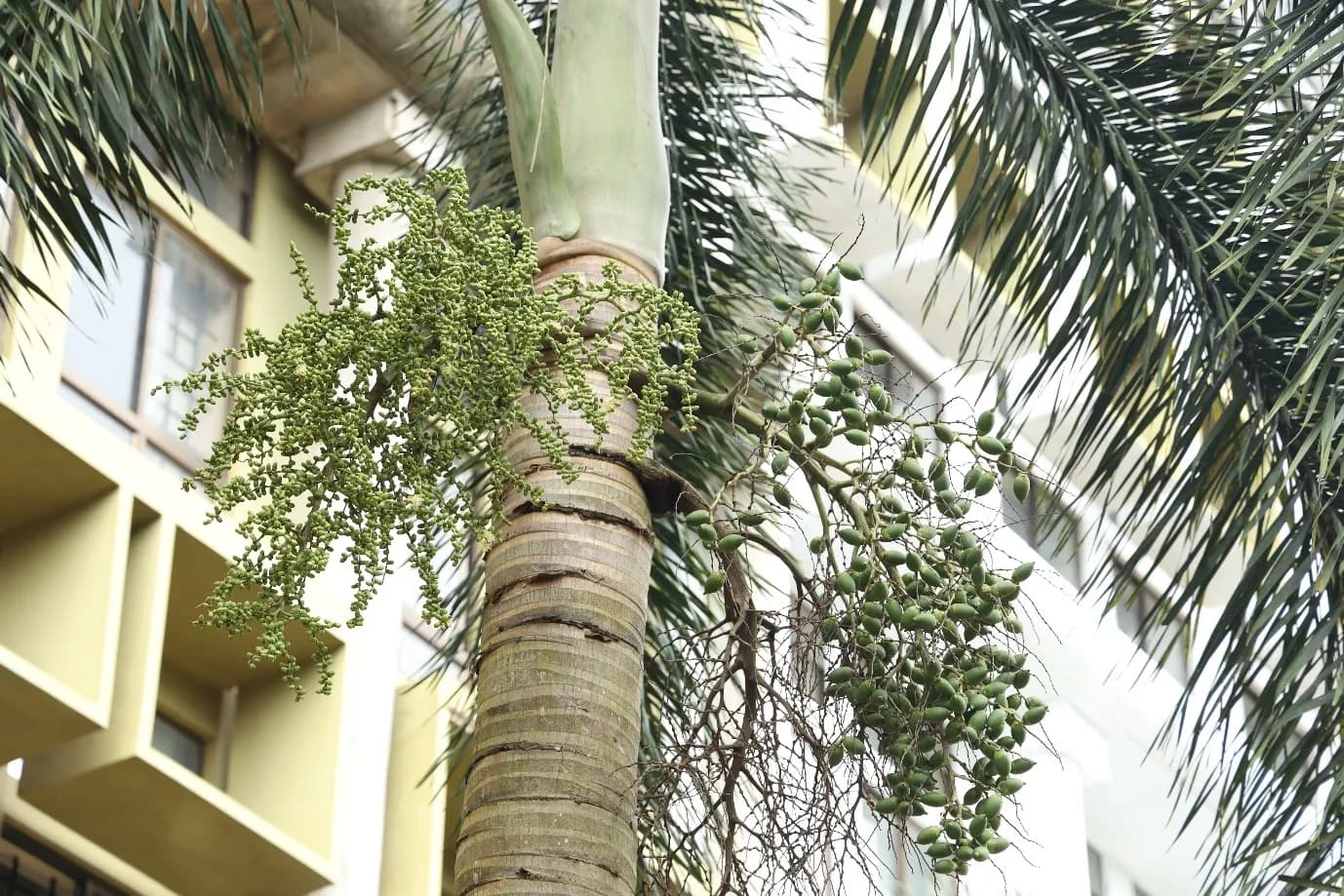
Leaves are large, bright green, and pinnate, with leaflets approximately 20 cm (8 inches) long. Inflorescences bearing both male and female white flowers emerge near the base of the crownshaft. Fruits are small, ellipsoid, purple to black when ripe, and contain a single seed.
Uses
Widely cultivated as an ornamental and shade palm in tropical and subtropical regions. Its elegant appearance makes it popular for avenue plantations and landscape design. Although the seeds have some traditional uses, the palm is primarily valued for its ornamental appeal.
Growing conditions
Prefers full sunlight and consistently warm temperatures. It thrives in tropical and subtropical climates and requires moderate watering and well-drained soils. The species is tolerant of salt and sandy soils, making it ideal for coastal environments
Habit
A majestic, tall, and robust evergreen palm reaching heights of 20–30 meters or more, with a smooth, light-grey trunk. The trunk has a characteristic swollen base and a prominent crownshaft. The palm bears a large, symmetrical crown consisting of 15–20 large pinnate leaves.