
Malabar Memecylon
Memecylon malabaricum (C.B.Clarke) Cogn.
Location
Botanical Garden
Family
Melastomataceae.
Common names
Malabar Memecylon, Ollekodi, Malabar Ironwood
Native range
Western Ghats of India.
Habitat
Evergreen and semi-evergreen forests of the Western Ghats.
Flowering
Generally observed during the monsoon and post-monsoon seasons.
Fruiting
Generally observed during the monsoon and post-monsoon seasons.
Conservation status
Endemic to the Western Ghats; locally conserved but vulnerable to habitat loss
About this plant
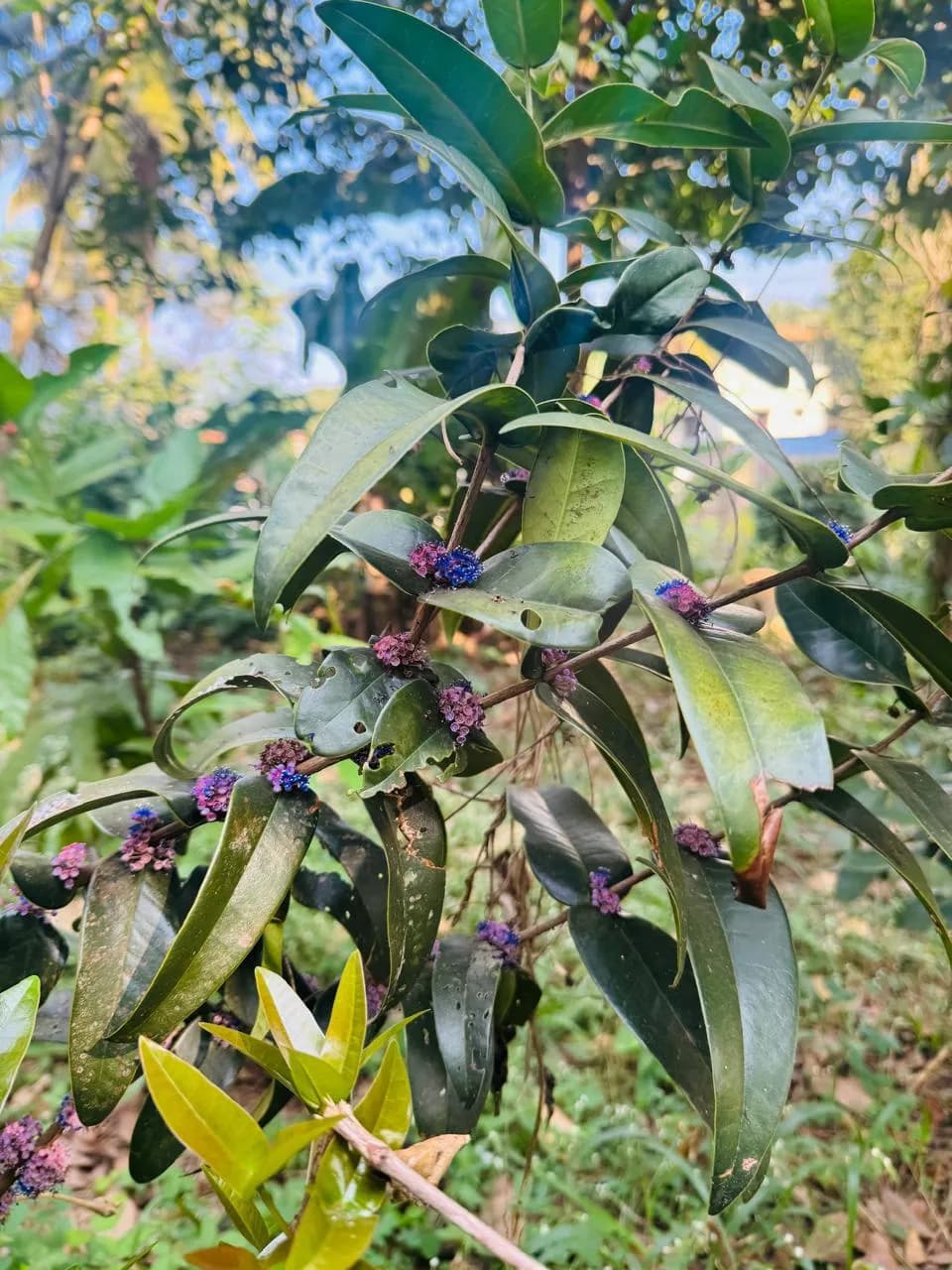
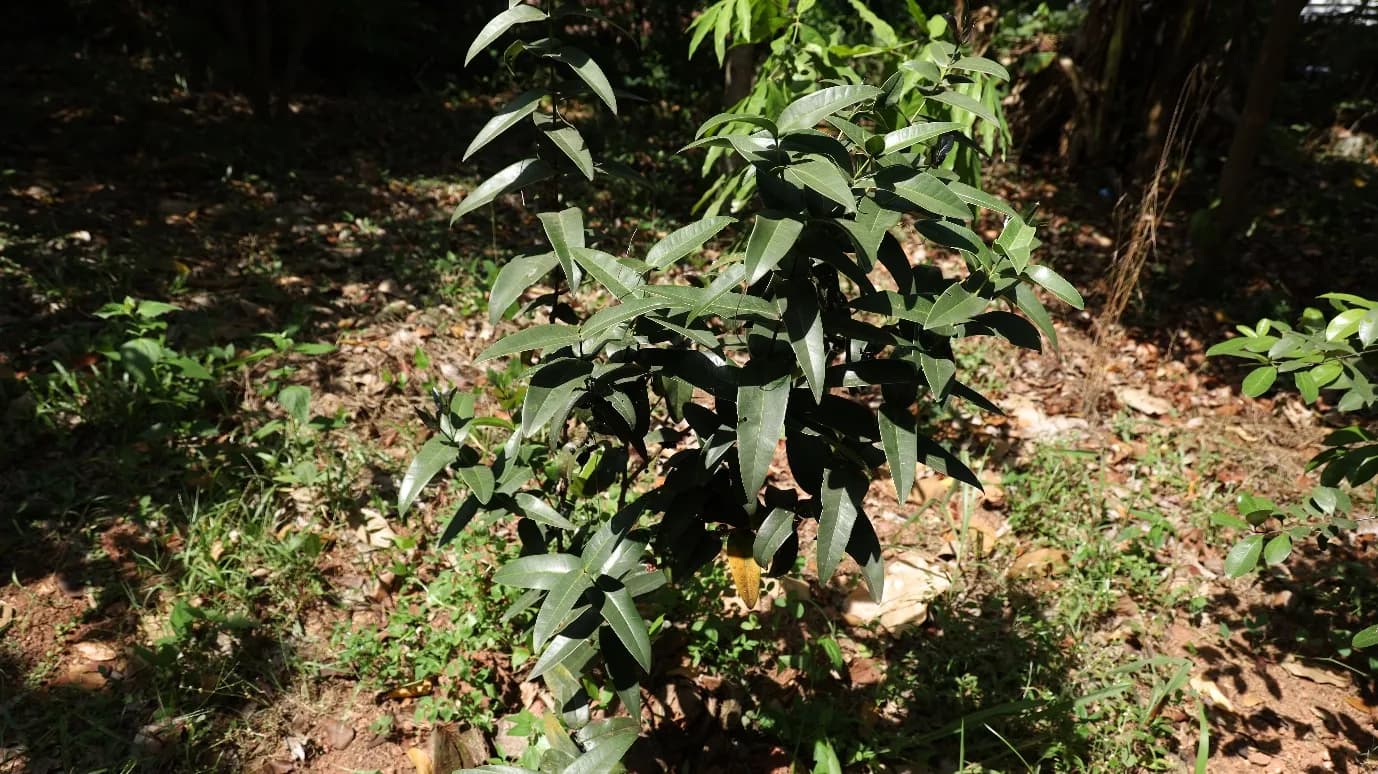
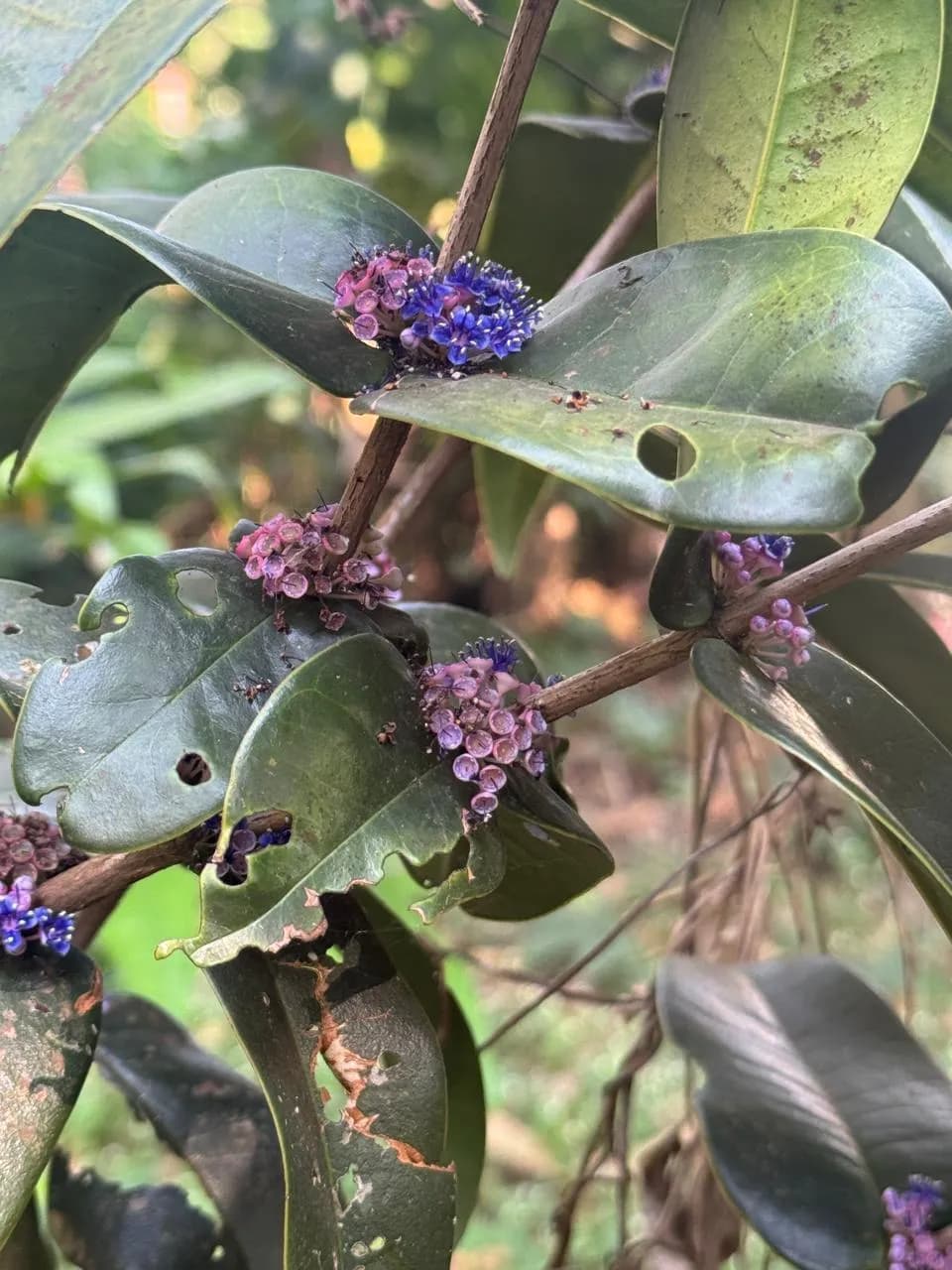
This species grows up to about 6–12 metres in height. Leaves are simple, opposite, elliptic to ovate, thick and leathery, with a glossy dark green surface and distinct lateral veins. Flowers are small, bluish to violet, borne in clustered inflorescences. Fruits are small, globose berries that turn dark purple to black on maturity.
Uses
The species is primarily valued for its ecological importance and ornamental appeal, particularly its attractive bluish-violet flowers. Some local and traditional medicinal uses of related Memecylon species include the use of leaves and bark in folk remedies, though M. malabaricum itself has limited documented medicinal applications.
Growing conditions
Thrives in moist, well-drained soils under partial shade to filtered sunlight. Prefers humid tropical climates and grows well in forest understory conditions
Habit
Evergreen shrub or small to medium-sized tree.