
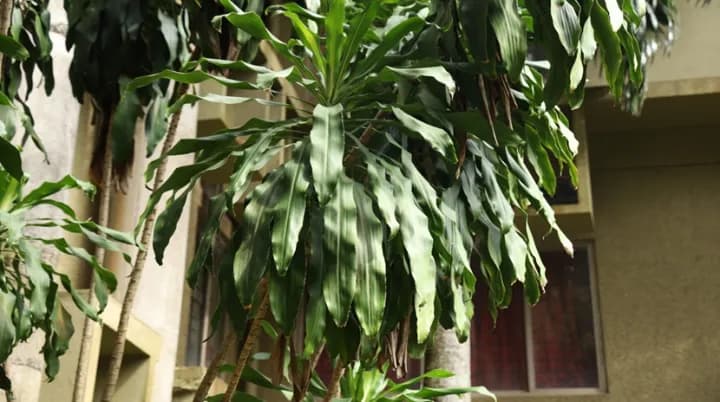
Alexandrian Laurel
Calophyllum inophyllum L.
Location
Administrative Block 1
Family
Calophyllaceae
Common names
Alexandrian Laurel, Beach Calophyllum, Tamanu, Mastwood
Native range
Coastal regions of the Old-World Tropics
Habitat
A littoral tree mainly found growing above the high-tide mark along sea coasts, sandy beaches, rocky and sandy shores, and occasionally inland on sandy soils up to 200 meters elevation.
Flowering
October-March
Fruiting
Year-round, with fruits maturing several months after flowering
Conservation status
Not threatened; widely cultivated and naturalized in many tropical coastal areas
About this plant
This species is 8 to 20 meters tall with a broad, spreading crown and irregular, gnarled branches. The bark is thick, grey-brown to dark brown, exuding a clear resin when wounded. Leaves are simple, opposite, glossy above and pale beneath, elliptic to oblong, 6–20 cm long. Flowers are bisexual, white with a sweet fragrance, borne in axillary clusters. Fruits are round, green to yellow drupes with thin pulp and a single large seed.
Uses
The tree is widely cultivated as a shade and ornamental tree in coastal areas. Its oil, extracted from the seeds (known as Tamanu oil), is used traditionally to treat skin diseases, wounds, and inflammation. The wood is valued for boat building, furniture, and carving.
Growing conditions
Prefers warm, humid tropical climates with annual rainfall from 750 to 5000 mm and temperatures between 7°C and 48°C. Grows best in full sun to partial shade on sandy or loamy soils and is tolerant of drought, salt spray, and wind but sensitive to frost
Habit
A large evergreen tree