
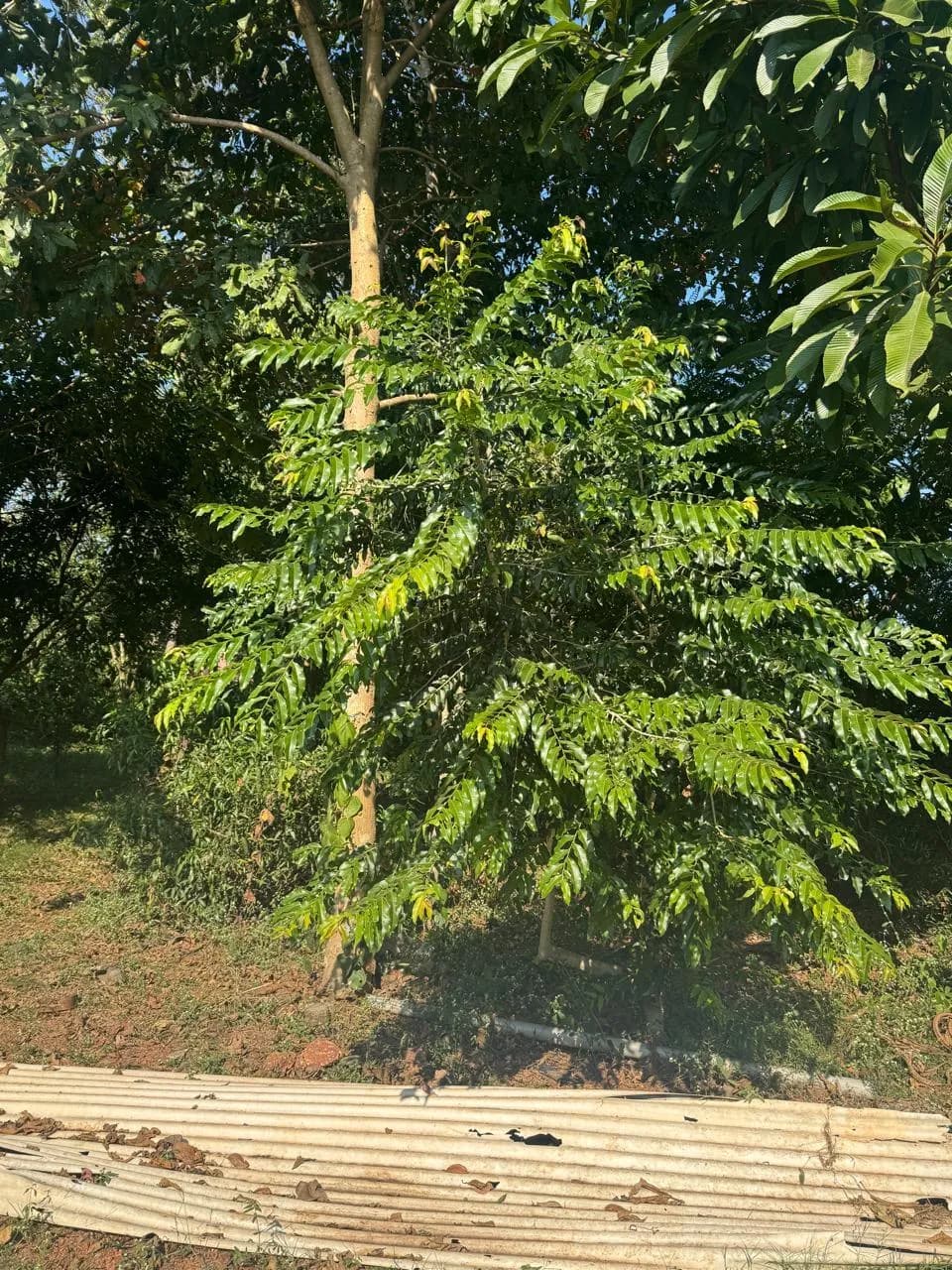
Putranjiva
Putranjiva roxburghii Wall.
Location
Botanical Garden
Family
Putranjivaceae (formerly Euphorbiaceae)
Common names
Putranjiva, Putrajeeva Tree, Child-life Tree
Native range
Indian subcontinent and Southeast Asia
Habitat
Tropical and subtropical regions; dry and moist deciduous forests
Flowering
December-April
Fruiting
December-April
Conservation status
Not threatened; widely cultivated and naturally occurring across its native range
About this plant
Putranjiva roxburghii is a medium-sized, evergreen tree growing up to 12–18 metres in height, with a dense, rounded crown. The bark is grey to dark brown, rough, and fissured. Leaves are simple, alternate, narrow elliptic to lanceolate, leathery, glossy dark green, and resemble neem leaves in appearance. The tree is dioecious, bearing male and female flowers on separate plants. Flowers are small, greenish, and borne in axillary clusters. Fruits are ovoid to ellipsoid drupes, green when young and turning yellowish to reddish-brown on maturity, each containing a hard seed.
Uses
The seeds are traditionally used to make amulets and necklaces, especially believed in Ayurveda and folk traditions to protect children and promote longevity. Medicinally, bark, leaves, and seeds are used in traditional remedies for fever, rheumatism, inflammation, and skin diseases. The tree is also planted as an ornamental and avenue tree due to its dense evergreen foliage.
Growing conditions
Thrives in full sun to partial shade and prefers well-drained loamy to sandy soils. It is drought-tolerant once established and moderately tolerant of urban pollution. Does not tolerate prolonged waterlogging. Suitable for roadside planting, gardens, and parks
Habit
Evergreen tree