
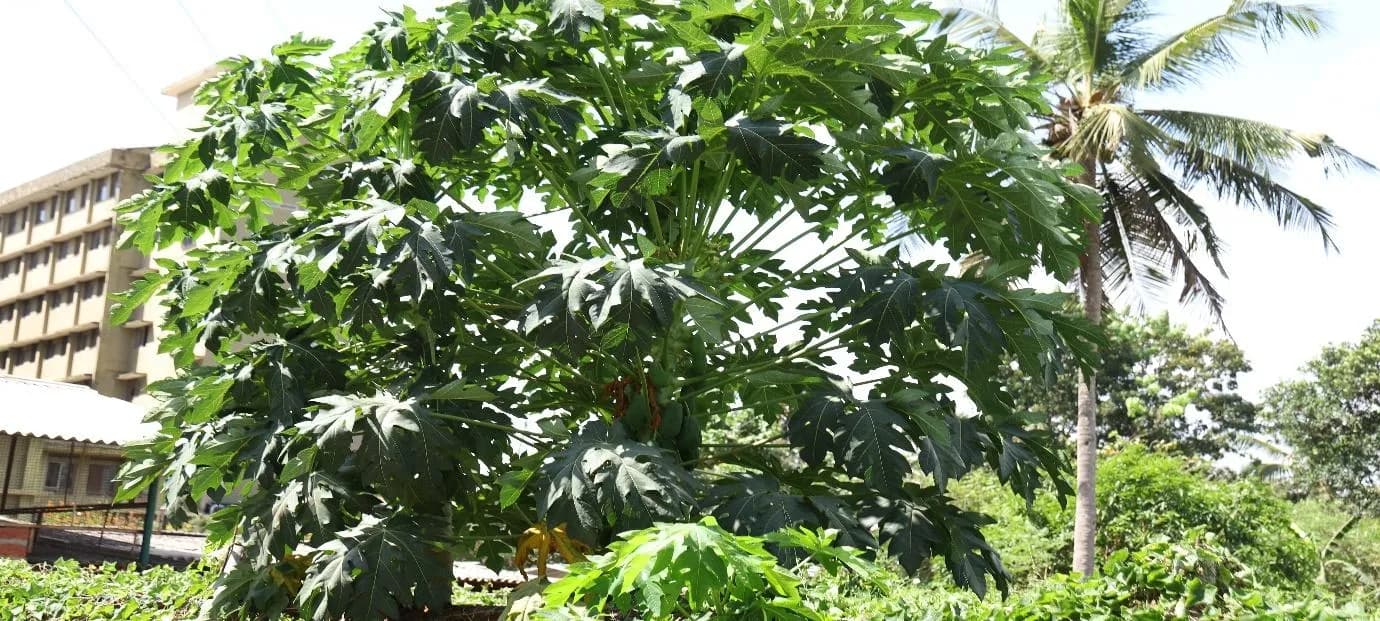
Papaya
Carica papaya L.
Location
Vegetable Garden
Family
Caricaceae
Common names
Papaya, Pawpaw
Native range
Tropical Americas (Southern Mexico and Central America)
Habitat
Tropical and subtropical regions; commonly cultivated in home gardens and farms
Flowering
3–5 months after planting (varies with conditions)
Fruiting
6–9 months after planting; year-round in tropical climates
Conservation status
Not Evaluated
About this plant
Carica papaya is a small, soft-wooded tree that typically grows up to 5–10 meters tall. It has a hollow, greenish trunk with noticeable leaf scars and a crown of large, deeply lobed leaves on long petioles. The tree may bear male, female, or hermaphrodite flowers depending on the variety. The fruit is large, oval to pear-shaped, green when unripe and turning yellow to orange when ripe.
Uses
In the Karavali region, papaya (locally called "Papayi hannu") is grown in backyards and used both as a fruit and vegetable. Ripe papaya is eaten fresh, made into juices, desserts, or pickles. Raw (green) papaya is used in curries, stir-fries, and sambar. The leaves and latex are traditionally used for their medicinal properties, especially for aiding digestion and treating fevers. Papaya enzymes (papain) are also used in tenderizing meat and have Ayurvedic applications.
Growing conditions
Requires a warm, frost-free climate with plenty of sunlight. Grows best in well-drained, fertile soil rich in organic matter. Sensitive to waterlogging and cold temperatures. Regular watering and mulching help support healthy fruiting. Begins to bear fruit within 6–12 months of planting
Habit
Fast-growing, short-lived, herbaceous tree