
Casuarina
Casuarina equisetifolia L.
Location
Vegetable Garden
Family
Casuarinaceae
Common names
Casuarina, Australian Pine, Ironwood, Whistling Pine
Native range
Australia, Southeast Asia, and Pacific Islands
Habitat
Coastal sandy areas, dunes, and dry tropical regions
Flowering
Mostly in dry seasons; varies by region
Fruiting
3–4 months after flowering; seeds dispersed by wind
Conservation status
Least Concern (LC)
About this plant
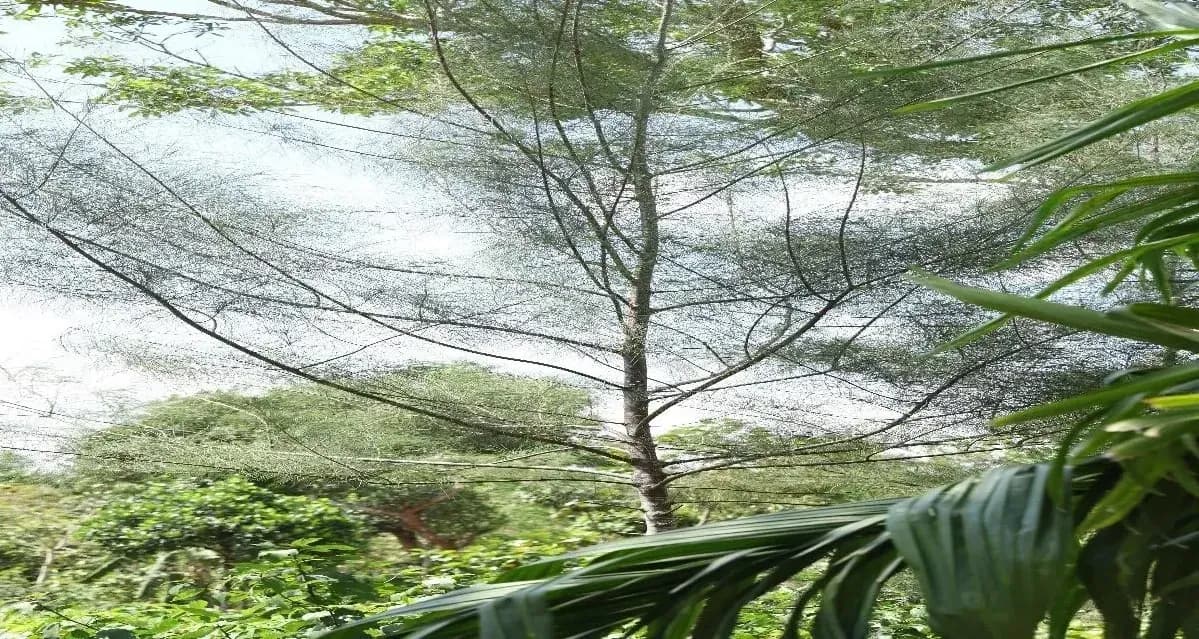
Casuarina equisetifolia is a tall, slender tree reaching up to 35 meters in height, with a straight trunk and rough, greyish bark. The branchlets are green, slender, jointed, and resemble pine needles, functioning as the main photosynthetic organs. True leaves are reduced to tiny scale-like teeth arranged in whorls at the nodes. True leaves are tiny and scale-like, arranged in whorls. The tree bears small, cone-like fruiting bodies containing numerous winged seeds. It is tolerant of poor soils and coastal conditions, making it ideal for stabilizing sand dunes.
Uses
In the Karavali region, it is widely planted along the coastline as a windbreak and to control coastal erosion. Its deep root system helps bind sandy soils. The wood is highly valued for firewood, poles, and construction due to its density and high calorific value. It is also used in agroforestry systems and as a shelterbelt in plantations. Though not typically used in local cuisine, the species has ecological and economic significance in the region.
Growing conditions
Prefers sandy, well-drained soils and tolerates saline conditions, making it suitable for coastal areas. Requires full sunlight and can grow in arid or semi-arid climates. Very drought-resistant and capable of growing in nutrient-poor soils due to its nitrogen-fixing ability via root symbiosis with Frankia bacteria
Habit
Fast-growing, evergreen, conifer-like tree