
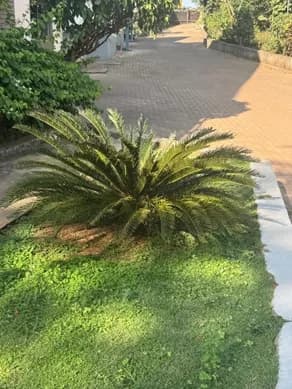
Sago Palm
Cycas revoluta Thunb.
Location
Other Plants
Family
Cycadaceae
Common names
Sago Palm, Japanese Sago Palm, King Sago
Native range
Southern Japan (Ryukyu Islands)
Habitat
Tropical and subtropical regions; rocky hills, coastal areas, and well-drained soils
Flowering
Mature plants produce male and female reproductive structures separately, usually after several years (5–10 years in cultivation). Cones appear seasonally, depending on climate.
Fruiting
Mature plants produce male and female reproductive structures separately, usually after several years (5–10 years in cultivation). Cones appear seasonally, depending on climate.
Conservation status
Not globally threatened; widely cultivated and popular as an ornamental plant. Some wild populations are considered vulnerable due to habitat loss and overcollection
About this plant
Cycas revoluta is a slow-growing, evergreen, palm-like gymnosperm, typically reaching 1–2 metres in height in cultivation, though older specimens can exceed 4–5 metres. The trunk is thick, unbranched, and woody, covered with old leaf bases. Leaves are pinnate, stiff, and dark green, emerging in a crown at the top of the trunk, with leaflets that are narrow, curved, and revolute (rolled backward at the edges, giving the species its name). The plant is dioecious, with male cones being cylindrical and erect, and female structures forming a rosette of megasporophylls that bear ovules. Seeds are large, ovoid, and orange to reddish-brown when mature.
Uses
Ornamental: Widely grown as a decorative plant in gardens, landscapes, and containers due to its symmetrical form and tropical appearance. Traditional uses: In some cultures, starch extracted from the trunk and seeds (after proper processing to remove toxins) has been used as a food source. Medicinal: Limited use due to toxicity; certain compounds have been studied for pharmacological properties.
Growing conditions
Thrives in full sun to partial shade and prefers well-drained, sandy to loamy soils. Drought-tolerant once established and tolerates heat and coastal conditions. Sensitive to waterlogging and frost. Suitable for containers and landscape planting in tropical and subtropical climates
Habit
Evergreen perennial gymnosperm (cycad)