
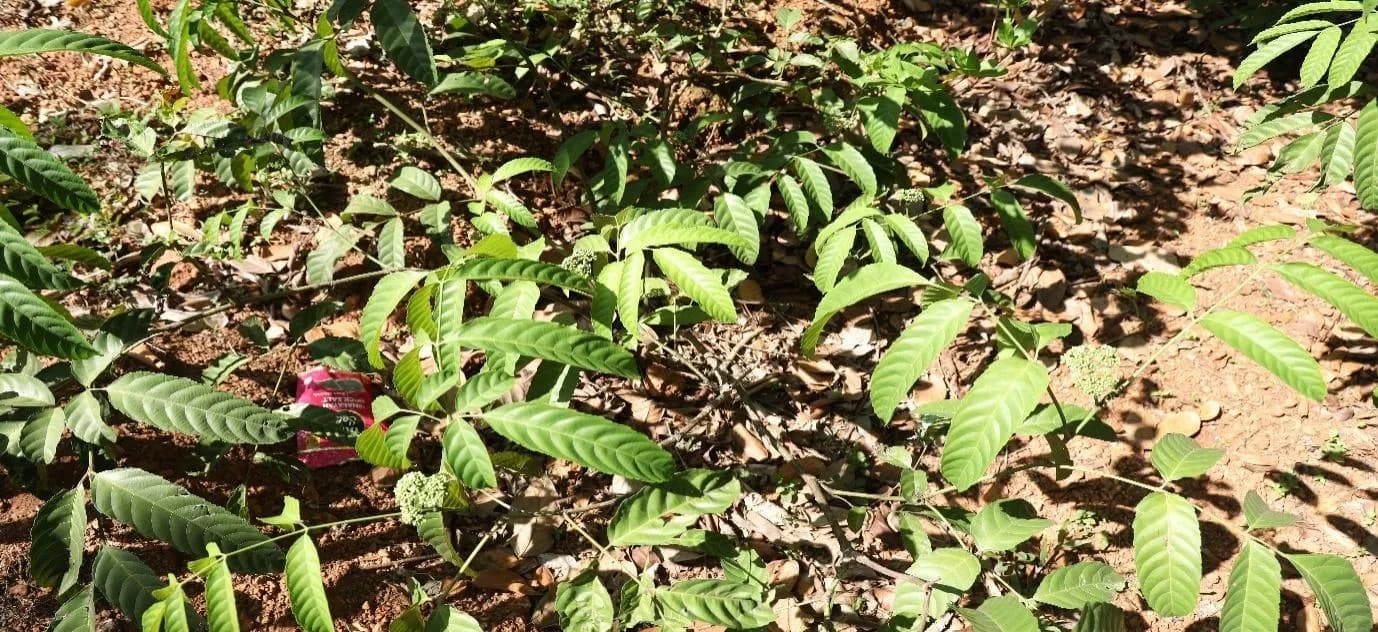
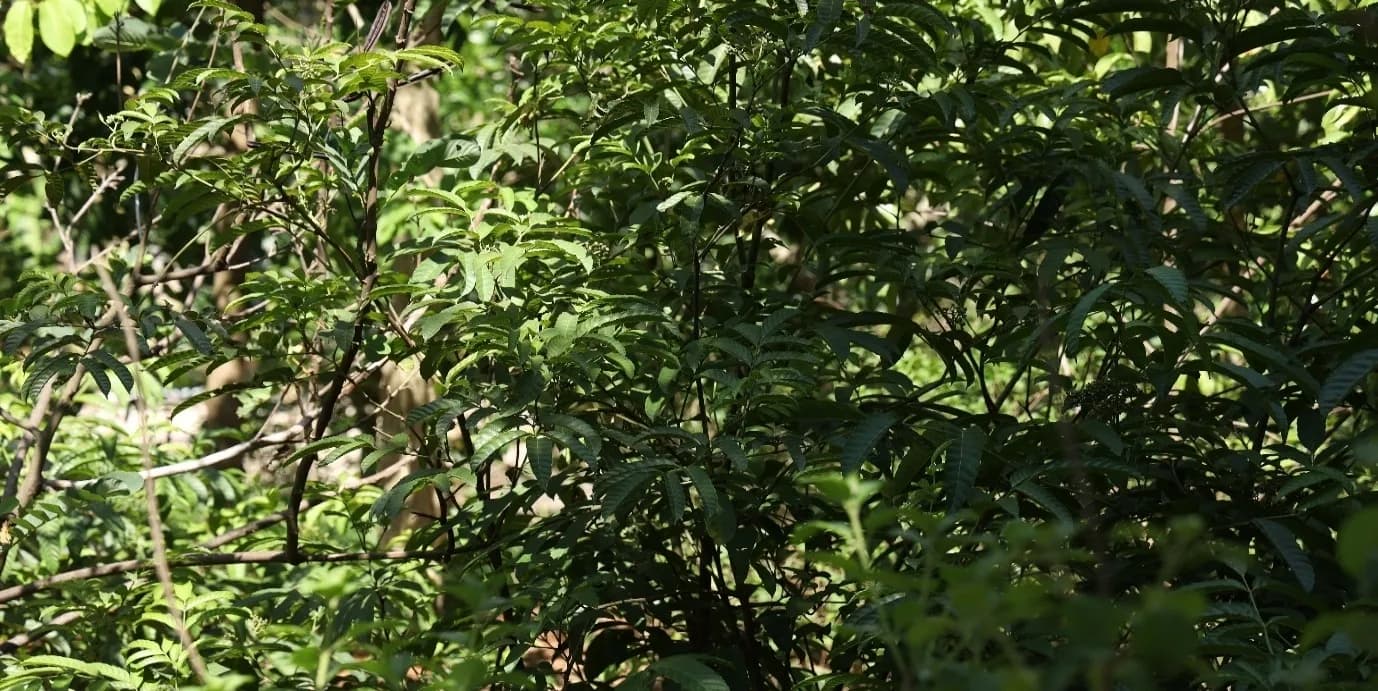
Bandicoot berry
Leea indica (Burm. f.) Merr.
Location
Butterfly Garden
Family
Vitaceae (formerly placed in Leeaceae)
Common names
Bandicoot berry, Indian leea, Bandicoot Berry
Native range
Tropical Asia (India, Sri Lanka, Southeast Asia)
Habitat
Forest margins, thickets, roadsides, moist shady places
Flowering
April - July
Fruiting
August to November
Conservation status
Not threatened; fairly common in its native range, though habitat disturbance may affect local populations
About this plant
Leea indica is an erect, much-branched shrub with thick, soft, green to reddish stems. Leaves are large, compound (2–3 pinnate), with ovate to elliptic leaflets having serrate margins and an acuminate apex. The leaves are dark green above and lighter beneath. Inflorescence is a large terminal or axillary corymbose cyme. Flowers are small, greenish-white to pinkish, bisexual, and numerous. Calyx is small and persistent; petals are 5, free, and spreading. Stamens are 5, united at the base. The fruit is a globose berry, purplish-black when ripe, containing several seeds.
Uses
Leea indica is widely used in traditional medicine. Different parts of the plant are used to treat inflammation, skin diseases, wounds, diarrhea, dysentery, fever, and joint pain. Leaf paste is applied externally for ulcers and swellings, while decoctions are used internally in folk remedies. The plant is also valued for its antioxidant and antimicrobial properties.
Growing conditions
Prefers tropical humid climates and grows best in moist, fertile, well-drained loamy soils. It thrives in partial shade to full sun and is commonly found in semi-wild and cultivated conditions. Propagation is usually by seeds or stem cuttings
Habit
Large shrub or small tree