
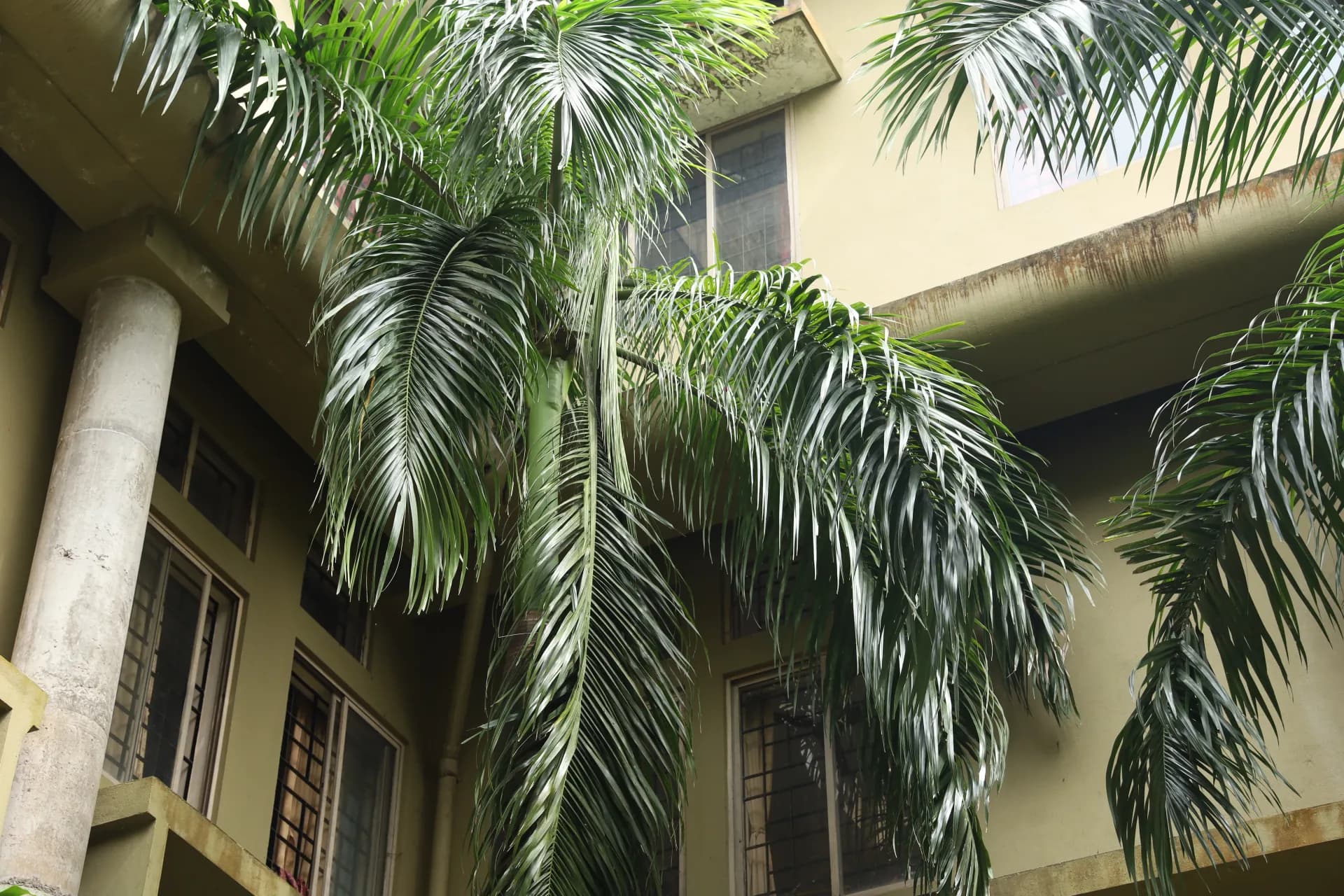
West Indian Mahogany
Swietenia mahagoni (L.) Jacq.
Location
Administrative Block 1
Family
Meliaceae
Common names
West Indian Mahogany, Cuban Mahogany, True mahogany
Native range
Southern Florida, Caribbean islands, parts of Central America.
Habitat
Coastal tropical forest, limestone soils, well-drained areas.
Flowering
August to October
Fruiting
November to January
Conservation status
This species is Near Threatened due to historical overharvesting in natural habitats, but it is widely cultivated in plantations and urban settings to meet timber demand while conserving wild populations
About this plant
Swietenia mahagoni is a large, evergreen to semi-deciduous tree with a tall, straight trunk and a broad, rounded crown. It typically reaches 25–35 meters in height and develops a well-formed, cylindrical bole, making it one of the most important timber trees in the tropics. Leaves are pinnately compound, usually with 4–10 glossy, dark green leaflets arranged in opposite pairs. Flowers are small, greenish-yellow to yellowish, borne in terminal or axillary panicles. Fruits are woody, reddish-brown capsules that split open when mature, releasing winged seeds.
Uses
Valued mainly for its high-quality timber used extensively in fine furniture, cabinetry, veneer, and musical instruments. Bark and fruits have applications in traditional medicine for treating various ailments including fever and digestive issues.
Growing conditions
Thrives in full sunlight and warm climates with moderate to high humidity. Prefers well-drained soils and tolerates moderate drought once established. Requires protection from frost
Habit
Deciduous to semi-evergreen tree