
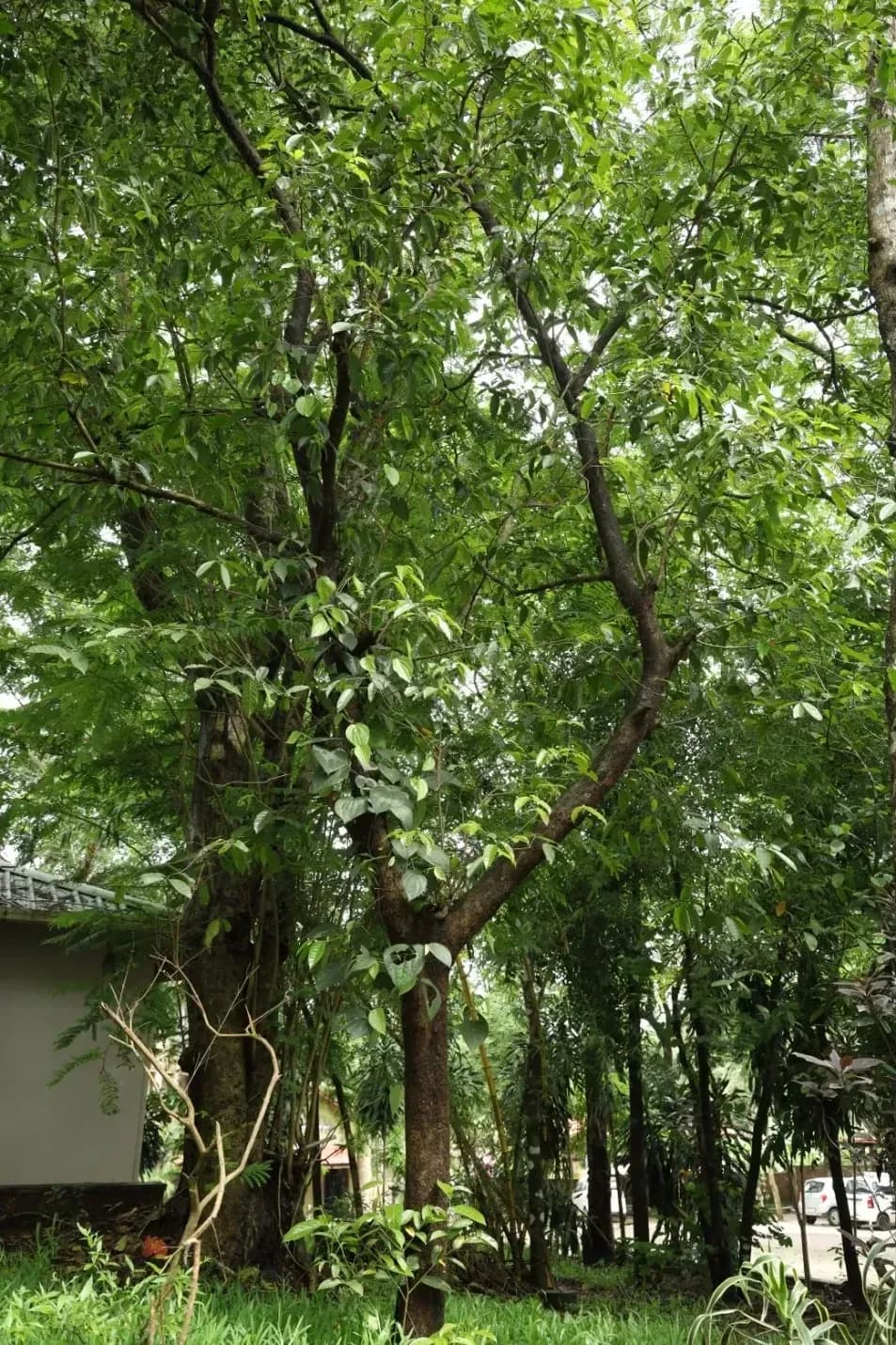
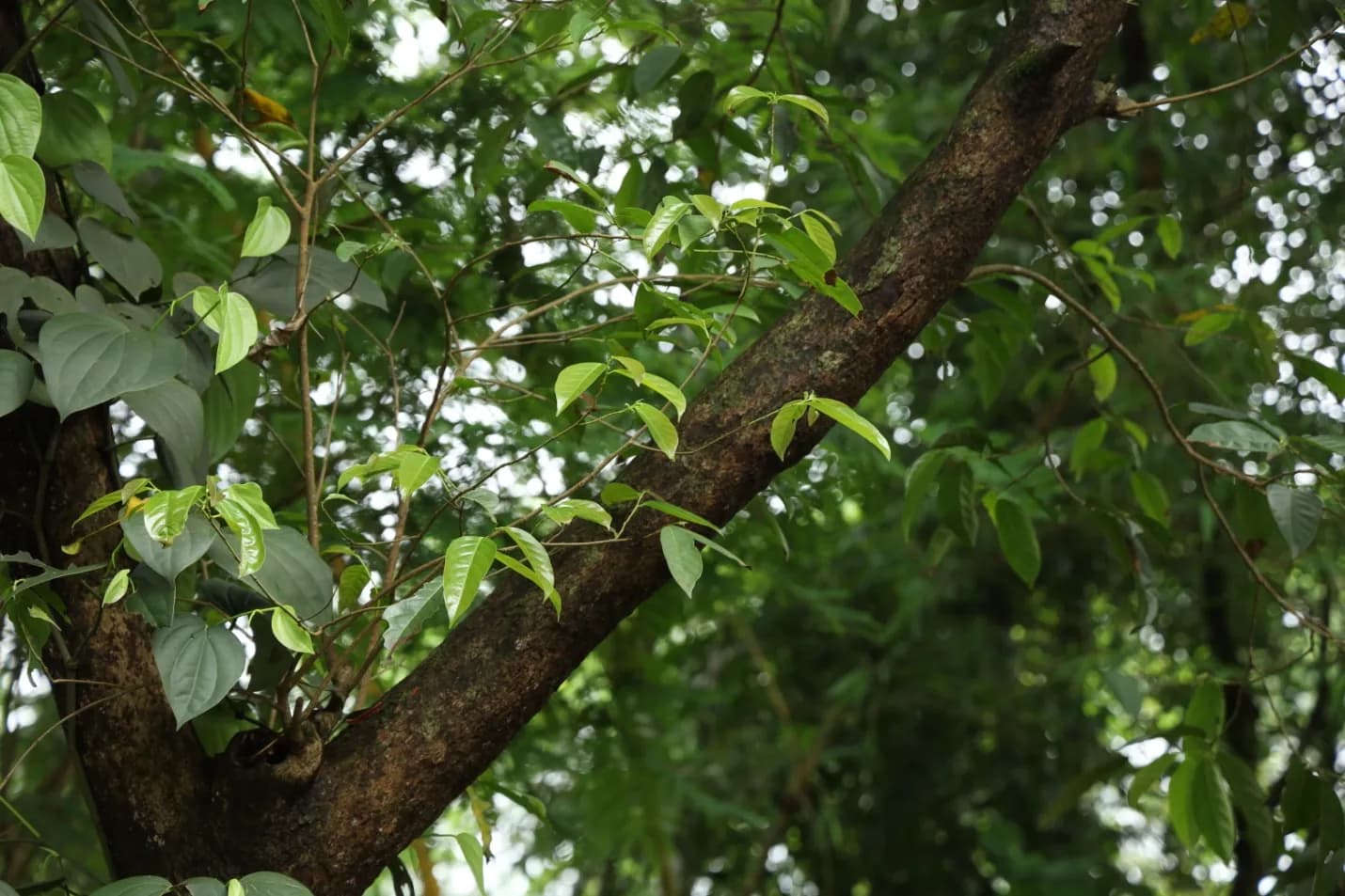
Wild Jack
Artocarpus gomezianus Wall. ex Trécul
Location
2 Wheeler parking
Family
Moraceae
Common names
Wild Jack, Forest Jack (regional names vary; local names are used in different parts of India and Southeast Asia)
Native range
South and Southeast Asia, including India (particularly the Western Ghats and Northeast India), Bangladesh, Myanmar, Thailand, Laos, and Malaysia
Habitat
Typically found in moist tropical and subtropical forests, especially in hilly or mountainous regions. It occurs in semi-evergreen and evergreen forests and is often part of the natural forest canopy or understory. The species is occasionally cultivated or protected in home gardens and agroforestry systems near forested areas.
Flowering
March – May
Fruiting
June – August
Conservation status
Not Evaluated (NE), but considered of ecological and ethnobotanical significance in its native range
About this plant
Artocarpus gomezianus has large, simple, alternate leaves that are elliptic to oblong, leathery, and rough to the touch. Leaves may be entire or lobed, particularly in young plants. The tree is monoecious, bearing separate male and female inflorescences on the same plant. Fruits are compound syncarps, similar to jackfruit but smaller, generally ovoid to round with a rough surface. The edible pulp is fibrous and yellowish-orange when ripe.
Uses
Traditionally used by local and indigenous communities for both food and medicinal purposes. The fruit is edible and locally consumed, though it is less commercially significant than common jackfruit (Artocarpus heterophyllus). Various plant parts, including bark, latex, and leaves, are used in folk medicine to treat skin ailments, digestive disorders, and inflammation. The wood is durable and locally used for construction, furniture, and tools.
Growing conditions
Thrives in warm, humid tropical climates with well-drained, fertile soils. Prefers partial shade to full sunlight and is typically found under forested or semi-natural conditions. Requires moderate rainfall and does not tolerate prolonged drought
Habit
Medium to large deciduous or semi-evergreen tree reaching 15–25 m in height. It has a straight trunk and a dense, rounded crown, giving it a robust forest presence.