
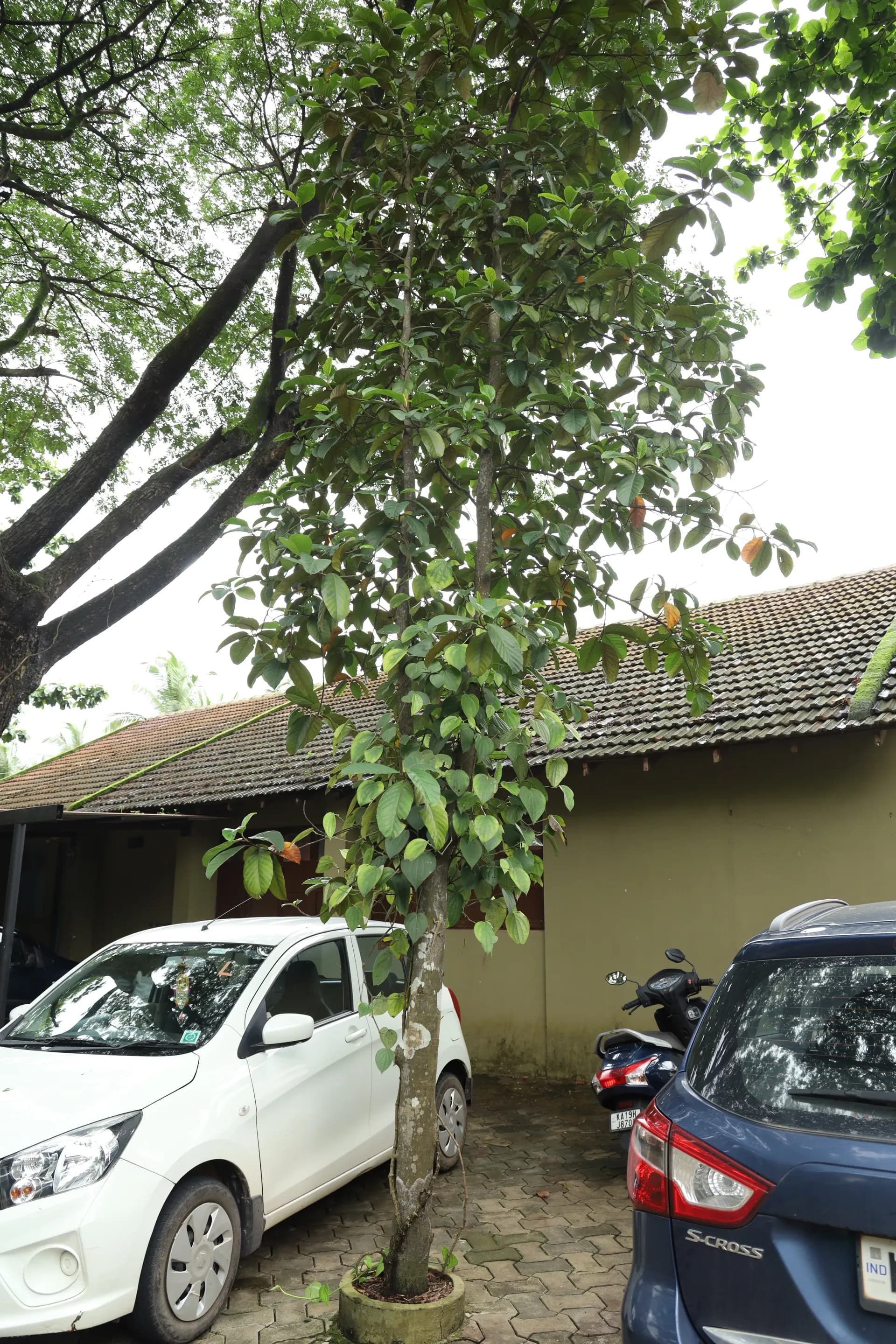
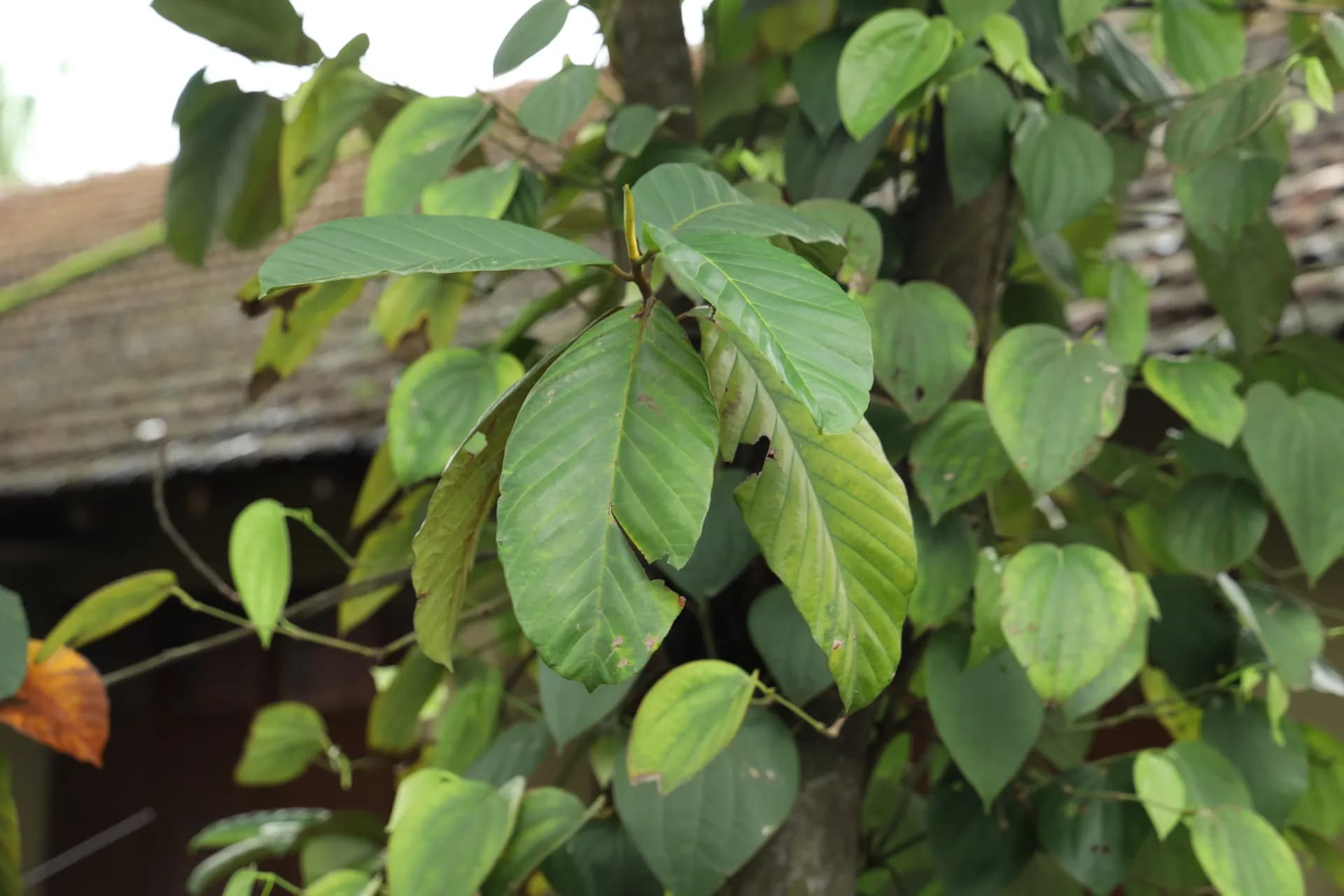
Wild Jack
Artocarpus hirsutus Lam.
Location
2 Wheeler parking
Family
Moraceae
Common names
Wild Jack, Aini, Ayani, Hebbalasu (ಹೆಬ್ಬಳಸು in Kannada), Anjili (in Malayalam)
Native range
Endemic to the Western Ghats of India
Habitat
Naturally found in evergreen and semi-evergreen forests of the Western Ghats, from sea level up to about 1,000 m elevation. It grows well in moist tropical regions and forms part of the natural forest canopy. The species is sometimes cultivated for timber in plantations and homestead farms.
Flowering
March – June
Fruiting
June – September
Conservation status
Least Concern (LC), but locally threatened in some areas due to timber overexploitation and habitat degradation
About this plant
Artocarpus hirsutus has simple, alternate leaves that are elliptic to oblong, leathery, and densely hairy, especially when young—hence the name hirsutus. The tree is monoecious, bearing separate male and female inflorescences on the same plant. Fruits are oblong to cylindrical syncarps, similar to jackfruit but smaller, with rough, warty skin. The pulp is edible and yellowish-orange, with a sweet flavour, though it is less commercially exploited.
Uses
Highly valued for its durable and termite-resistant timber, widely used in traditional house construction, boat building, and furniture, especially in Kerala and Karnataka. The fruit is consumed locally, and the seeds are also edible. In folk medicine, various parts of the tree are used to treat skin ailments and inflammation.
Growing conditions
Prefers warm, humid tropical climates with deep, fertile, well-drained soils. Grows best under shaded to semi-shaded conditions during early growth stages. Requires good rainfall and does not tolerate prolonged dry spells or frost. Suitable for forest restoration and agroforestry systems in the Western Ghats region
Habit
Large evergreen tree growing up to 35–45 m in height. It has a tall, straight trunk and a dense, rounded crown. White latex exudes from the bark when injured.