

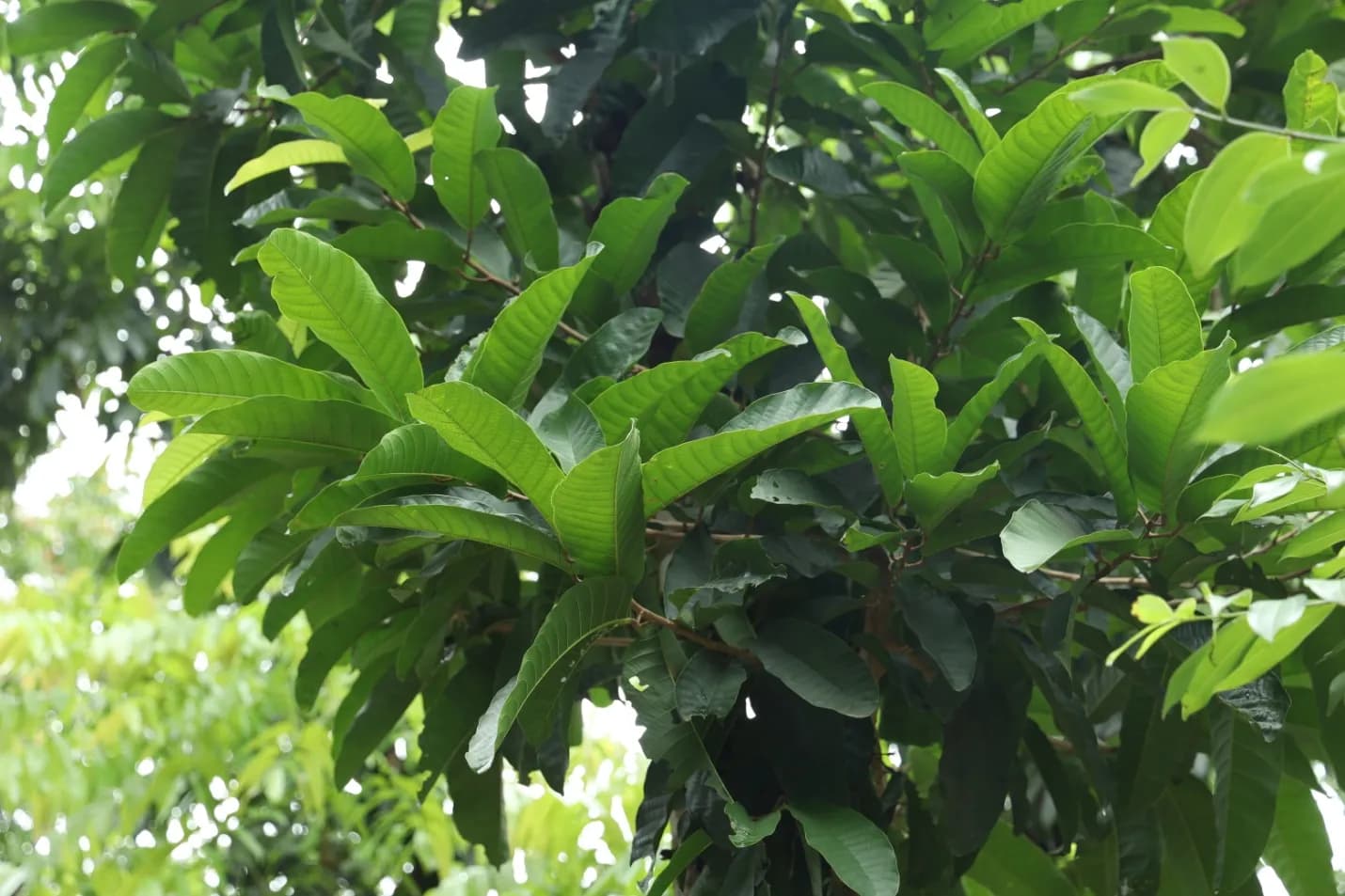
Indian Copal Tree
Vateria indica L.
Location
2 Wheeler parking
Family
Dipterocarpaceae
Common names
Indian Copal Tree, Dhupa Tree, White Dammar
Native range
Western Ghats, India
Habitat
Occurs naturally in tropical evergreen forests of the Western Ghats, especially in moist and humid areas at low to medium elevations.
Flowering
January – March
Fruiting
May – July
Conservation status
Endangered (EN)
About this plant
Vateria indica is a tall evergreen tree reaching up to 40 m in height. The trunk is straight, often buttressed at the base, and covered with rough, dark brown bark. Leaves are simple, alternate, oblong to elliptic, leathery, and dark green. Flowers are white, fragrant, and borne in panicles. The fruit is an ovoid, winged capsule that splits open to release a single seed.
Uses
The species is primarily known for its resin (white dammar), which is widely used in incense, varnishes, and traditional medicine. The wood is valued as timber; however, its exploitation is regulated due to conservation concerns. In Ayurveda, the resin is traditionally used for wound healing and in the treatment of respiratory ailments.
Growing conditions
Requires deep, well-drained lateritic soils and thrives in humid tropical climates. Young plants prefer partial shade, while mature trees require full sunlight. High rainfall regions are ideal for its growth
Habit
Large evergreen tree with a tall, straight bole and dense canopy.