
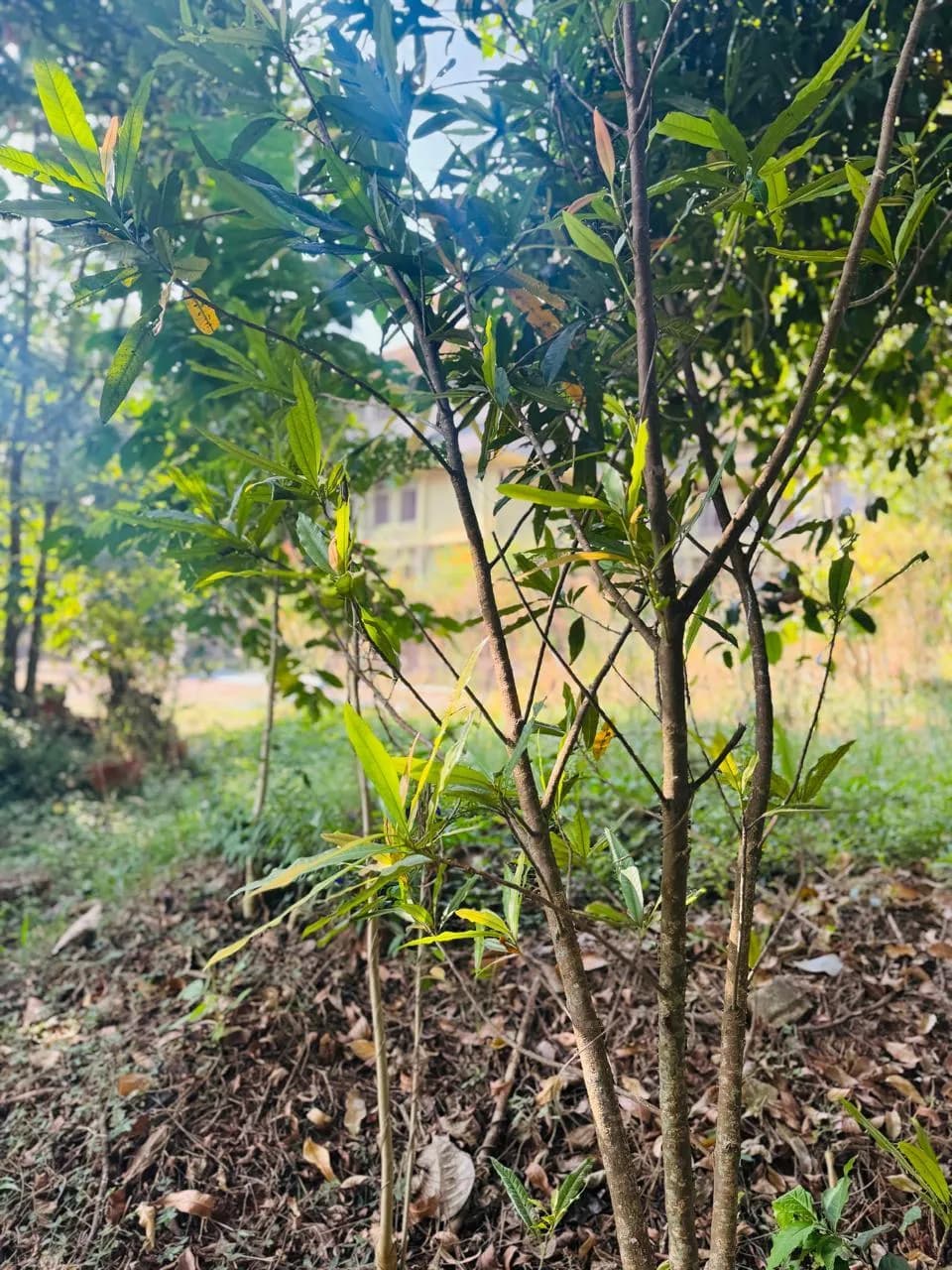
Mahua
Madhuca longifolia (Koenig ex L.) J.F. Macbr.
Location
Botanical Garden
Family
Sapotaceae
Common names
Mahua, Butter Tree, Mahu
Native range
Indian subcontinent
Habitat
Tropical dry deciduous forests, open woodlands, and plains
Flowering
Flowering occurs in late winter to early summer (February–April)
Fruiting
Fruits mature in summer (April–June).
Conservation status
Not threatened; widespread across its native range, though overharvesting for flowers and timber may affect local populations
About this plant
Madhuca longifolia is a medium to large deciduous tree, typically growing 15–25 metres in height, with a dense, spreading crown. Bark is grey to dark brown, rough, and fissured. Leaves are simple, alternate, and oblong-lanceolate, often clustered at the branch tips. Flowers are small, creamy-white to yellowish, fragrant, and borne in dense clusters. The tree is well known for its fleshy, ovoid fruits, which turn yellow when ripe and contain one or two seeds. The seeds are rich in oil.
Uses
Mahua is highly valued for its multipurpose uses: Edible uses: Flowers are used to make alcoholic beverages, sweets, and condiments. Seeds yield oil used for cooking and soap making. Medicinal uses: Flowers, seeds, and bark are used in traditional medicine to treat fever, skin disorders, cough, wounds, and rheumatism. Other uses: Timber is used for furniture and fuel; flowers are culturally significant in tribal rituals and festivals.
Growing conditions
Thrives in full sun and prefers well-drained, sandy to loamy soils. Tolerates drought and poor soils but does not grow well in waterlogged conditions. Grows naturally in tropical dry deciduous forests and can withstand high temperatures
Habit
Medium to large deciduous tree