
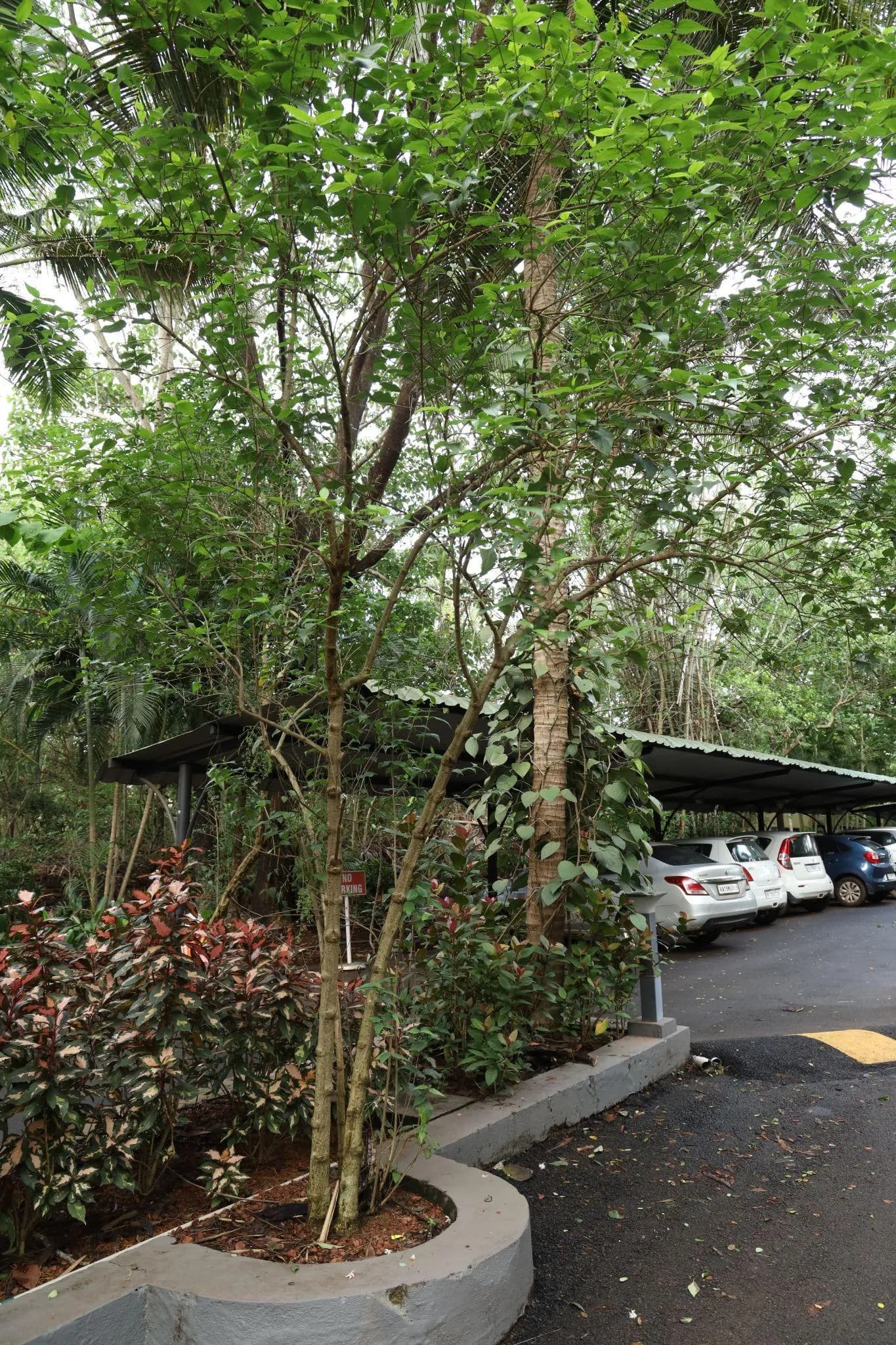
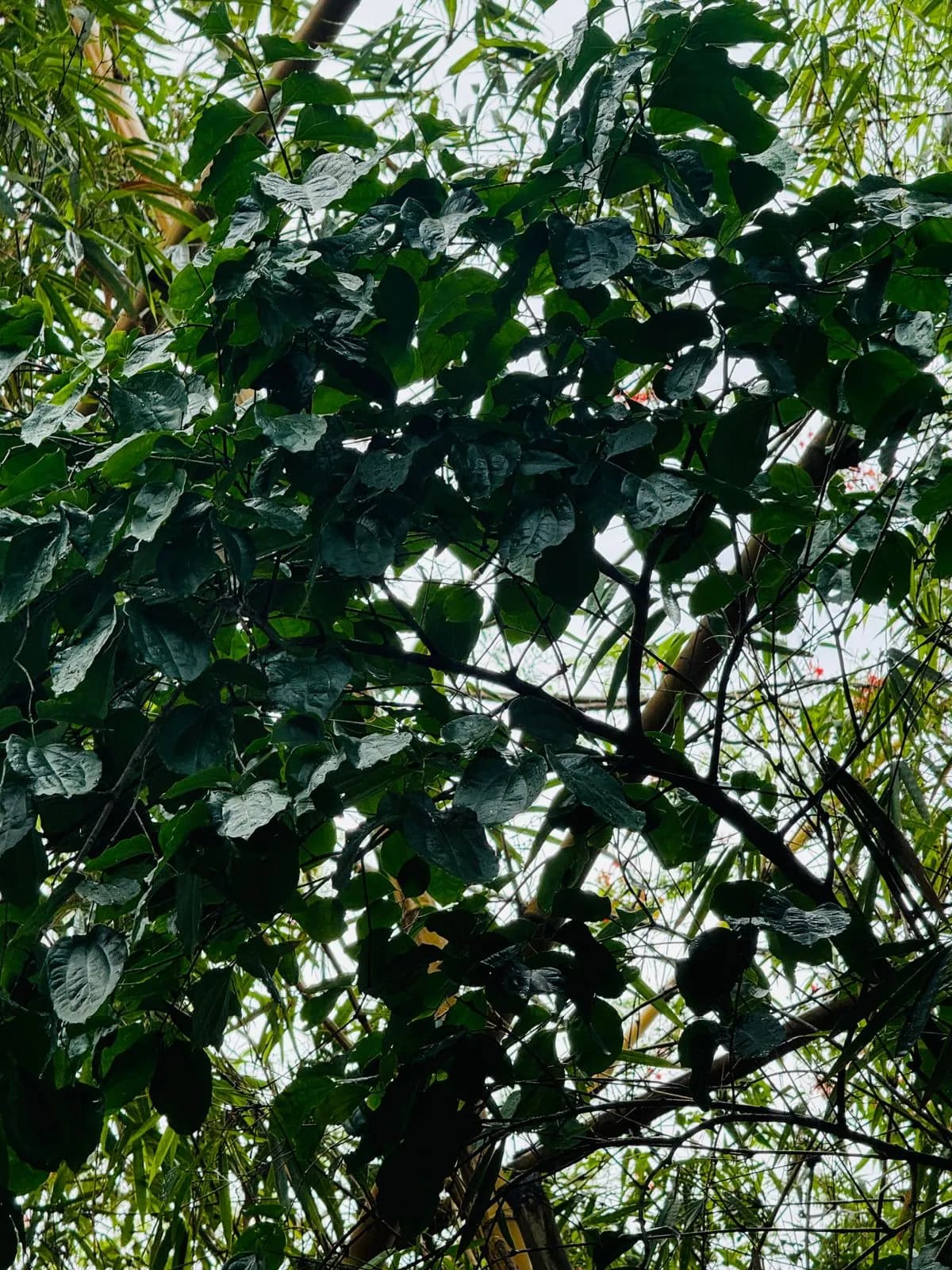
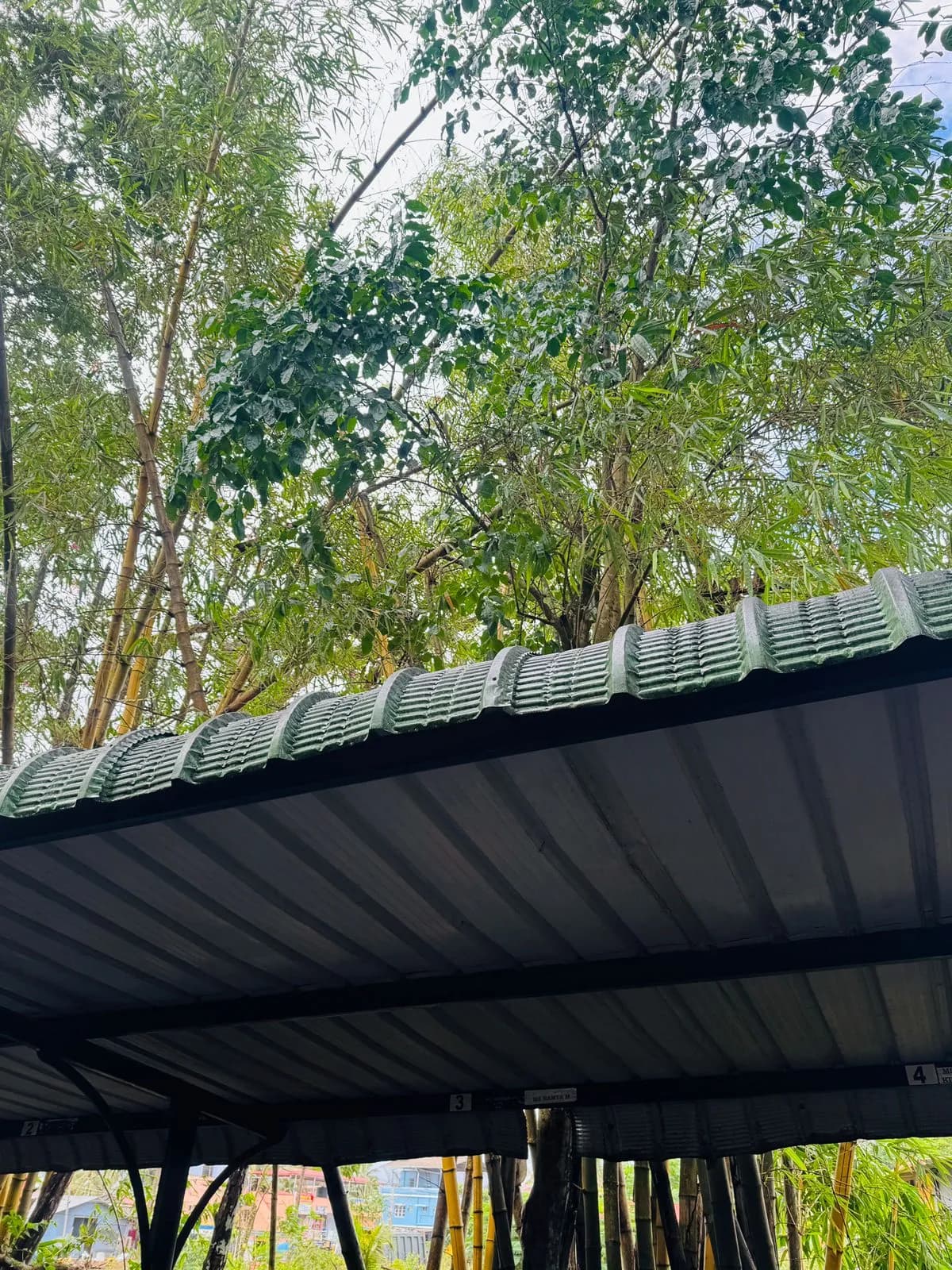
Poison Nut Tree
Strychnos nux-vomica L
Location
Main Gate & Parking
Family
Loganiaceae
Common names
Poison Nut Tree, Nux-vomica, Snakewood, Kanjiram
Native range
India and Southeast Asia
Habitat
Grows naturally in dry deciduous forests and scrublands. Found in plains, rocky hills, and semi-arid regions, especially across central and southern India including the Deccan Plateau and parts of the Western Ghats.
Flowering
March - May
Fruiting
July - November
Conservation status
Least Concern (LC)
About this plant
Strychnos nux-vomica is a deciduous tree reaching up to 10–15 meters in height. The bark is grey and rough. Leaves are simple, opposite, ovate or elliptic, and leathery, measuring 6–12 cm long. Flowers are small, greenish-white, fragrant, and borne in terminal cymes. Fruits are round, orange to reddish berries about the size of an apple, containing 3–5 disc-shaped, grey, silky seeds. Note: The seeds contain toxic alkaloids—strychnine and brucine—which are highly poisonous. While small, carefully processed doses are used medicinally, direct consumption is dangerous and potentially fatal. Detoxification (shodhana) is essential before any medicinal use.
Uses
Used in traditional medicine systems like Ayurveda, Siddha, and Unani after detoxification. Employed in treating nervous disorders, digestive issues, and as a stimulant. Culturally, parts of the tree were historically used in traditional rituals and in poison-tipped arrows.
Growing conditions
Prefers dry, open deciduous forests. Requires full sunlight and well-drained soil. Tolerates drought and semi-arid conditions
Habit
Medium-sized deciduous tree with a straight trunk and dense crown.