
North Indian Rosewood
Dalbergia sissoo Roxb.
Location
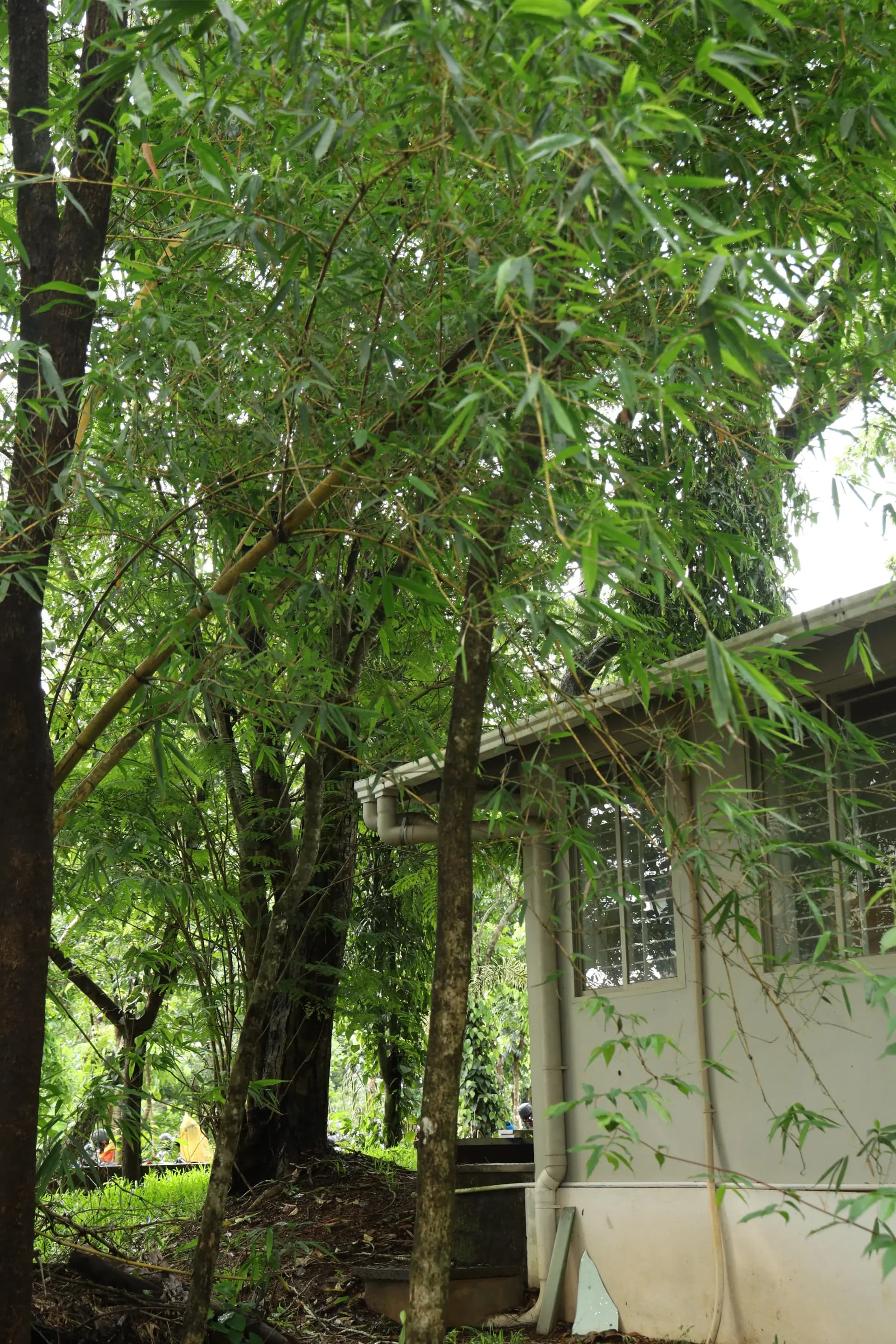
2 Wheeler parking
Family
Fabaceae
Common names
North Indian Rosewood, Shisham, Sissoo, Irugudike (ಇರುಗುಡಿಕೆ in Kannada)
Native range
Indian subcontinent, mainly India, Pakistan, Nepal, and Bangladesh
Habitat
Commonly found along riverbanks, in tropical and subtropical dry deciduous forests, and widely cultivated in plantations, roadside avenues, and agroforestry systems. It prefers alluvial soils and is particularly abundant in northern India near river plains.
Flowering
February – April
Fruiting
May – July
Conservation status
Least Concern (LC)
About this plant
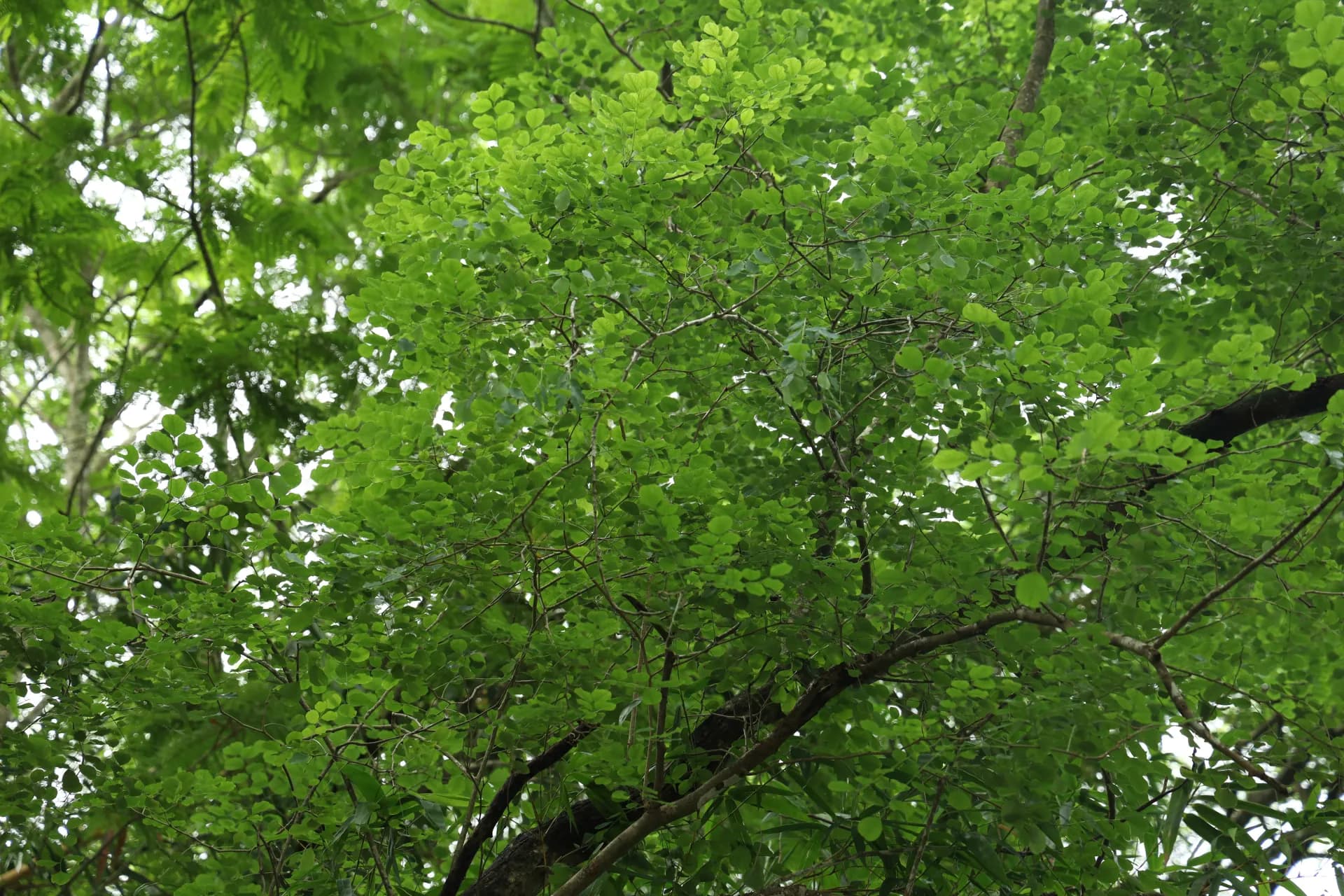
Dalbergia sissoo has pinnately compound leaves with 3–5 alternate, leathery leaflets that are ovate to round in shape. The bark is greyish-brown and becomes rough and fissured with age. Flowers are small, white to pale yellow, fragrant, and borne in axillary panicles. Fruits are flat, narrow, indehiscent pods, 5–8 cm long, containing 1–5 flat brown seeds.
Uses
Highly valued for its high-quality hardwood, which is extensively used in furniture, cabinetry, flooring, and agricultural implements. In traditional medicine, bark and leaves are used to treat skin diseases, wounds, dysentery, and fever. The tree is also important for erosion control, shade, and fuelwood. Its fast growth rate and nitrogen-fixing ability make it valuable in agroforestry and reforestation programs.
Growing conditions
Prefers full sunlight and thrives in deep, well-drained alluvial soils. Tolerates dry climates and occasional waterlogging. Drought-hardy once established and capable of withstanding high temperatures, making it suitable for semi-arid regions
Habit
Medium to large deciduous tree with a light crown and erect branching habit. It typically grows to a height of 10–20 m, but may reach up to 25 m under favorable conditions.