
Sapota
Manilkara zapota (L.) P. Royen
Location
Vegetable Garden
Family
Sapotaceae
Common names
Sapota, Chikoo
Native range
Southern Mexico, Central America, and the Caribbean
Habitat
Tropical and subtropical areas
Flowering
January – March
Fruiting
June - July
Conservation status
Least Concern (LC)
About this plant
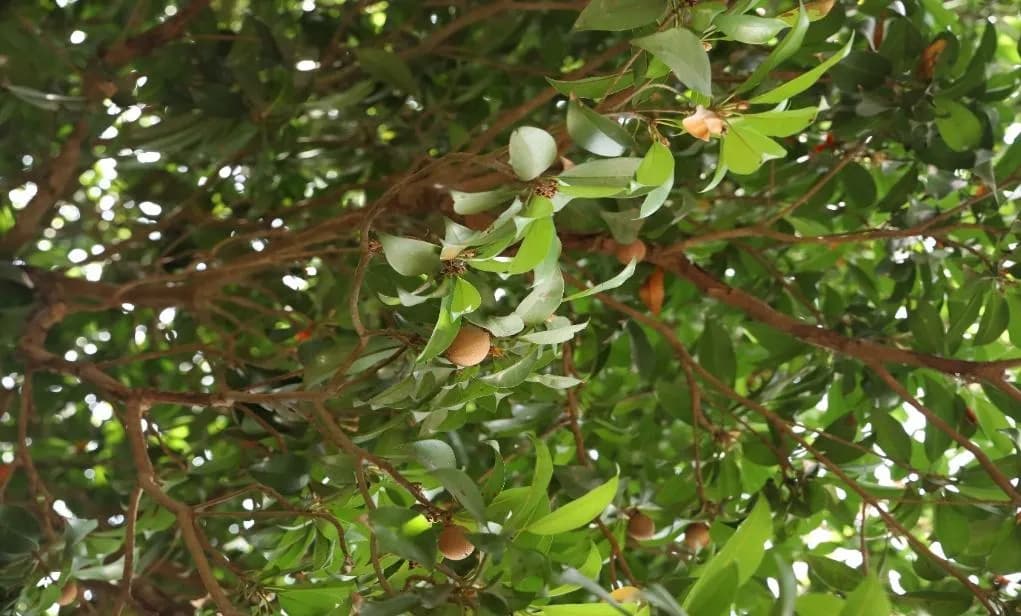
Manilkara zapota is a medium to large evergreen tree, typically growing up to 15–30 meters in height. Leaves are glossy, dark green, elliptic to lance-shaped, arranged spirally. Flowers small, white, bell shaped, with a mild fragrance; pollinated by insects. Fruits are round to oval, with rough brown skin; flesh is sweet, gritty, and brownish, containing 2–6 black, shiny seeds.
Uses
The fruit is widely consumed fresh and used in desserts, beverages, and traditional dishes due to its sweet flavour. The bark exudes chicle, historically significant for chewing gum production. In traditional medicine, the bark and other parts are used for their antidiarrheal, antipyretic, antibiotic, and astringent properties.
Growing conditions
Prefers full sun and well-drained soils, adaptable to clay, sand, loam, and a wide pH range from acidic to alkaline. The tree displays good drought and salt spray tolerance and is wind-resistant once mature
Habit
Evergreen tree