
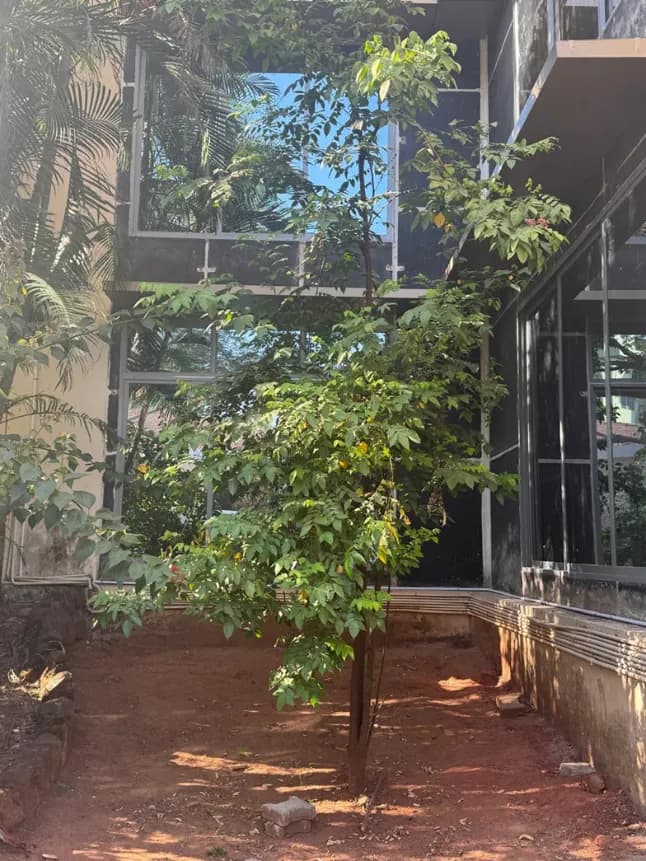
Star Fruit
Averrhoa carambola L.
Location
Other Plants
Family
Oxalidaceae
Common names
Star Fruit, Carambola, Kamrak
Native range
Southeast Asia (Malaysia, Indonesia, Philippines)
Habitat
Tropical and subtropical regions; home gardens, orchards, and lowland forests
Flowering
Throughout the year
Fruiting
Throughout the year
Conservation status
Not threatened; widely cultivated throughout tropical and subtropical regions worldwide
About this plant
Averrhoa carambola is an evergreen tree typically growing 5–12 metres tall with a short trunk and spreading, irregular crown. Bark is thin, smooth to slightly fissured, and greyish-brown. Leaves are pinnate, compound, with 5–11 leaflets, each oblong to elliptic and bright green. Flowers are small, pink to purple, and fragrant, borne in terminal or axillary panicles. Fruits are oblong, waxy, and yellow when ripe, with a characteristic five-ridged cross-section giving the “star” shape. The pulp is juicy, sweet to sour, and aromatic, containing small, brown seeds.
Uses
Culinary: Fruits are eaten fresh, juiced, or used in salads, preserves, and desserts. Medicinal: Traditionally used for digestive issues, fever, and inflammation. Leaves and roots have been used in folk medicine. Other uses: Ornamental planting for home gardens due to attractive foliage and fruits.
Growing conditions
Thrives in full sun and well-drained, fertile soils rich in organic matter. Requires regular watering, especially during dry periods. Sensitive to frost and prolonged waterlogging. Performs well in tropical and subtropical climates
Habit
Evergreen small to medium-sized tree