
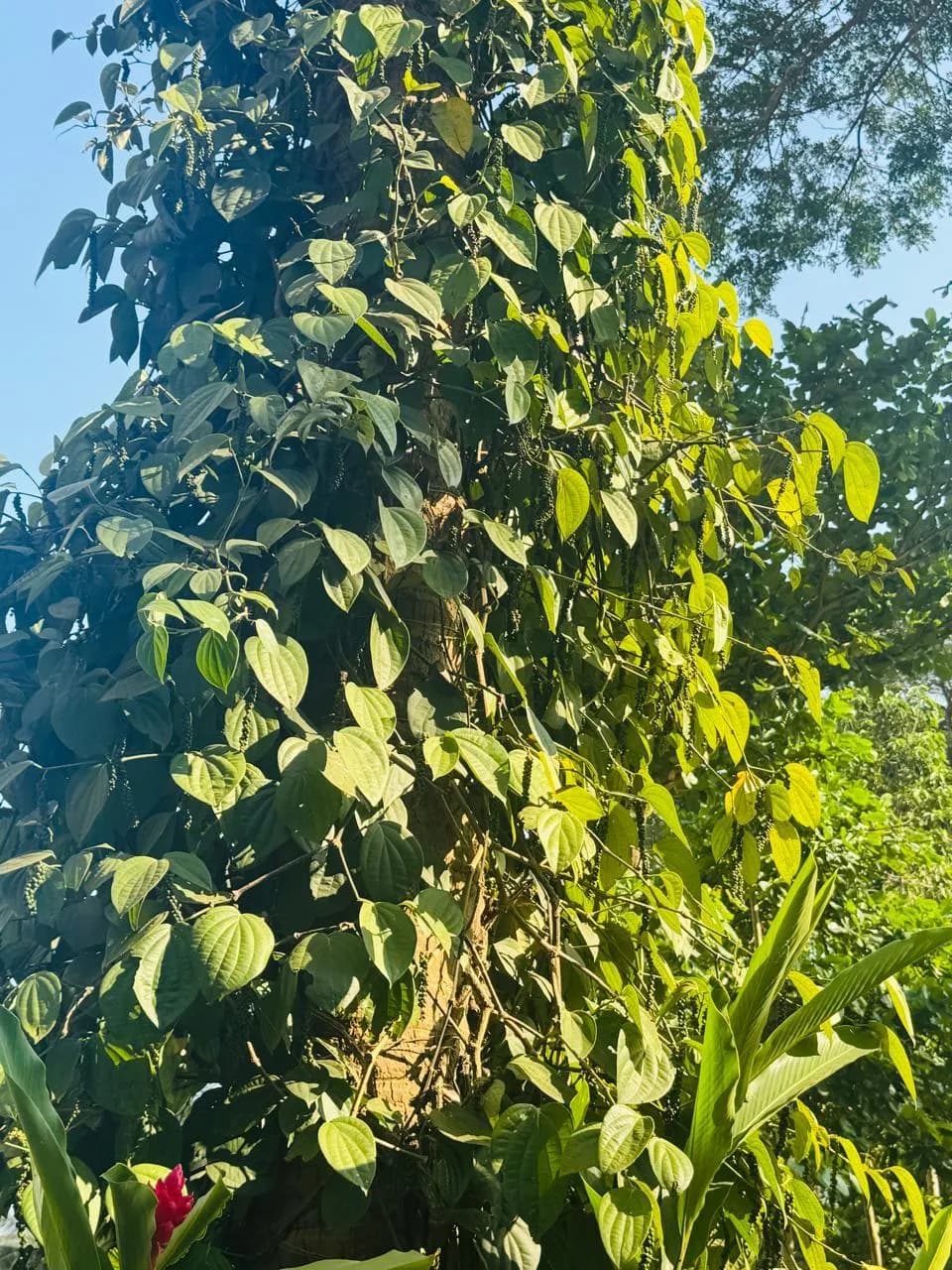
Black Pepper
Piper nigrum L.
Location
Botanical Garden
Family
Piperaceae
Common names
Black Pepper, Peppercorn
Native range
Western Ghats of India (South India)
Habitat
Tropical humid regions
Flowering
June-October
Fruiting
June-October
Conservation status
Not threatened; widely cultivated in tropical regions worldwide
About this plant
Piper nigrum is a perennial, evergreen climbing vine that can grow 8–10 metres or more with support. The plant has slender, jointed stems with adventitious roots that help it cling to supports. Leaves are simple, alternate, ovate to heart-shaped, dark green, glossy, and leathery. Flowers are small, minute, white to greenish, and borne on pendulous spikes. Fruits are small, spherical drupes (peppercorns), green when unripe and turning red at maturity; they become black when dried. Each fruit contains a single hard seed.
Uses
Black pepper is one of the world’s most important spices, used extensively as a seasoning and preservative. It is valued for its pungent flavour due to the alkaloid piperine. Medicinally, black pepper is used in traditional systems (Ayurveda and folk medicine) to aid digestion, improve appetite, relieve respiratory ailments, enhance bioavailability of nutrients, and act as an antioxidant and antimicrobial agent.
Growing conditions
Thrives in warm, humid tropical climates with partial shade to filtered sunlight
Habit
Perennial woody climber (vine)