
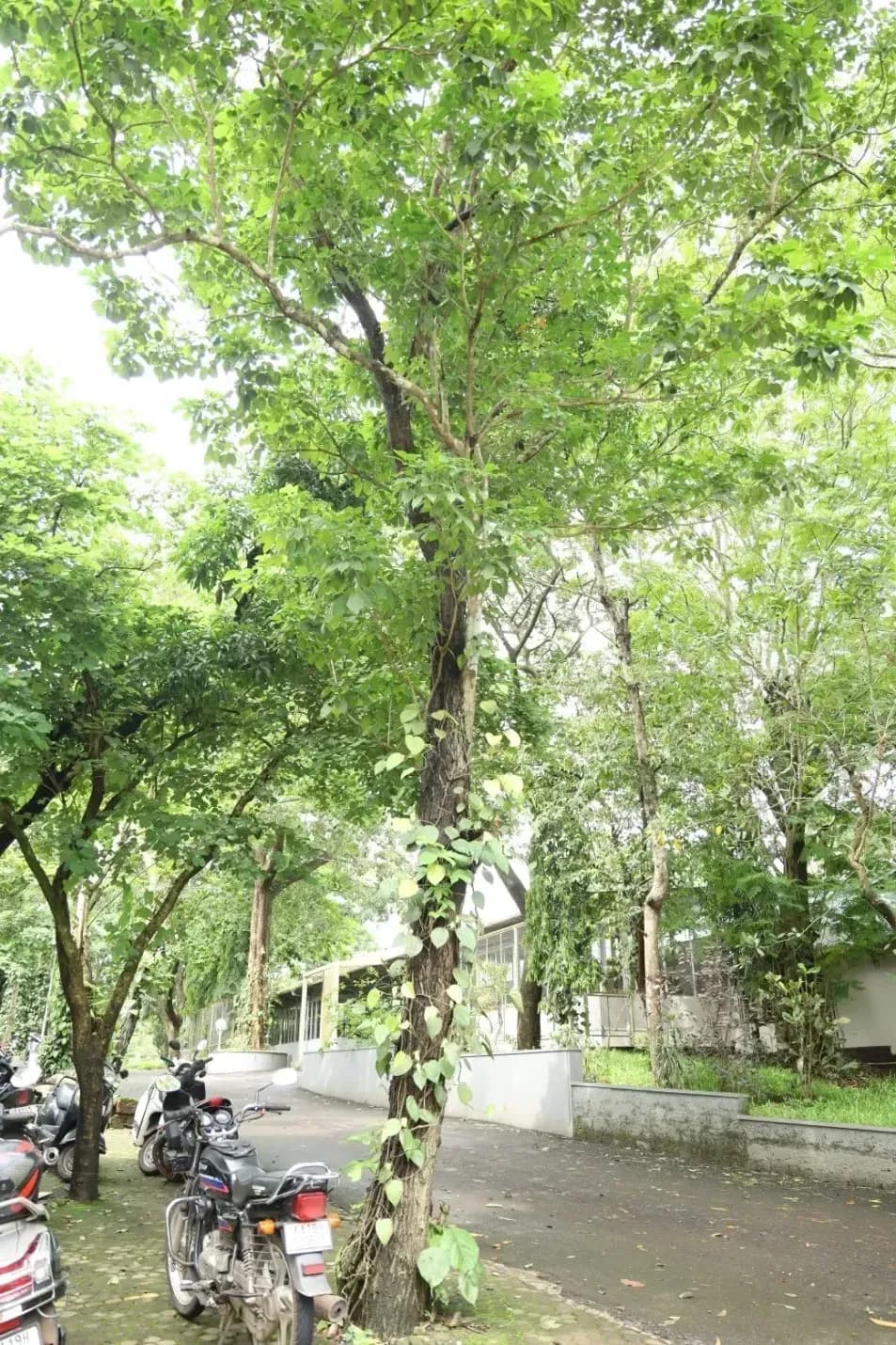
Indian Cork Tree
Millingtonia hortensis L.f.
Location
2 Wheeler parking
Family
Bignoniaceae
Common names
Indian Cork Tree, Tree Jasmine, Akash Neem
Native range
South Asia and Southeast Asia, including India, southern China, Indo-China, and Malesia
Habitat
Commonly grown in tropical and subtropical regions. It thrives in gardens, roadsides, and avenues, particularly in moist climates. The tree adapts well to a wide range of soil types.
Flowering
September – December
Fruiting
Following the flowering season
Conservation status
Not threatened; commonly cultivated and naturalized
About this plant
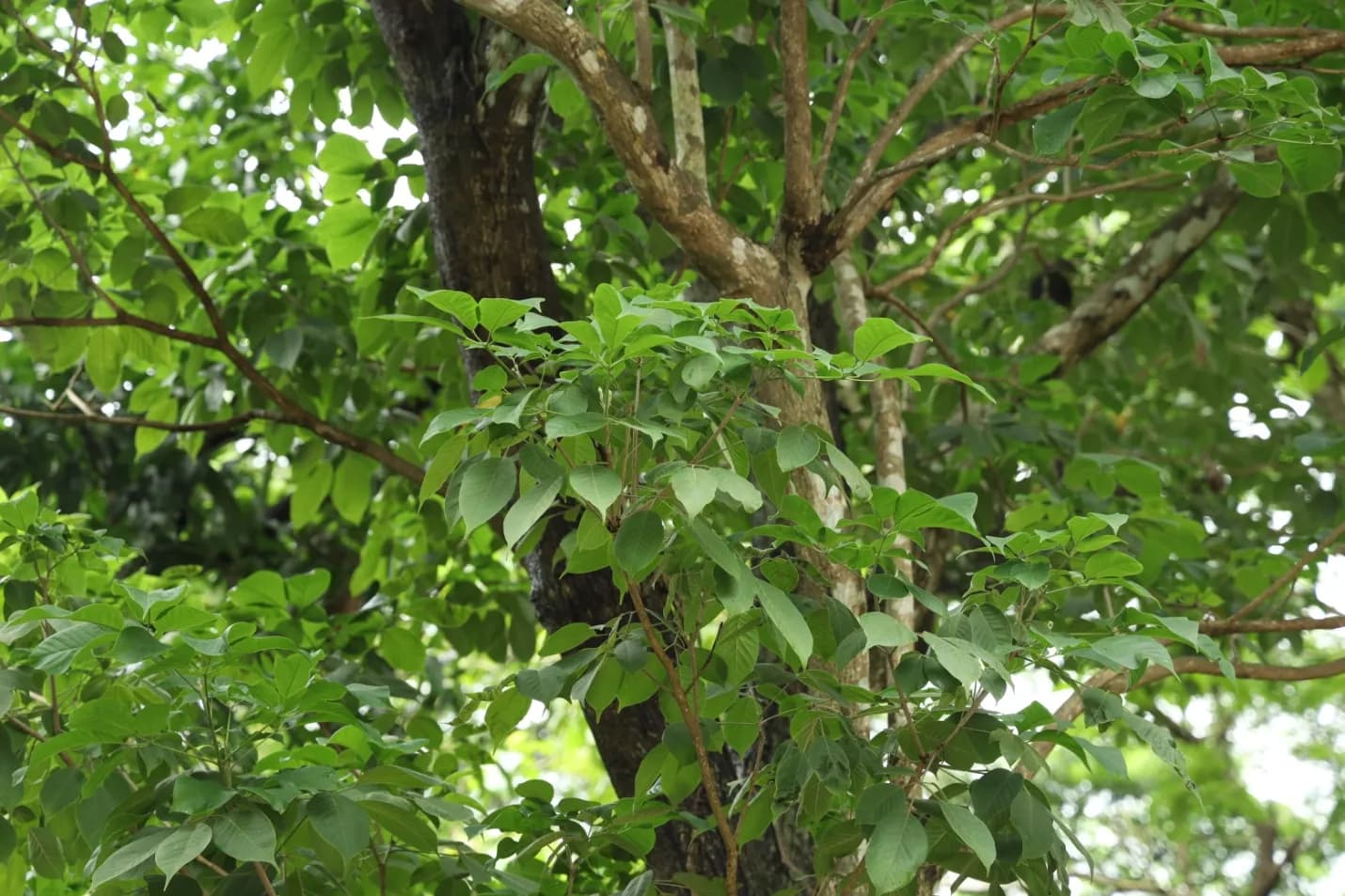
Millingtonia hortensis has bipinnate leaves with elliptic to ovate leaflets. The flowers are white, fragrant, and bell-shaped, borne in panicles. Flowering occurs mainly at night, and the flowers shed by morning, releasing a pleasant fragrance. The fruit is a flat capsule containing winged seeds.
Uses
Widely planted as an ornamental tree because of its fragrant and attractive flowers. In traditional medicine, different parts of the tree are used to treat lung diseases, bronchitis, and food poisoning.
Growing conditions
Prefers full sunlight and moist climates but grows well in a variety of soil types. It is commonly cultivated in gardens and along avenues
Habit
Medium to large deciduous tree growing up to 18–25 m in height with a spread of 7–11 m, reaching maturity within 6–8 years. It has a tall, straight trunk with corky bark.