
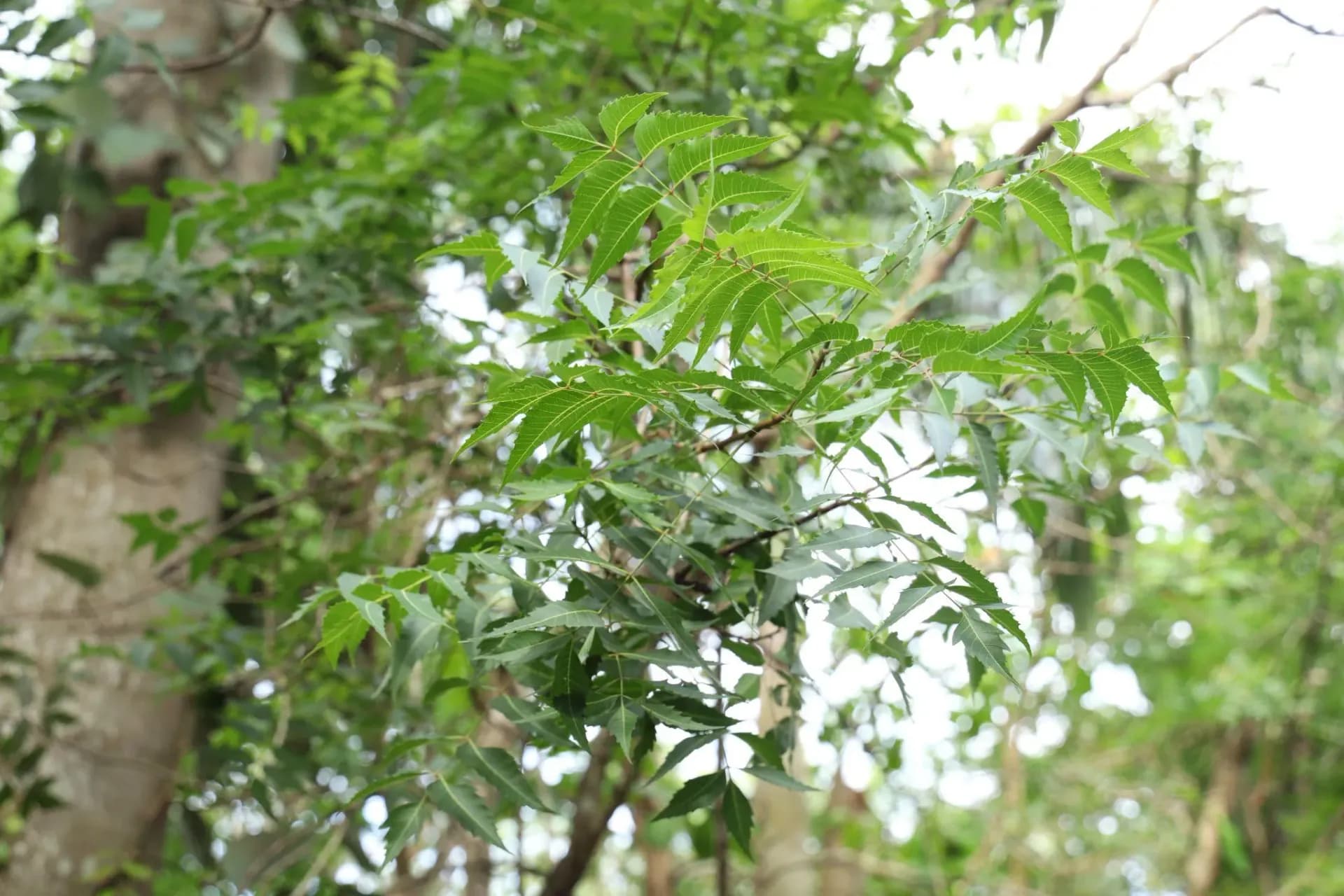
Neem
Azadirachta indica A.Juss.
Location
Main Gate & Parking
Family
Meliaceae
Common names
Neem, Indian Lilac, Bevu (Kannada)
Native range
Indian subcontinent
Habitat
Commonly found in tropical and subtropical regions, growing in dry deciduous forests, agricultural lands, roadsides, village boundaries, and urban landscapes.
Flowering
March – May
Fruiting
June – August
Conservation status
Least Concern (LC)
About this plant
Azadirachta indica is a fast-growing evergreen tree that typically reaches 15–20 meters in height and may grow taller under favourable conditions. It has a straight trunk with rough, fissured grey-brown bark and a broad, spreading crown. Leaves are alternate, pinnately compound, with numerous serrated leaflets that are bright green in colour. The tree produces small, fragrant, white flowers arranged in drooping clusters. Fruits are smooth, oval drupes that turn yellow when ripe and contain a single seed.
Uses
Neem is one of the most important medicinal trees in India and has been used for centuries in Ayurveda, Siddha, and folk medicine. Leaves, bark, seeds, flowers, and fruits possess antibacterial, antifungal, antiviral, anti-inflammatory, and insecticidal properties. Neem leaves are traditionally used during festivals and religious ceremonies. Neem oil extracted from seeds is widely used in organic agriculture as a natural pesticide. Twigs are traditionally used as natural toothbrushes, and various plant parts are used to treat skin disorders, fever, diabetes, and digestive ailments.
Growing conditions
Thrives in full sunlight and grows well in a wide range of soils, including sandy, rocky, and moderately saline soils. It is highly drought-tolerant once established and performs well in hot tropical and subtropical climates. The tree requires minimal maintenance and is well suited for afforestation and urban greening programs
Habit
Medium to large evergreen tree.