
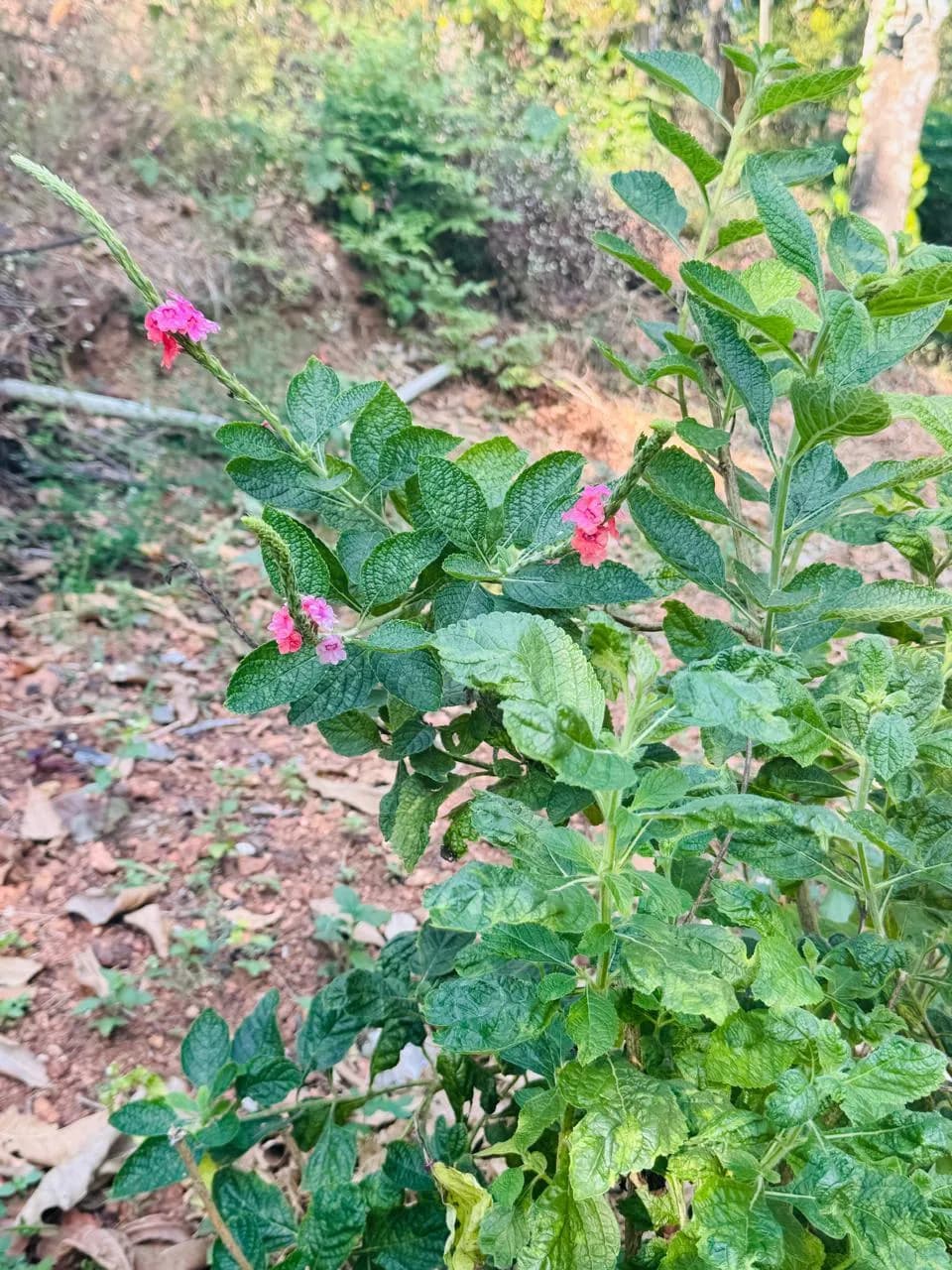
Blue Porterweed
Stachytarpheta mutabilis (Jacq.) Vahl
Location
Butterfly Garden
Family
Verbenaceae
Common names
Blue Porterweed, Jamaica Vervain, Brazilian Tea
Native range
Caribbean and Central America
Habitat
Tropical and subtropical regions, roadsides, gardens, and disturbed areas
Flowering
Throughout the year
Fruiting
Throughout the year
Conservation status
Not threatened; widespread and commonly cultivated or naturalized in tropical regions
About this plant
Stachytarpheta mutabilis is a sprawling, perennial herbaceous plant or small shrub, growing up to 1–2 metres in height. Stems are slender, quadrangular, and can trail or climb slightly. Leaves are simple, opposite, ovate to lanceolate, serrated along the margins, and dark green. Flowers are small, tubular, typically violet-blue or purple, borne in long, slender, spike-like inflorescences (racemes) that bloom from the base upwards. Fruits are small, dry capsules containing tiny seeds.
Uses
Medicinal: Traditionally used in folk medicine to treat fever, digestive disorders, inflammation, and respiratory ailments. Leaf infusions are used as a mild laxative and for general wellness. Ornamental: Grown in gardens and landscapes for its attractive violet-blue flowers that attract butterflies and pollinators. Ecological: Provides nectar for bees, butterflies, and hummingbirds, making it valuable for pollinator gardens.
Growing conditions
Thrives in full sun to partial shade and prefers well-drained soils, though it tolerates poor or sandy soils. Drought-tolerant once established and grows well in tropical and subtropical climates. Sensitive to frost. Requires minimal maintenance and responds well to pruning
Habit
Perennial herb or small shrub