

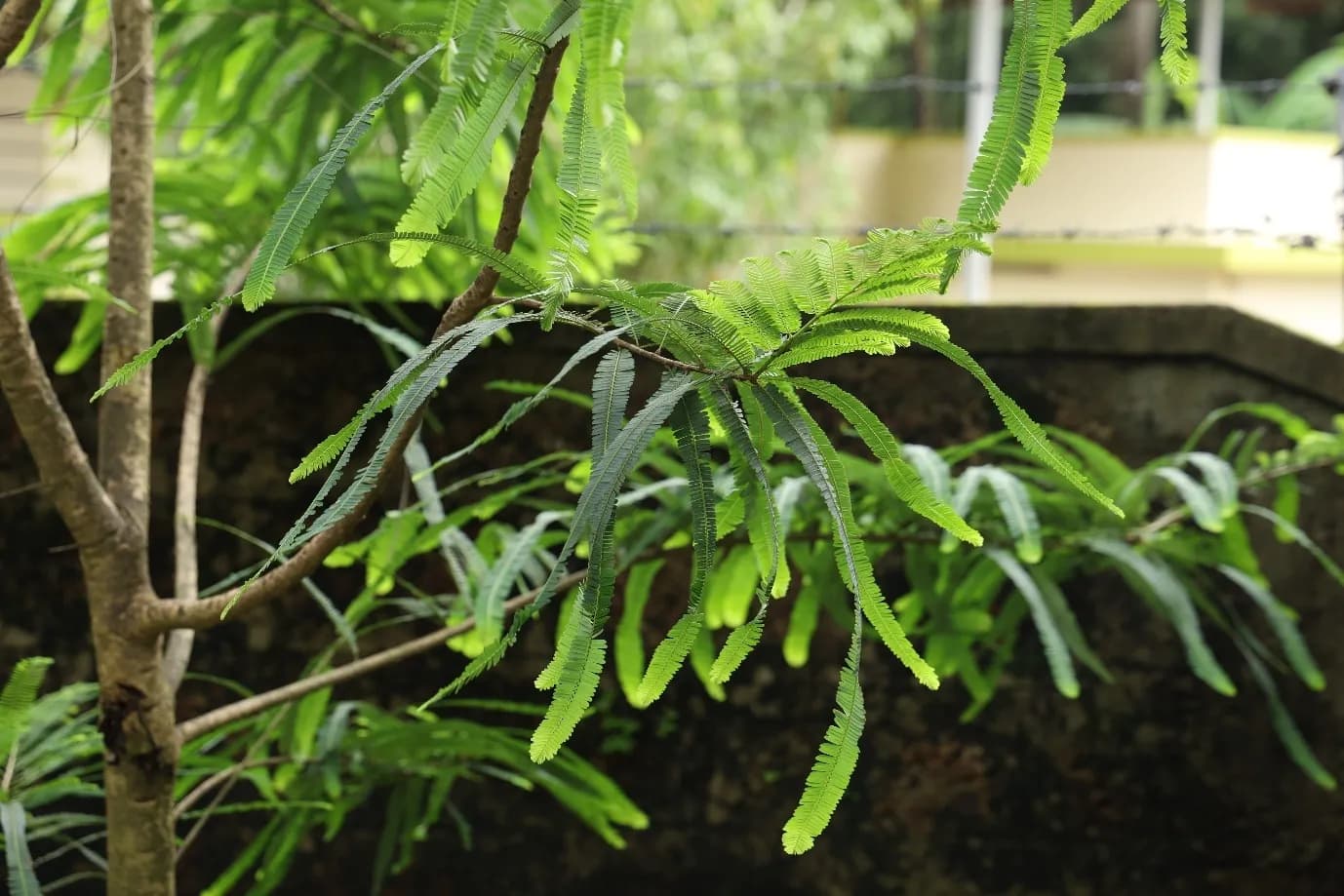
Indian Gooseberry
Phyllanthus emblica L.
Location
Civil New Block
Family
Phyllanthaceae
Common names
Indian Gooseberry, Amla, Emblic Myrobalan, Nelli (Malayalam)
Native range
Indian subcontinent and tropical to subtropical Asia, including India, Nepal, Sri Lanka, and Bangladesh.
Habitat
Grows naturally in mixed deciduous and savannah forests and is also widely cultivated in tropical and subtropical regions. It thrives in well-drained, fertile soils with a neutral to slightly alkaline pH and can tolerate various soil types, including rocky and sandy soils. It grows at elevations ranging from sea level up to 2,000 meters.
Flowering
July to February
Fruiting
August to March
Conservation status
Least Concern; widely cultivated and naturalized in many regions
About this plant
The bark is mottled brownish-grey and rough. Leaves are simple, small, closely set, and light green, giving a pinnate-like appearance. Flowers are greenish-yellow and occur in small clusters. Fruits are nearly spherical, smooth, light greenish-yellow, with six vertical stripes or furrows; they are rich in vitamin C and edible either raw or cooked.
Uses
Widely used in traditional medicine, especially Ayurveda, for its antioxidant, anti-inflammatory, and digestive properties. Fruits, leaves, bark, and seeds are used to treat various ailments, including diabetes, anaemia, and infections. The fruit is also consumed fresh and used in pickles and herbal preparations.
Growing conditions
Prefers warm, sunny climates with moderate rainfall and can tolerate dry spells. Requires regular watering, especially during dry seasons, but is hardy and adaptable to a wide range of soil conditions
Habit
A small to medium-sized deciduous tree reaching heights of 8–18 meters, with a crooked trunk and a spreading crown.