
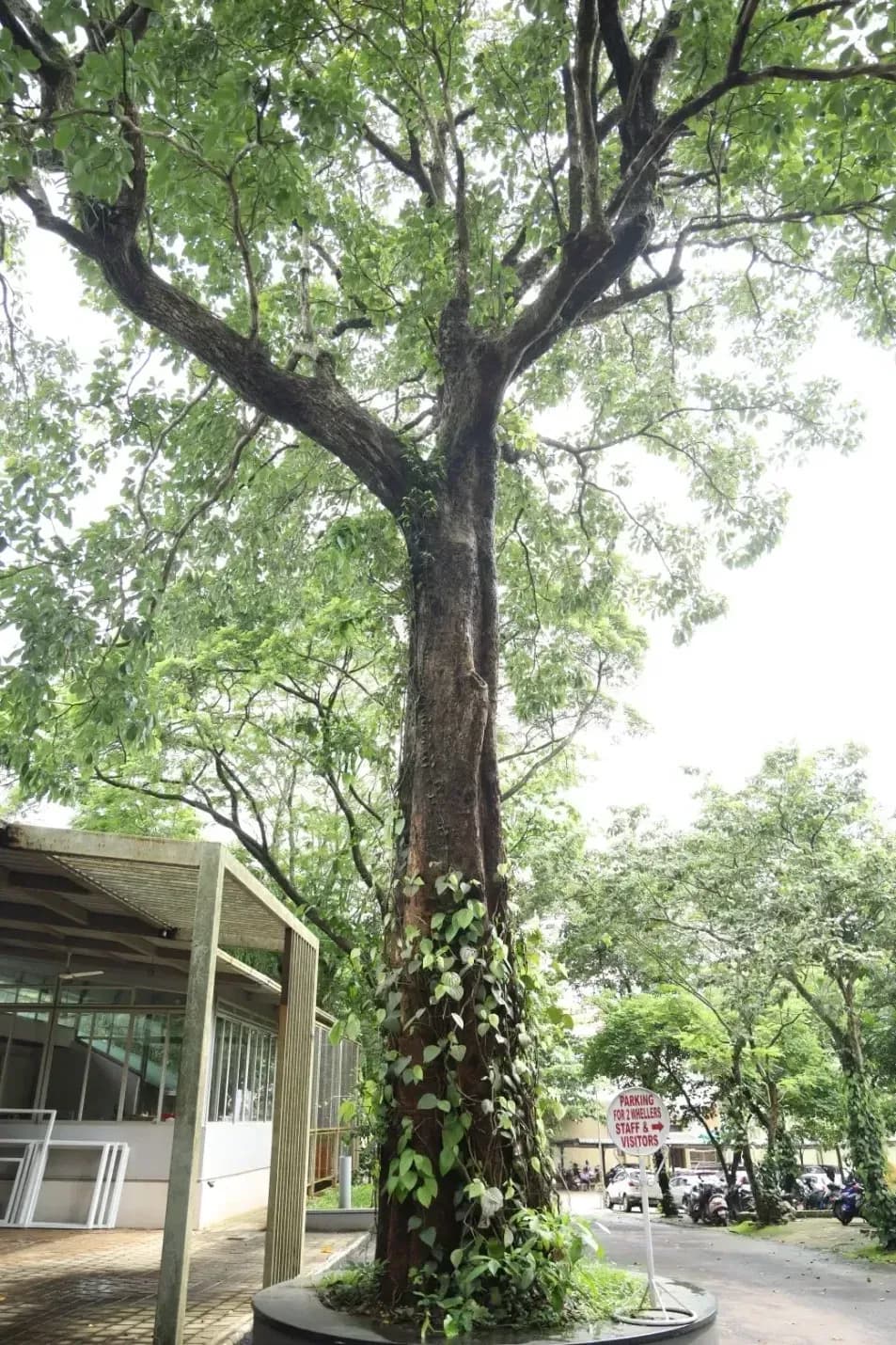
Belleric Myrobalan
Terminalia bellirica (Gaertn.) Roxb.
Location
2 Wheeler parking
Family
Combretaceae
Common names
Belleric Myrobalan, Bahera, Baheda, Vibhitaki
Native range
Indian subcontinent and Southeast Asia
Habitat
Commonly found in deciduous forests, riverbanks, and the lower Himalayan foothills. It grows naturally in tropical and subtropical regions and is often cultivated for its medicinal value and shade. The species is widely distributed across India, Sri Lanka, Nepal, Bangladesh, and Myanmar.
Flowering
April – June
Fruiting
November – February
Conservation status
Least Concern (LC)
About this plant
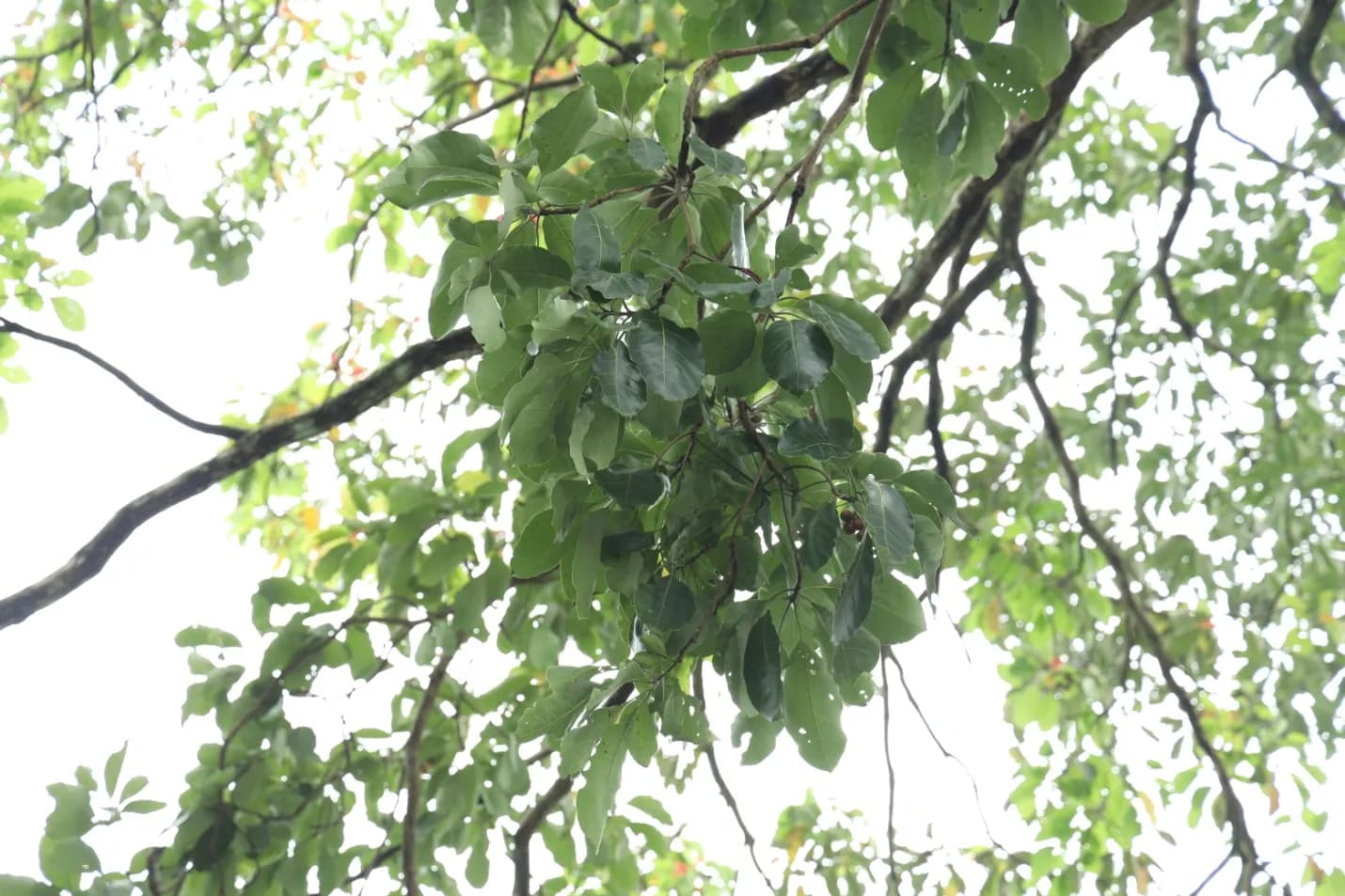
Terminalia bellirica has large, alternate, broadly oval leaves clustered at the ends of branches. Leaves are 10–20 cm long, smooth-edged or slightly toothed. Small greenish-yellow flowers are borne in axillary spikes. The fruits are globular to ovoid drupes, grey to yellowish-brown at maturity, containing a single hard seed. The dried fruit is one of the three ingredients in the traditional Ayurvedic formulation Triphala.
Uses
Highly valued in traditional medicine, particularly in Ayurveda and Siddha systems. The fruit is used as an astringent, laxative, and tonic and is believed to promote longevity. It is commonly used in the treatment of coughs, digestive disorders, and respiratory ailments. Seeds yield oil used for hair and skin applications. The timber is strong and durable and is used in construction, furniture making, and agricultural tools.
Growing conditions
Thrives in full sunlight and prefers deep, well-drained alluvial or loamy soils. Tolerates dry conditions once established but performs best under moderate rainfall. Grows well in tropical and subtropical climates and is suitable for reforestation and agroforestry programs
Habit
A large deciduous tree with a tall, straight trunk and spreading branches, forming a broad crown. It typically grows to a height of 20–30 m.