
Wild Guava
Careya arborea Roxb.
Location
Main Gate & Parking
Family
Lecythidaceae (formerly placed in Barringtoniaceae)
Common names
Wild Guava, Slow Match Tree, Kumbhi
Native range
Indian subcontinent and Southeast Asia
Habitat
Occurs in deciduous forests, dry hill slopes, and open woodlands. It is commonly found across Central and South India, particularly in the Western Ghats and the Karavali region.
Flowering
February - April
Fruiting
April -July.
Conservation status
Not threatened; widely distributed and locally common.
About this plant
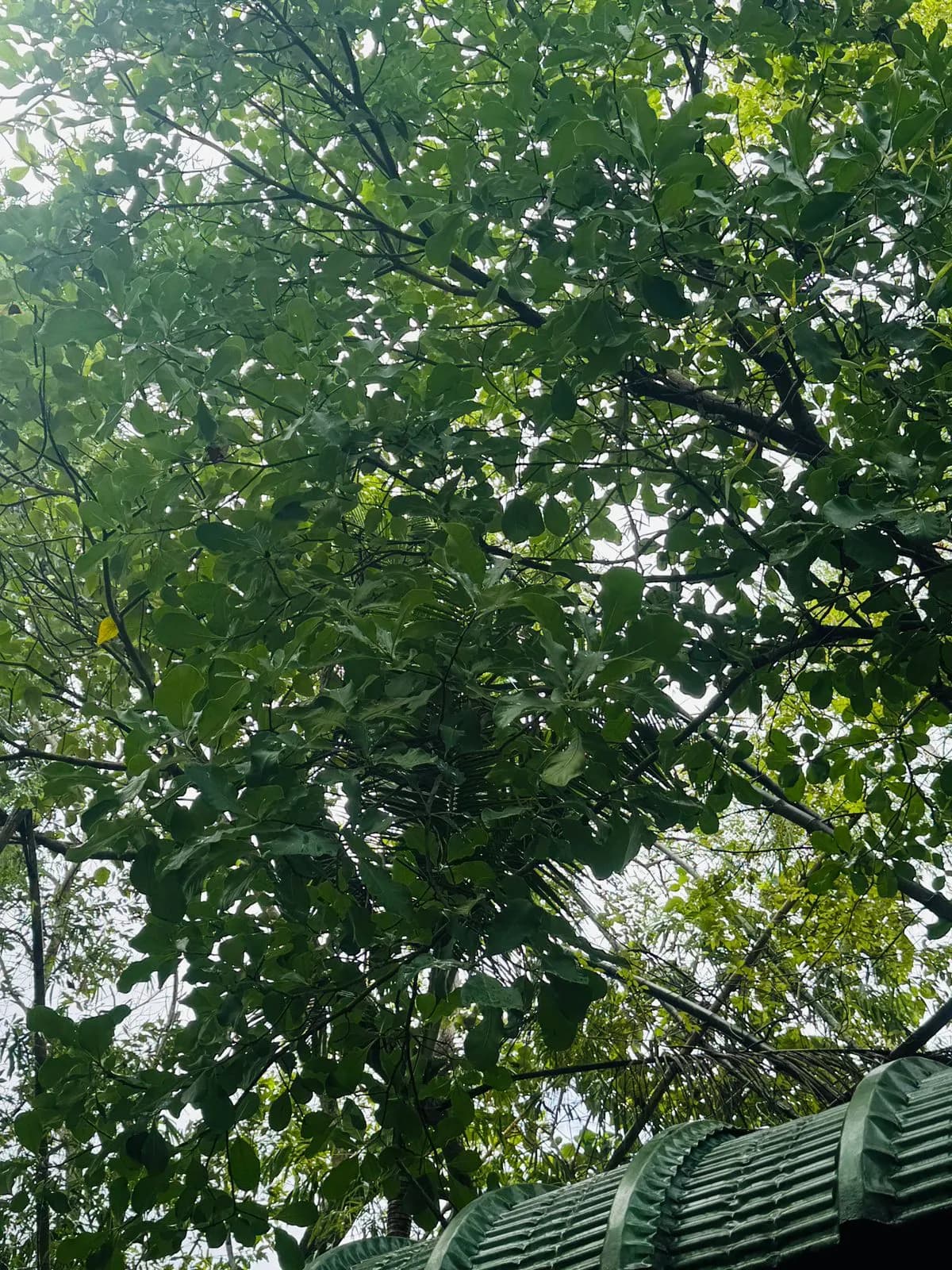
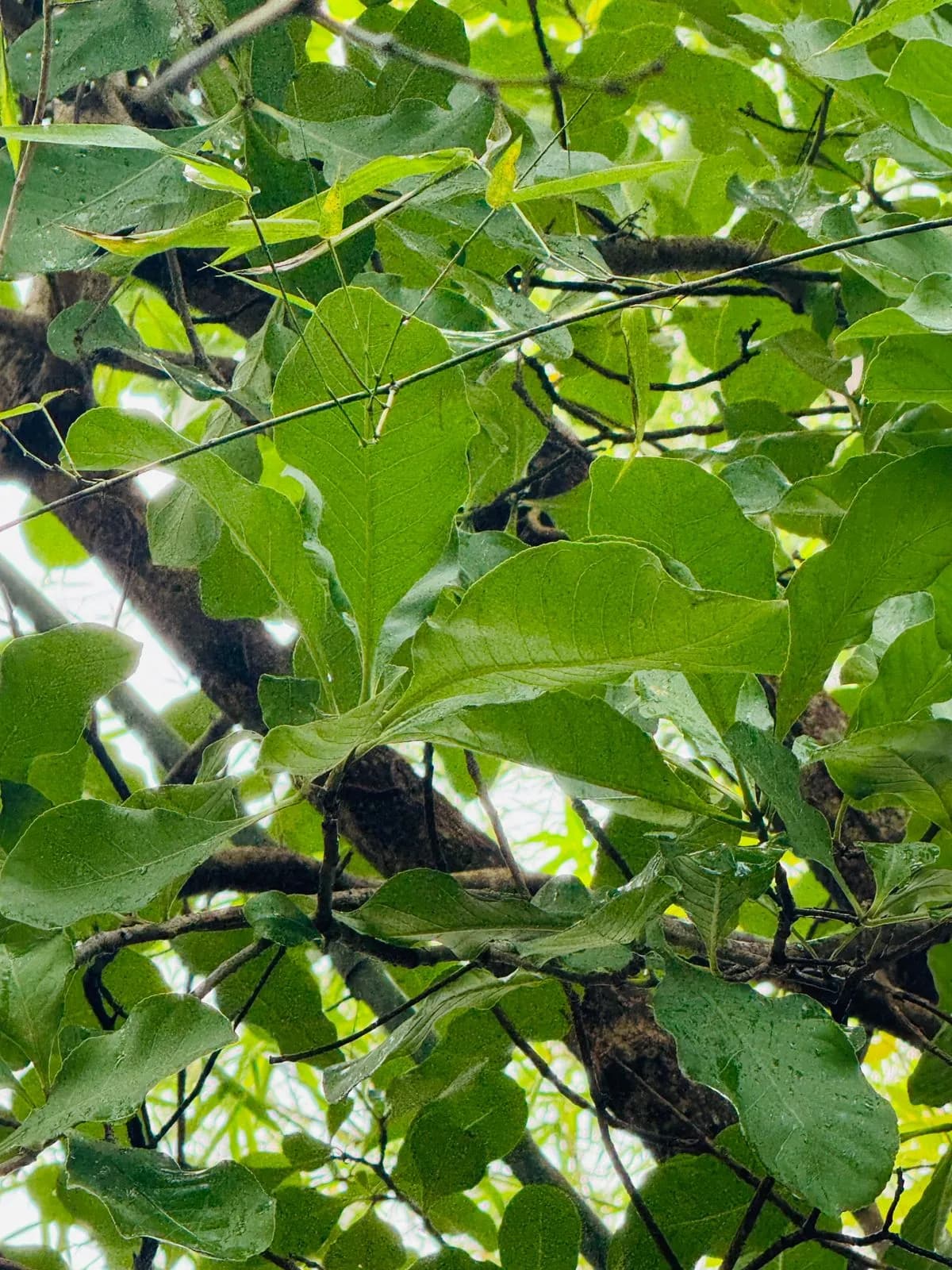
The species develops a broad crown with thick, spreading branches and typically reaches a height of 10–15 meters. The leaves are large and obovate, measuring up to 30 cm in length, reddish when young and gradually turning green and leathery with age. The flowers are large and showy, whitish-pink to pale yellow, borne in terminal spikes, and appear before the emergence of new leaves. The fruits are green, oval berries about 5–8 cm long, containing soft pulp and several seeds inside.
Uses
Young leaves are occasionally consumed as a vegetable or prepared as chutneys. The ripe fruit pulp is sometimes eaten by local communities, though it has a sour and astringent taste. Leaves are also used for wrapping food, similar to banana leaves. In traditional medicine, the bark and leaves are commonly applied for treating wounds and reducing inflammation.
Growing conditions
Grows in a variety of soils, especially red loamy and lateritic. Prefers full sunlight and a dry tropical climate. Common in secondary forests and village boundaries
Habit
Medium-sized deciduous tree.