
False Ashoka
Monoon longifolium (Sonn.) B. Xue & R. M. K. Saunders
Synonym: Polyalthia longifolia
Location
2 Wheeler parking
Family
AnnonaceaeSynonym: Polyalthia longifolia (Sonn.) Thwaites
Common names
False Ashoka, Mast Tree, Indian Fir Tree, Devadaru
Native range
Indian subcontinent and Sri Lanka
Habitat
Commonly cultivated in tropical urban and semi-urban areas. Grown along roadsides, in gardens, around temples, and as an avenue tree.
Flowering
February – April
Fruiting
May – August
Conservation status
Least Concern (LC)
About this plant
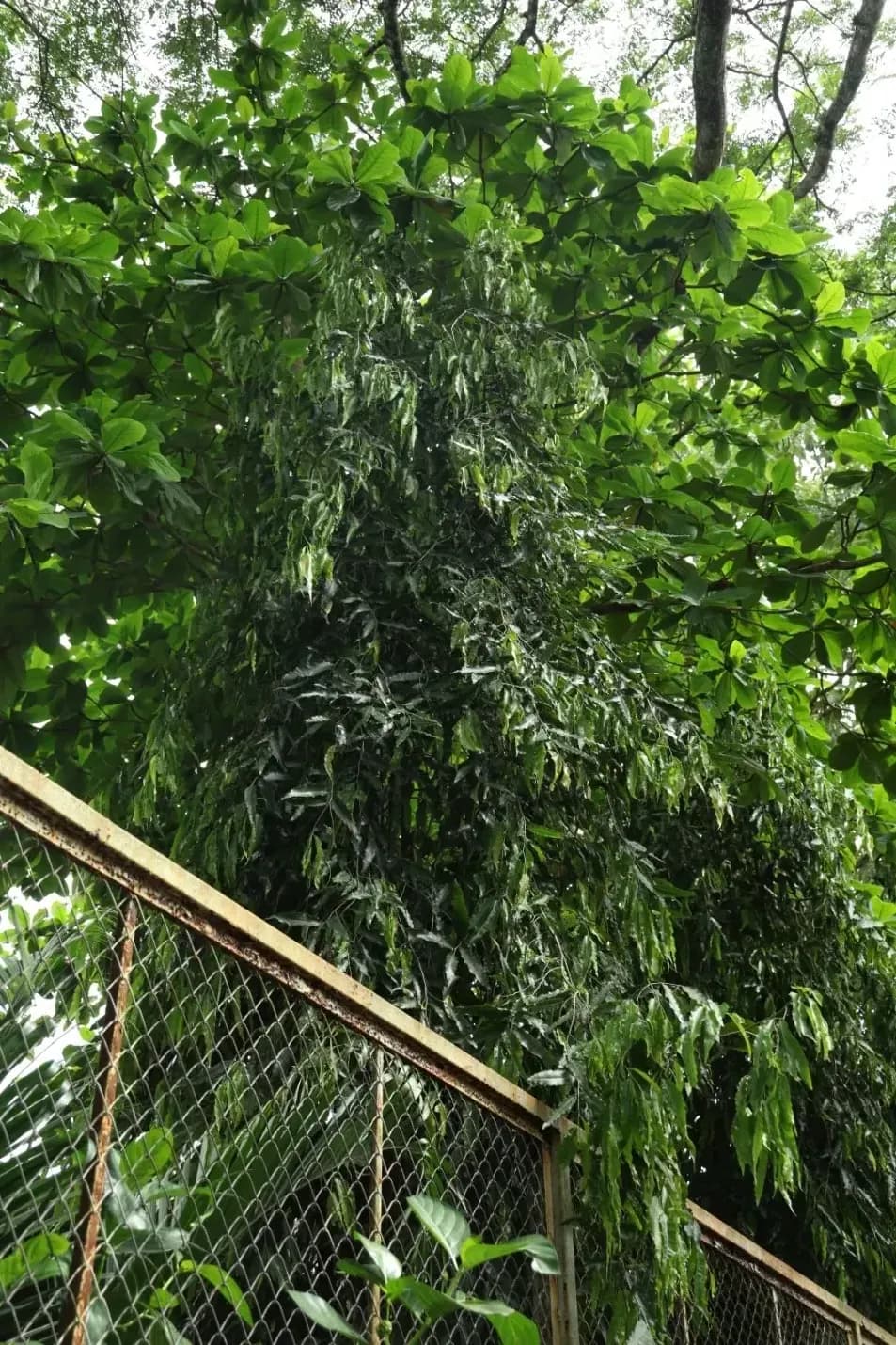
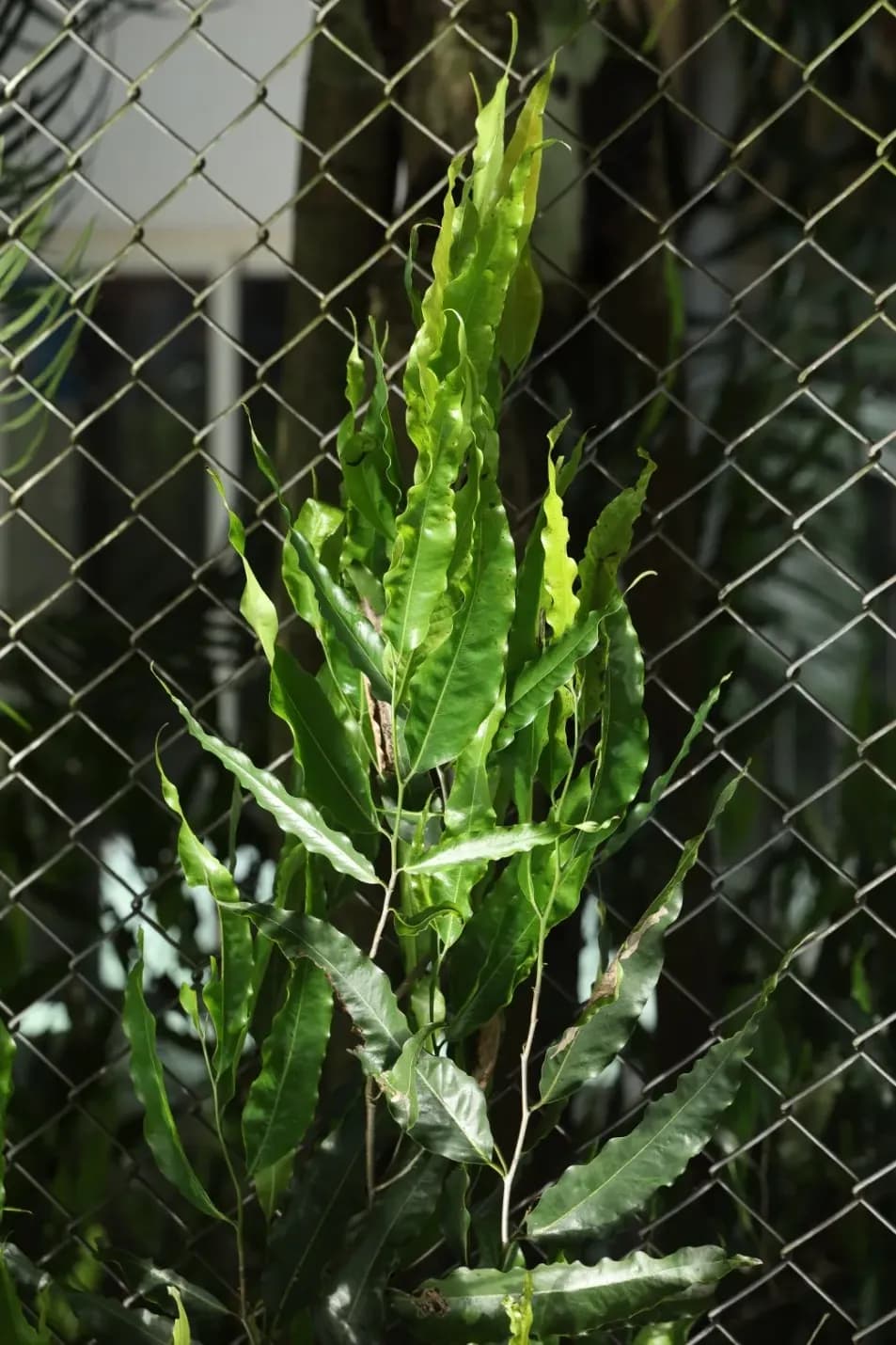
Monoon longifolium typically grows up to 12–20 m tall, occasionally reaching 30 m. The tree has a straight trunk with smooth grey bark and a distinctive narrow crown. Leaves are long (15–25 cm), lanceolate, wavy, and glossy green. Flowers are small, greenish-white to pale yellow, and fragrant. Fruits are small, green to black drupes containing one or two seeds.
Uses
Primarily planted for ornamental and religious purposes and commonly seen in temple premises and public gardens. In traditional medicine, various parts of the tree are used to treat fever, skin disorders, and hypertension. The species is also known for its air-purifying qualities.
Growing conditions
Thrives in full sun to partial shade. Prefers well-drained soils and adapts to a wide range of soil types. Requires moderate watering and is drought-tolerant once established. Suitable for tropical and subtropical climates
Habit
Tall, slender evergreen tree with a symmetrical pyramidal shape and pendulous branches.