
Cashew Tree
Anacardium occidentale L.
Location
Main Gate & Parking
Family
Anacardiaceae
Common names
Cashew Tree, Cashew Nut Tree
Native range
Northeastern Brazil
Habitat
Grows well in tropical and subtropical climates, typically found in well-drained sandy or loamy soils. Prefers areas with a pronounced dry season and tolerates drought. It is widely cultivated in tropical regions globally including India, Africa, and Southeast Asia.
Flowering
November - January
Fruiting
February-May
Conservation status
Not threatened; widely cultivated and naturalized globally
About this plant
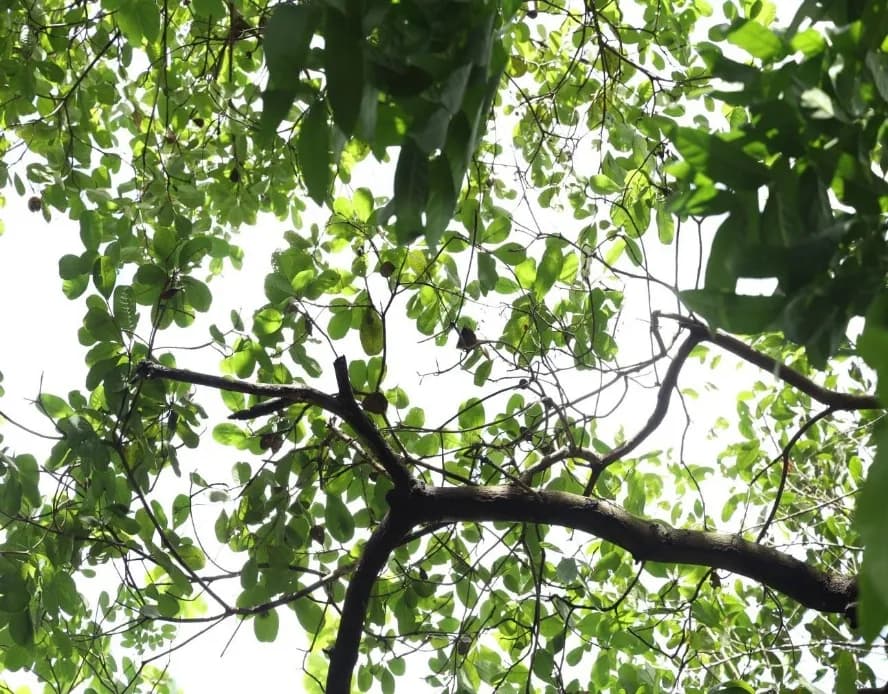
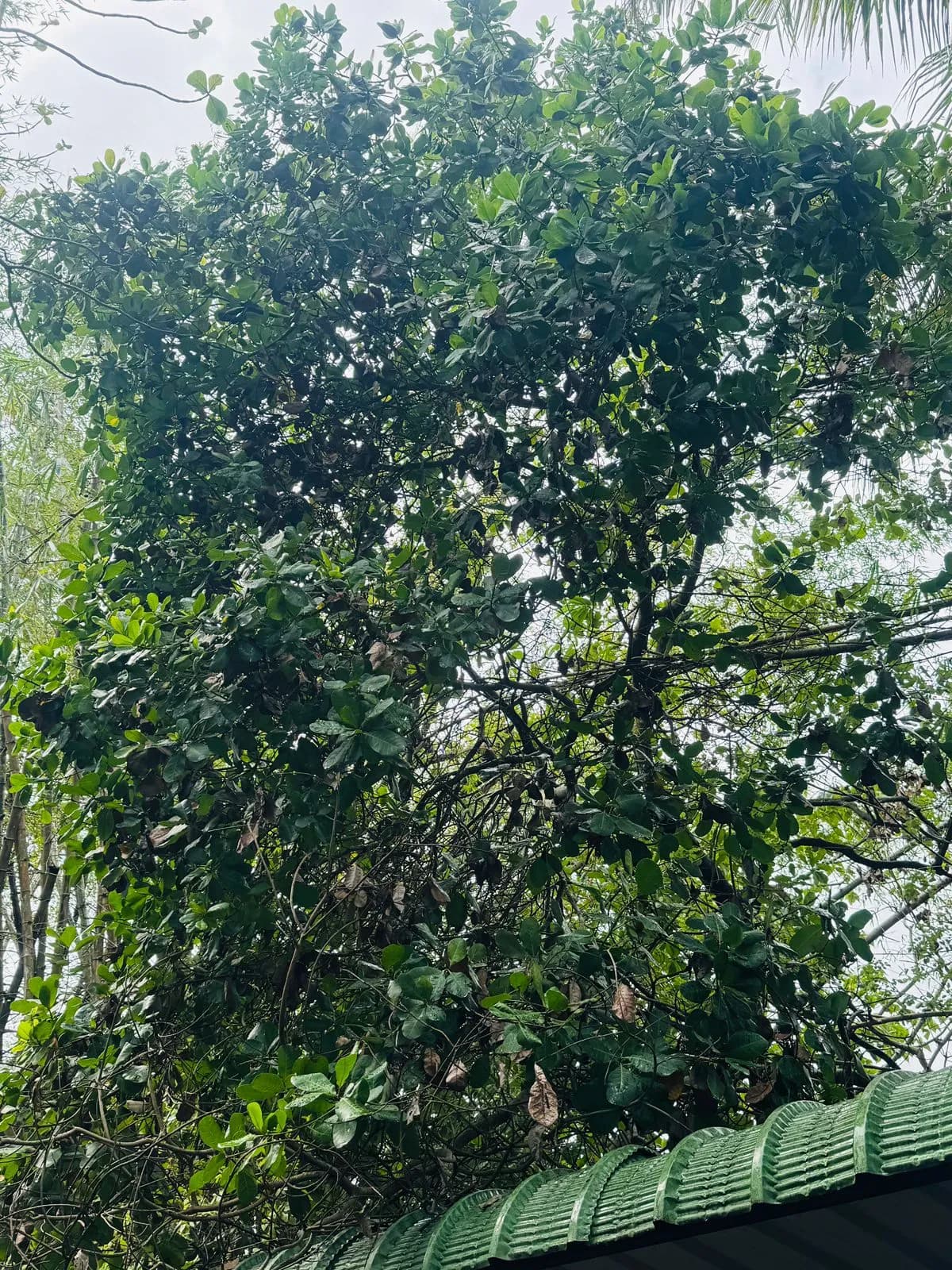
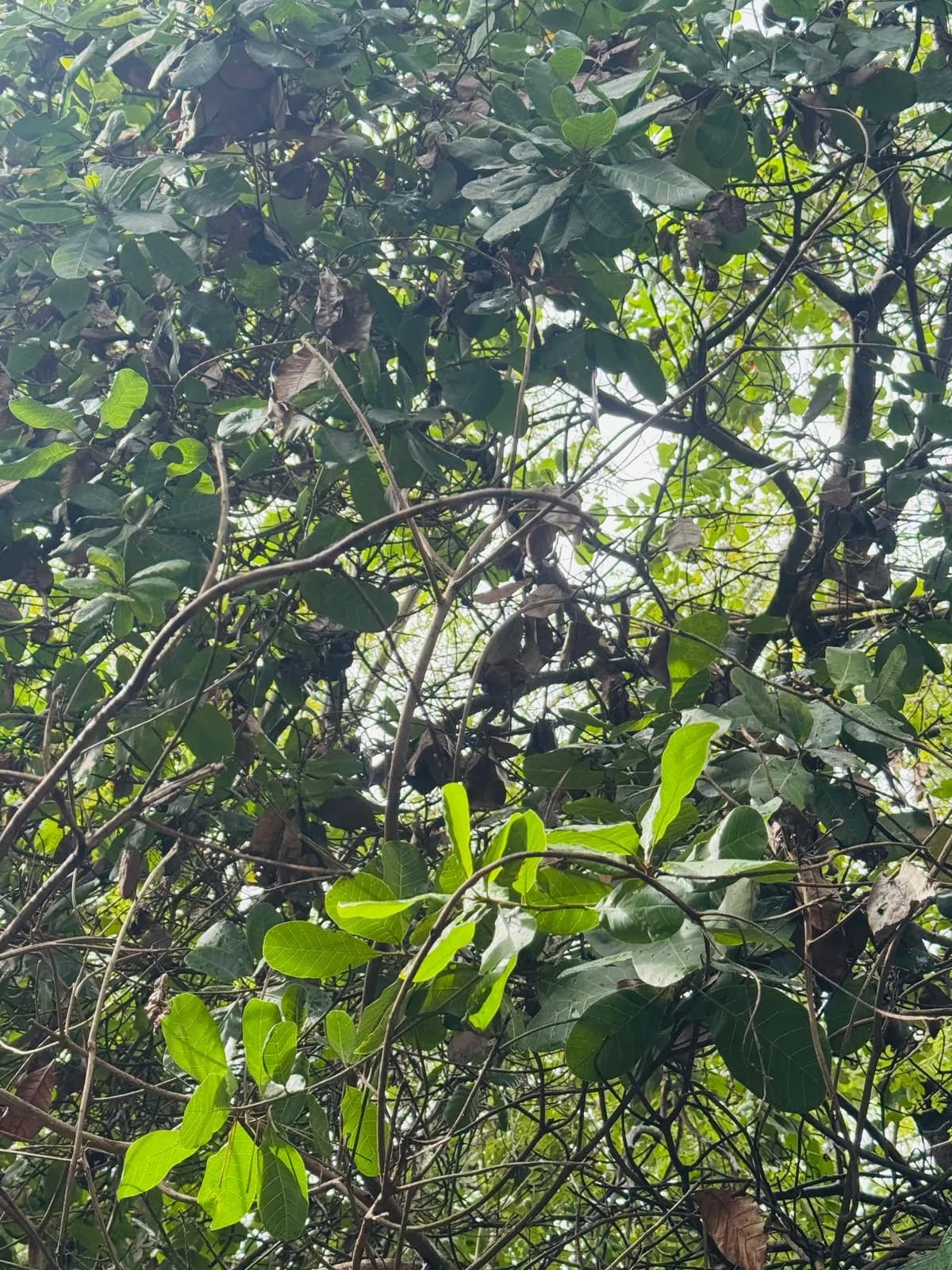
This species can grow up to 10–15 meters in height with a spreading, irregular crown. Leaves are spirally arranged, leathery, elliptical to obovate, 4–22 cm long, and 2–15 cm wide, smooth margined. Flowers are small, pale green to reddish, borne in panicles. The cashew fruit is unique: the fleshy, pear-shaped false fruit (cashew apple) is edible, while the true fruit is the kidney-shaped cashew nut attached outside the apple.
Uses
Cultivated primarily for cashew nuts and cashew apples, both edible and commercially valuable. Cashew nuts are extensively consumed and processed globally. The bark, leaves, and nuts have medicinal uses including antimicrobial, anti-inflammatory, and antioxidant properties.
Growing conditions
Requires full sun and thrives in well-drained soils, tolerates moderate drought but not waterlogging. Prefers warm tropical climates with 600-1200 mm annual rainfall and temperature range 24–28°C
Habit
An evergreen or semi-evergreen small to medium-sized tree