
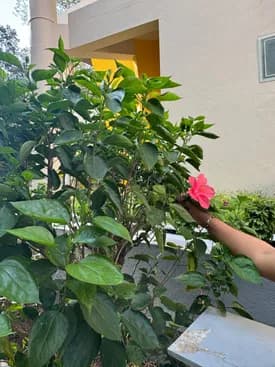
Hibiscus
Hibiscus spp.
Location
Other Plants
Family
Malvaceae
Common names
Hibiscus, China Rose, Rose Mallow, Shoeblack plant
Native range
Tropical and subtropical regions worldwide
Habitat
Gardens, forest edges, roadsides, and open sunny areas
Flowering
Throughout the year
Fruiting
Throughout the year
Conservation status
Not threatened; widely cultivated globally
About this plant
Hibiscus species are generally shrubs or small trees growing 1–5 metres tall. Stems are woody, and leaves are simple, alternate, ovate to lanceolate, with serrated margins. Flowers are large, showy, trumpet-shaped, and can be solitary or in clusters. Colours vary widely—red, pink, yellow, white, orange, or purple. Flowers have five petals and prominent stamens fused into a column. Fruits are capsule-like, containing many small seeds.
Uses
Ornamental: Widely grown for its vibrant, attractive flowers in gardens, parks, and hedges. Medicinal: Flowers, leaves, and roots are used in traditional medicine to treat fever, inflammation, cough, digestive issues, and skin conditions. Hibiscus tea (from H. sabdariffa) is popular for its antioxidant properties. Other uses: Flowers are used in religious offerings, hair care, and culinary preparations.
Growing conditions
Thrives in full sun and well-drained, fertile soils. Requires regular watering but tolerates short dry periods. Performs best in tropical and subtropical climates. Pruning encourages bushy growth and abundant flowering
Habit
Evergreen or deciduous shrub or small tree