
Ashoka Tree
Saraca asoca (Roxb.) De Wilde
Location
Botanical Garden
Family
Fabaceae
Common names
Ashoka Tree, Seetha ashoka
Native range
Indian subcontinent, Southeast Asia
Habitat
Tropical and subtropical forests
Flowering
February to May
Fruiting
June to September
Conservation status
Vulnerable due to habitat loss but widely cultivated and found in scattered wild pockets
About this plant
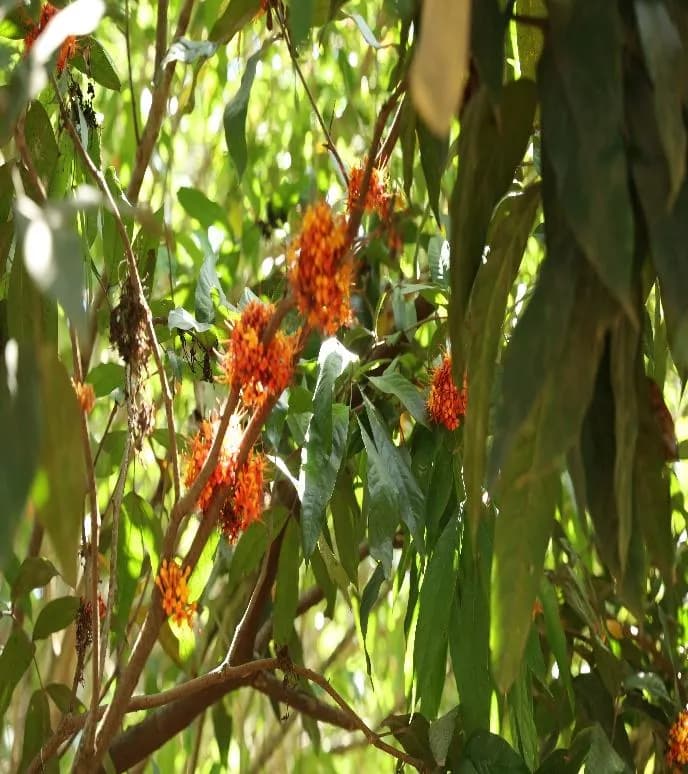
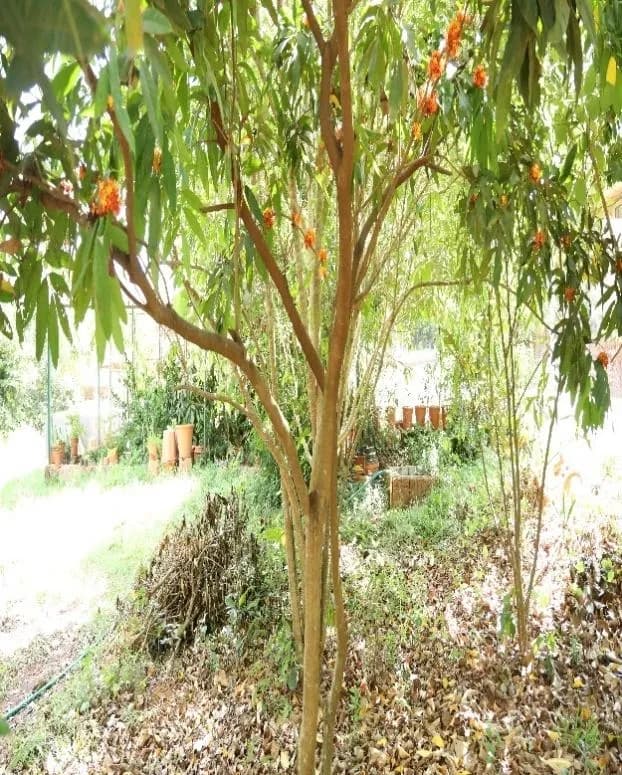
This is an evergreen, ornamental tree with a dense, spreading crown. Bark is dark brownish to grey, smooth with lenticels. Leaves are with 4–12 pairs of narrow elliptic to lanceolate leaflets. Young leaves reddish, turning dark green. Flowers are in dense corymbs, bright orange-yellow turning red. Fruit are flat, oblong woody pods with 4–8 seeds.
Uses
Highly valued in Ayurveda for treating gynaecological disorders and as an astringent; flowers and bark commonly used in traditional medicine; religiously significant in Indian culture; planted as ornamental in gardens and along roadsides. When Seetha was abducted by Ravaṇa and taken to Laṅka, she was kept in a beautiful garden called Aśoka Vana. The garden was filled with Asoka trees whose flowers symbolize freedom from sorrow.
Growing conditions
Thrives in slightly acidic to neutral, well-drained fertile soils; prefers tropical to subtropical climates with moderate watering; grows well in partial to full sunlight
Habit
Small to medium-sized evergreen tree