
Indian Sandalwood
Santalum album L.
Location
Main Gate & Parking
Family
Santalaceae
Common names
Indian Sandalwood, Chandan, Shri Gandha, Safed Chandan
Native range
Southern India and Southeast Asia
Habitat
Naturally grows in dry deciduous forests of Karnataka, Tamil Nadu, Kerala, and Andhra Pradesh. Found in interior and coastal Karnataka, including parts of Karawali. Prefers mixed forests, often growing with a host plant (it's a semi-parasitic tree).
Flowering
March to April
Fruiting
August to January
Conservation status
Vulnerable (VU)
About this plant
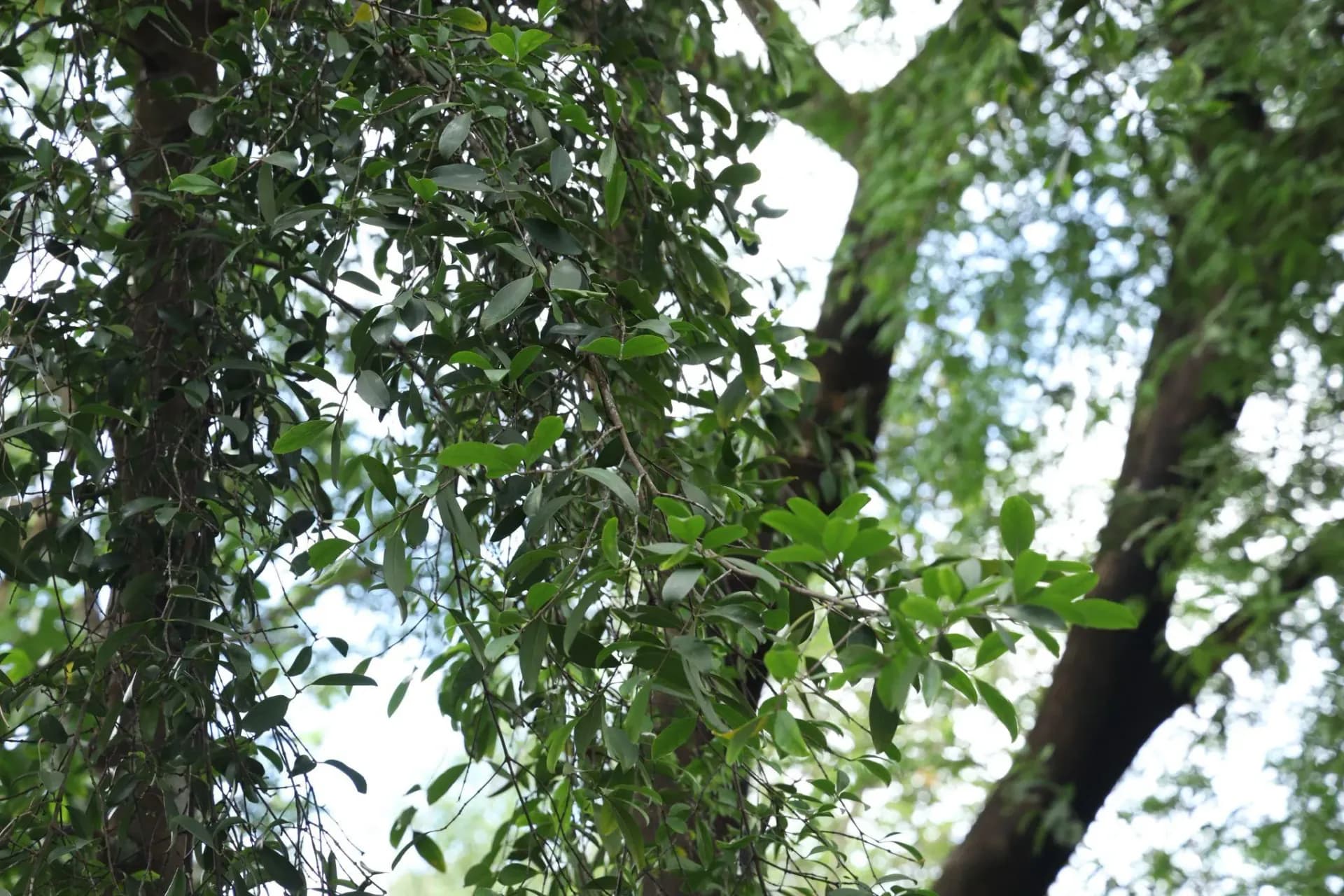
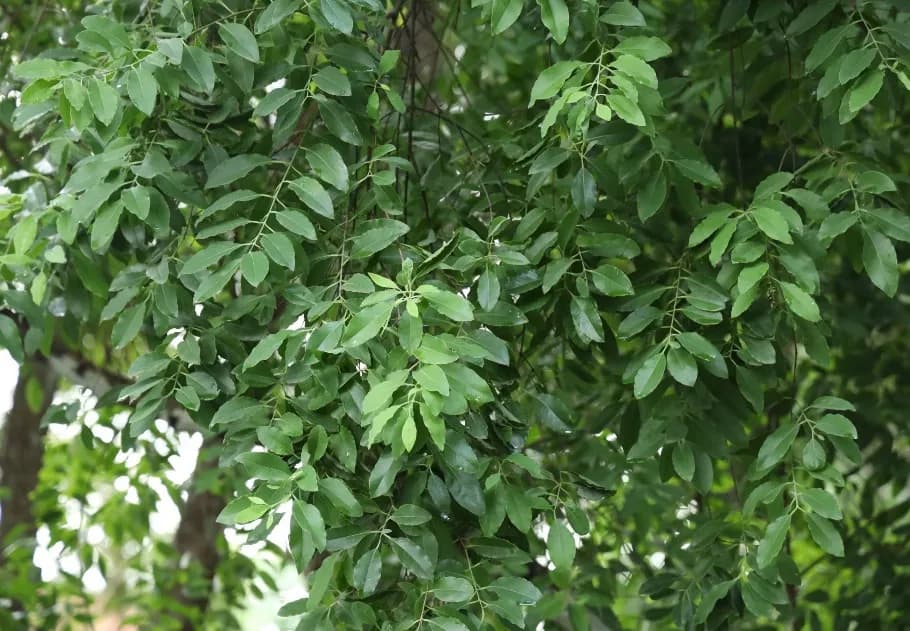
A small to medium evergreen tree, 8–15 m tall. Roots penetrate nearby host roots to derive water/nutrients. Leaves are simple, opposite, smooth, elliptic. Flowers: Small, purplish-brown or violet, fragrant. Wood is Pale yellow, very fragrant, rich in essential oils.
Uses
Highly sacred; used in Hindu rituals, temple offerings, and funerals. Paste made from wood is used in pujas, festivals, and tilaka marks. Used in Ayurvedic medicine, cosmetics, and natural perfumery. Heartwood and oil used in: aromatherapy, incense, perfumery, and Ayurveda. Treats skin infections, anxiety, fever, digestive issues.
Growing conditions
Soil: Well-drained red loamy or sandy soils. Light: Full sun to partial shade. Water: Moderate, tolerates dry spells once established. Climate: Tropical, hot and dry conditions; thrives in rainfall of 600–1600 mm
Habit
Small to medium-sized evergreen tree