
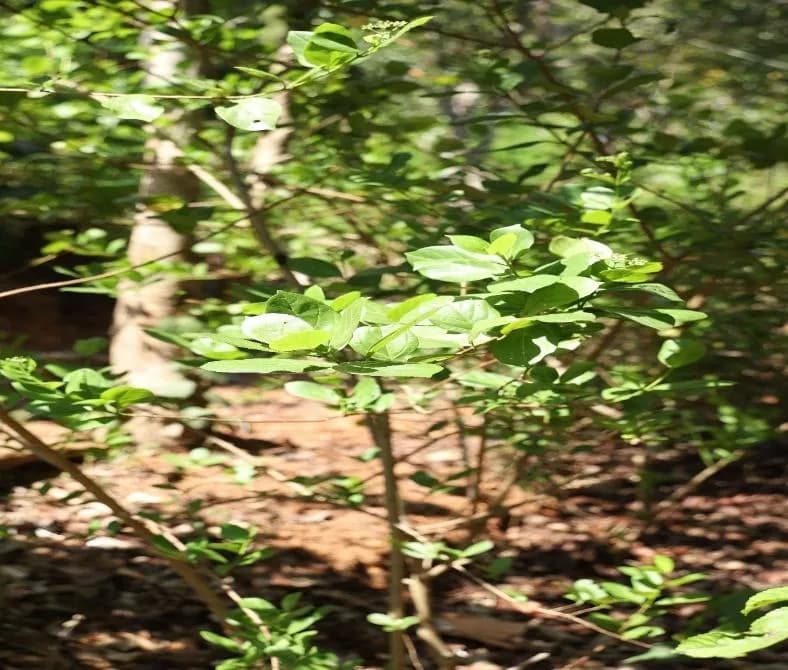
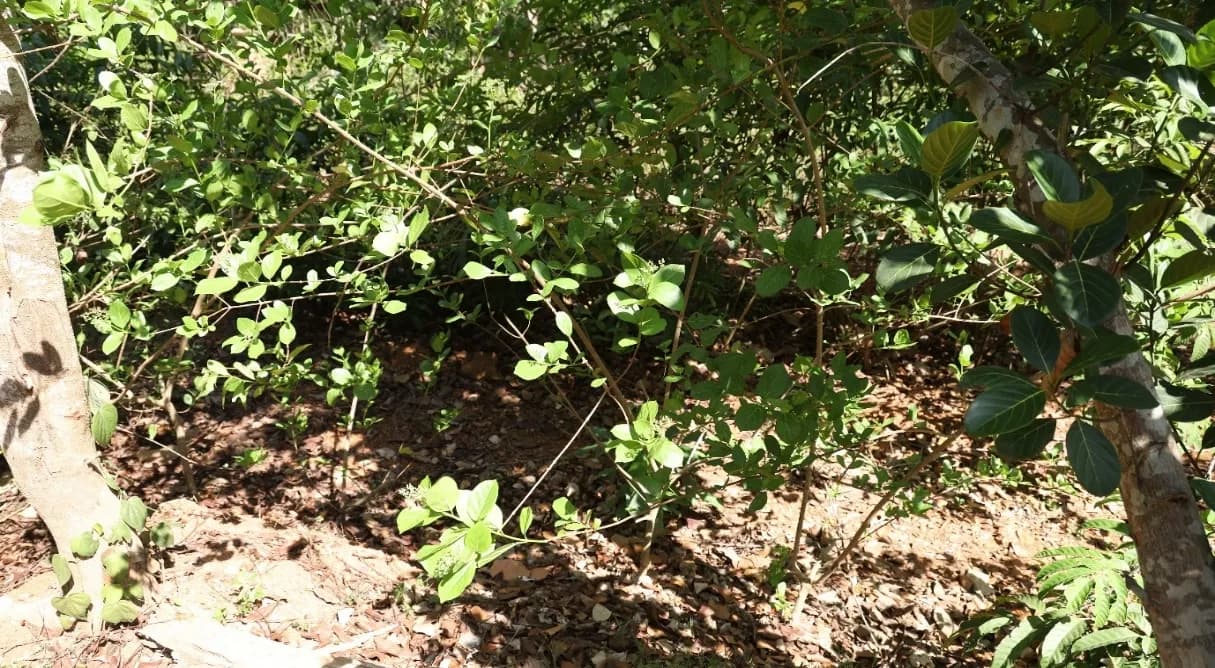
Agnimantha
Premna serratifolia L.(syn. Premna integrifolia L.)
Location
Butterfly Garden
Family
Lamiaceae (formerly Verbenaceae)
Common names
Agnimantha, Headache tree, Arni
Native range
Tropical and subtropical Asia
Habitat
Forest margins, coastal areas, riverbanks, roadsides
Flowering
May -August
Fruiting
September - December
Conservation status
Not threatened, but local populations may decline due to overharvesting of roots for medicinal use
About this plant
Agnimantha (Premna serratifolia) is a much-branched aromatic shrub or small tree. Leaves are simple, opposite, ovate to elliptic, with serrate or entire margins and a characteristic unpleasant odor when crushed. Inflorescence is a terminal or axillary corymbose panicle. Flowers are small, greenish-white, bisexual. The calyx is campanulate and persistent; the corolla is tubular with 4–5 lobes. Stamens are didynamous. The fruit is a globose drupe, turning black when ripe, usually containing a single seed.
Uses
Agnimantha is one of the Dashamoola (group of ten medicinal roots) in Ayurveda. The roots, bark, and leaves are used as anti-inflammatory, analgesic, digestive, antipyretic, and nervine tonic. It is commonly prescribed for rheumatism, fever, neuralgia, headaches, digestive disorders, and respiratory ailments. Decoctions and powders are widely used in classical Ayurvedic formulations.
Growing conditions
Prefers tropical climates and grows well in well-drained loamy or sandy soils. It tolerates coastal conditions and moderate drought. The plant thrives in full sun to partial shade and is propagated through seeds and stem cuttings
Habit
Small tree or large shrub