
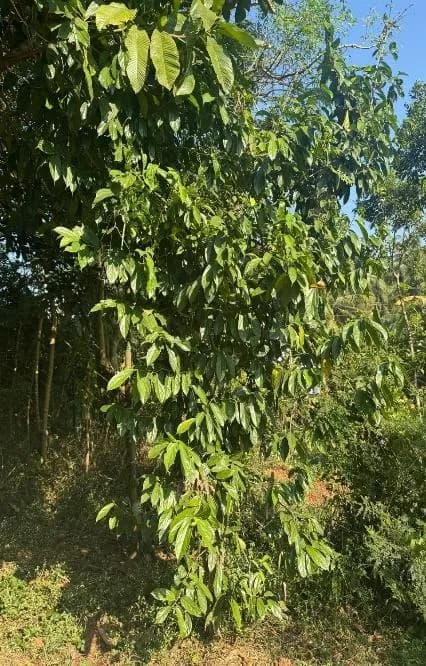
Ankol
Alangium salviifolium (L.f.) Wangerin
Location
Botanical Garden
Family
Cornaceae
Common names
Ankol, Sage-leaved Alangium, Ankol gida (Kannada)
Native range
Indian subcontinent and Southeast Asia
Habitat
Dry and moist deciduous forests, scrublands
Flowering
Flowering usually occurs during late winter to early summer.
Fruiting
Fruiting follows in summer and monsoon seasons.
Conservation status
Not globally threatened, but local populations may decline due to overharvesting for medicinal use and habitat loss
About this plant
Alangium salviifolium is a spiny, deciduous tree growing about 6–10 metres tall. The bark is grey to brown and rough. Leaves are simple, alternate, ovate to elliptic, resembling sage leaves, pale green to greyish beneath, and softly hairy. Flowers are small, white to creamy, fragrant, and borne in axillary clusters; they have narrow, elongated petals giving a star-like appearance. Fruits are ovoid drupes, green when young and turning yellow to reddish-brown when ripe, each containing a single seed.
Uses
Ankol gida is an important medicinal plant in Ayurveda and folk medicine. The bark and roots are used for treating rheumatism, inflammation, fever, snakebite, digestive disorders, and skin diseases. Fruits are sometimes used in traditional remedies. The tree also has cultural significance in rural areas and is occasionally used as a live fence due to its spines.
Growing conditions
Thrives in full sun and adapts well to dry conditions. Grows best in well-drained sandy or loamy soils and tolerates poor, rocky soils. Drought-tolerant once established and suitable for dryland afforestation. Does not tolerate waterlogging
Habit
Small to medium-sized deciduous tree