
Chinese Fan Palm
Livistona chinensis (Jacq.) R.Br. ex Mart.
Location
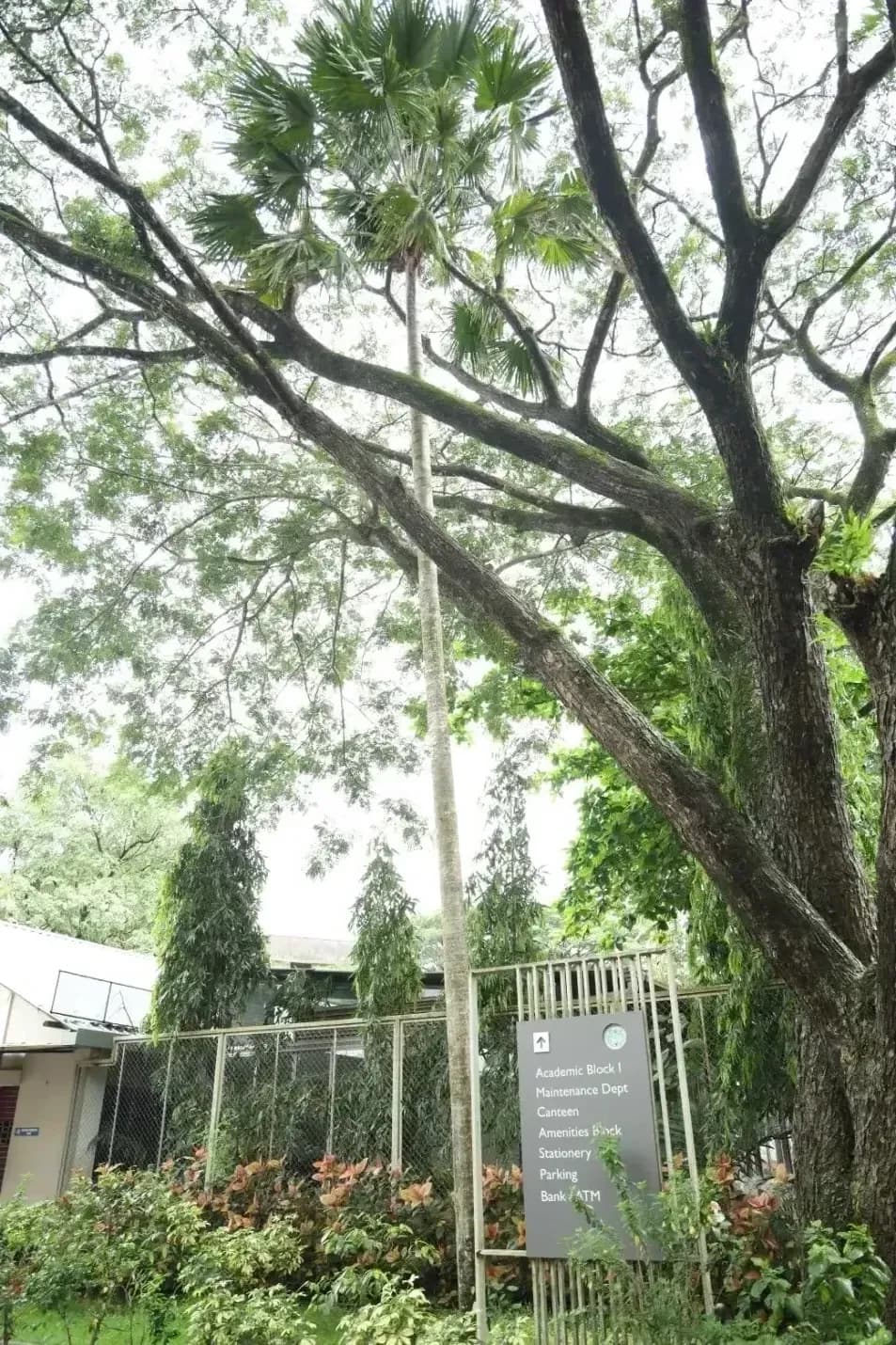
2 Wheeler parking
Family
Arecaceae
Common names
Chinese Fan Palm, Fountain Palm, Serdang, Chinese Fountain Palm
Native range
Southern Japan, Taiwan, southeastern China, the Ryukyu Islands, and Hainan
Habitat
Thrives in coastal and secondary moist forests, often on sandy soils and at elevations up to 600 m. It is commonly found in tropical and subtropical regions, growing in open forests, along roadsides, and in gardens. The palm adapts to a wide range of soil types, including clay, loam, and sand, with a preference for well-drained soils.
Flowering
Typically, year-round under favourable climatic conditions
Fruiting
Following flowering
Conservation status
Not threatened; widely cultivated and naturalize
About this plant
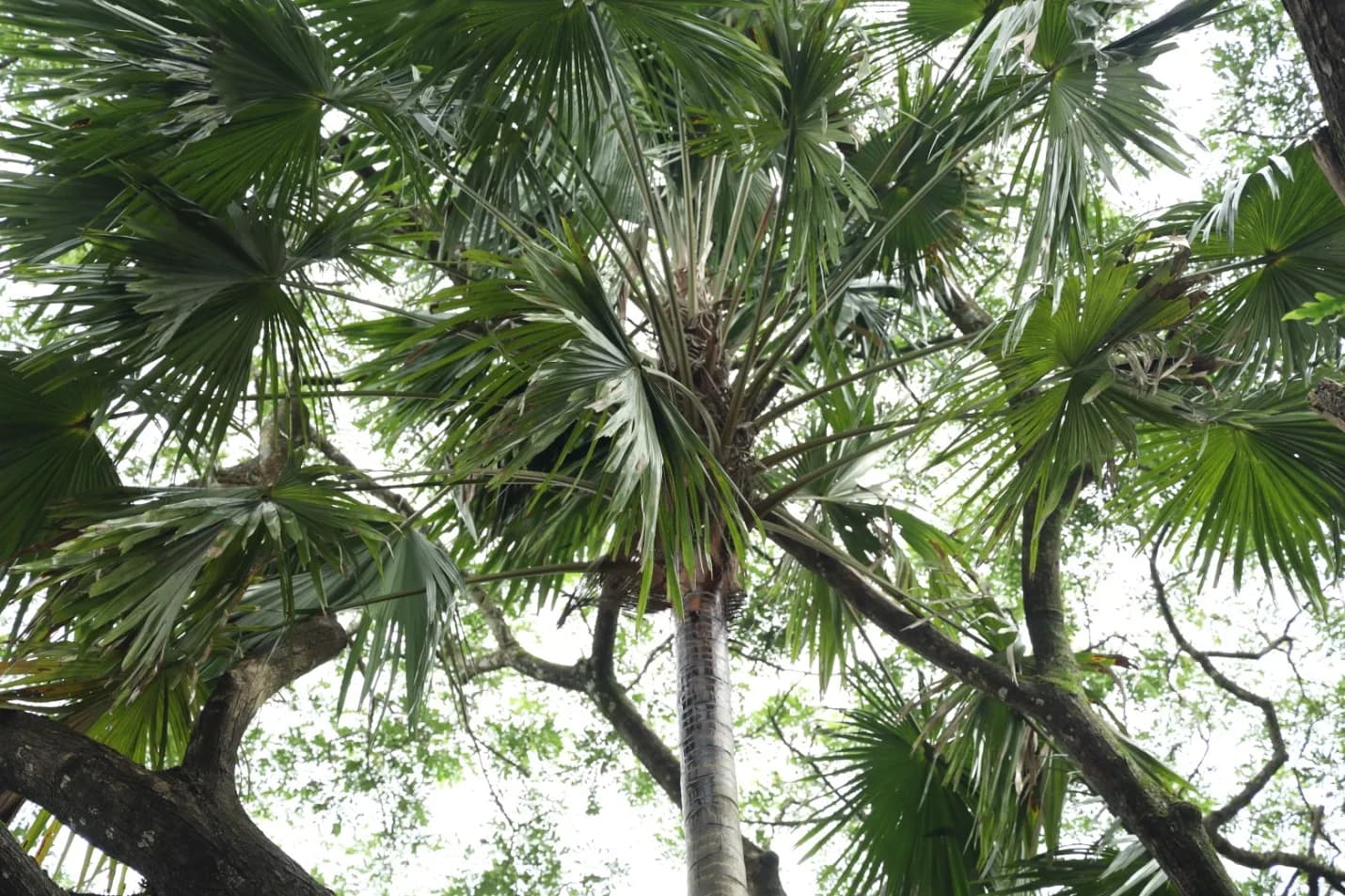
Leaves are large, Costa palmate, measuring 120–200 cm in length and 120–180 cm in width, with pendulous lobes. The inflorescence is unbranched at the base and arching, bearing clusters of small white to yellowish flowers. Fruits are glossy, globose to ellipsoid, 15–26 mm long, and blue-green to bright green when mature. The palm is slow-growing and can live for many decades.
Uses
Commonly planted as an ornamental palm in parks and gardens for its attractive foliage and form. It is also naturalized in many tropical regions outside its native range. In some areas, it exhibits moderate invasive behaviour, impacting local ecosystems.
Growing conditions
Prefers full sun to partial shade and requires moist, well-drained soils, though it adapts well to diverse soil types. It tolerates coastal conditions and grows successfully in a wide range of tropical climates
Habit
Moderate-sized, solitary palm reaching up to 15 m in height. It has a straight trunk with light-coloured, rough bark and a globose to ovoid crown of large fan-shaped leaves.