
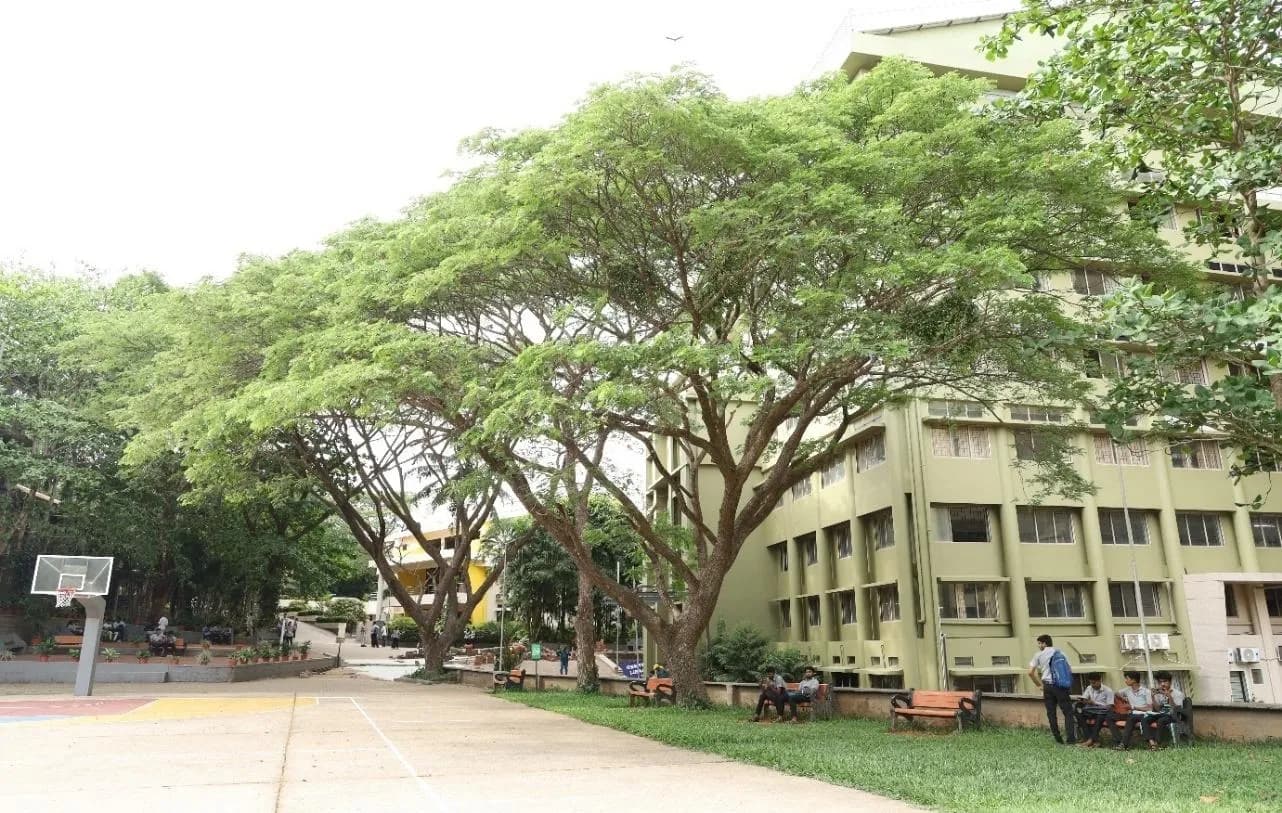
Rain Tree
Samanea saman (Jacq.) Merr.
Synonym: Albizia saman (Jacq.) Merr.
Location
Basketball
Family
Fabaceae (Legume family)
Common names
Rain Tree, Monkeypod Tree, Saman, Shirish, Thoonguvaagai
Native range
Tropical America (Mexico to Peru and Brazil); widely naturalized in tropical Asia, Africa, and the Pacific
Habitat
Roadsides, pastures, parks, tropical plains, and gardens
Flowering
February–April
Fruiting
May–July
Conservation status
Least Concern (LC)
About this plant
Samanea saman is a large, fast-growing, tropical, deciduous to semi-evergreen tree that can reach 15–25 m in height with a wide, spreading, umbrella-shaped crown. The bark is rough and greyish. Leaves are bipinnately compound with small leaflets that close at night or during cloudy weather (nyctinasty). The tree produces abundant pink to pale rose; fluffy, fragrant flowers arranged in globular heads. It yields long, flat pods containing numerous seeds.
Uses
Widely planted for shade and ornamental purposes. The hardwood is used for timber, furniture, and fuel. Pods provide highly nutritious forage for livestock. Traditional medicine uses various parts for anti-inflammatory and other healing properties.
Growing conditions
Thrives in tropical climates with annual rainfall of 600 to 3000 mm, tolerating seasonal dry periods of up to 6 months. Prefers well-drained, fertile, neutral to mildly acidic soils but tolerates heavy clays and occasional waterlogging. Requires full sunlight and is intolerant of frost and dense shade. Propagation: By seeds and cuttings; fast-growing and drought resistant once established
Habit
Large, fast-growing deciduous tree.