
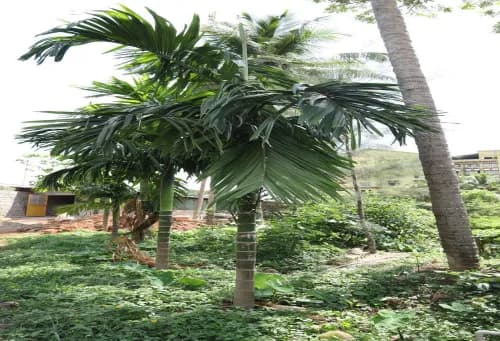
Areca Palm
Areca catechu L.
Location
Vegetable Garden
Family
Arecaceae
Common names
Areca Palm, Betel Nut Palm, Adike
Native range
Southeast Asia and Melanesia
Habitat
Tropical lowland forests and plantations
Flowering
Throughout the year in mature palms
Fruiting
Year-round; fruits mature 8–9 months after flowering
Conservation status
Not Evaluated (widely cultivated)
About this plant
Areca catechu is a graceful, erect palm reaching up to 20 meters in height. It has a single, unbranched trunk marked with ring-like scars and a crown of feathery, pinnate leaves. The leaves are dark green, arching, and up to 2–3 meters long. Inflorescences emerge below the crown shaft, bearing small, creamy-white to yellowish flowers. The fruits are oval, orange to red when ripe, and contain a hard seed known as the betel nut.
Uses
In the Karavali region, the areca palm (locally called "Adike" in Kannada or Tulu) plays a significant cultural, economic, and social role. The nuts are commonly chewed along with betel leaves (beeda), often with lime and other flavourings’, especially during ceremonies and social functions. Areca is deeply integrated into local traditions and rituals. The dried sheaths of the leaves are also used to make eco-friendly plates and bowls.
Growing conditions
Requires warm, humid climates with regular rainfall. Grows best in deep, well-drained soils rich in organic matter. Needs partial shade in early stages, and regular irrigation is essential during dry periods. Sensitive to waterlogging and frost
Habit
Tall, slender, single-stemmed palm